x
 Acrílico sobre lienzoArte de paredPost-Impressionism
 1877Renacimiento
 Museo Metropolitano de Arte
Óleo sobre lienzo pintado a mano en el tamaño y marco de su elección, realizado por encargo por nuestros artistas. ( Pedir impresión Comprar descarga)





























Elija entre nuestros tamaños predefinidos que respetan las proporciones originales de la obra.

Puede ingresar sus propias dimensiones para adaptarse a un marco o espacio específico. Si el tamaño seleccionado no coincide con las proporciones de la imagen original, recortaremos la obra o extenderemos la pintura con elementos adicionales pintados a mano. Se le enviará una maqueta digital para su aprobación antes de comenzar la producción.
Tenga en cuenta que la vista previa en pantalla no refleja el recorte o la extensión reales. Solo la maqueta mostrará con precisión la composición final.
Si bien existen tamaños personalizados, recomendamos seleccionar una dimensión de la lista predefinida para preservar las proporciones originales.
Envío a todo el mundo () en 3-4 semanas en lugar de las 5 semanas estándar. (20 agosto). Sin comprometer la calidad.


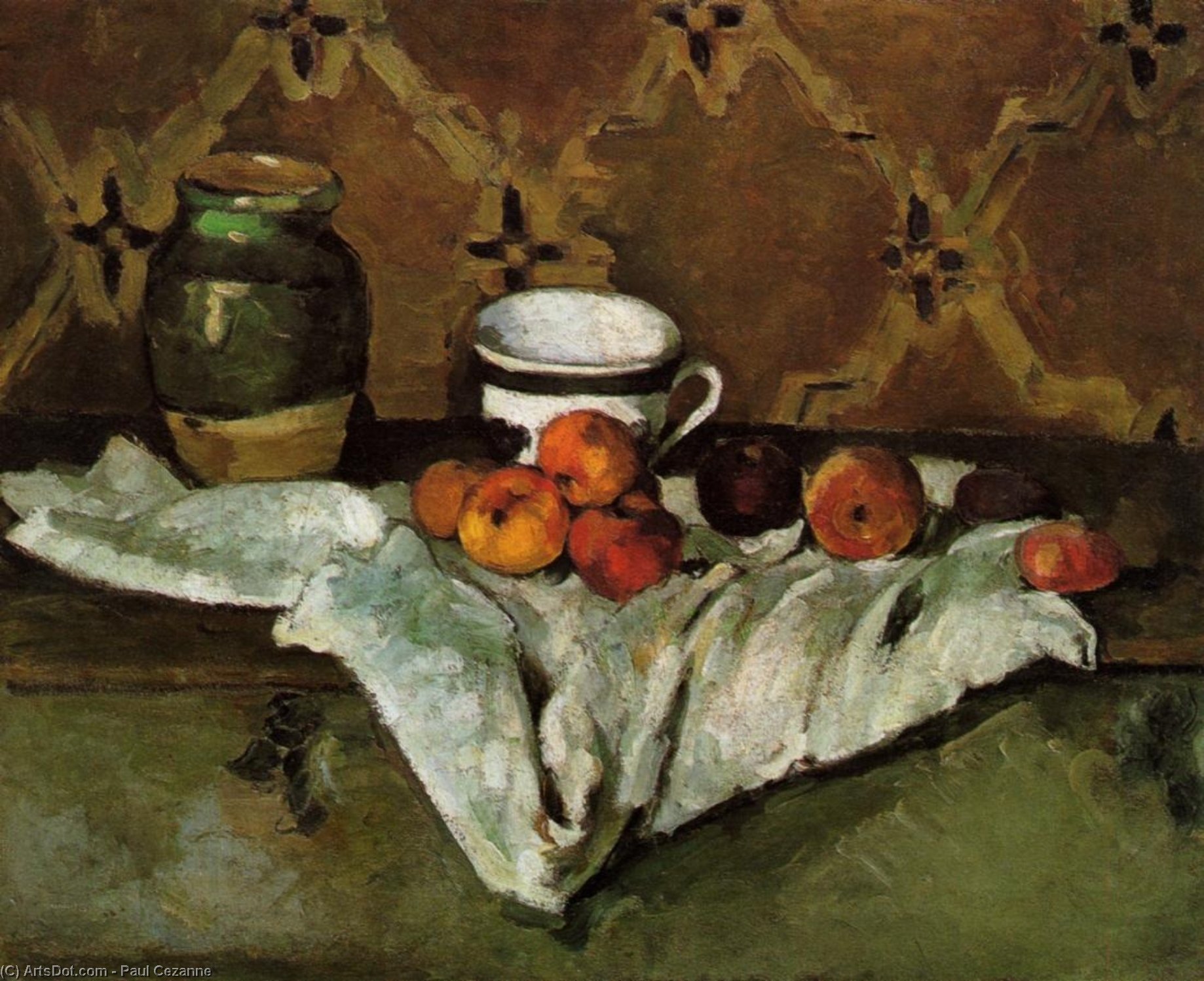
Still Life
Tamaño de la reproducción
Cézanne’s technique is instantly recognizable: he abandons traditional perspective, opting instead for flattened planes of color that overlap and intersect to create an illusion of depth. Unlike Impressionists who strive to capture light as it changes over time, Cézanne seeks to convey the underlying geometric forms of his subjects—the apple, the pears, the plums—revealing their essence rather than merely their appearance. This method isn’t accidental; Cézanne meticulously studied the work of Geuze and Maupassant, who had explored similar ideas about how to represent objects in a way that transcends mere visual perception.
Consider the way Cézanne renders the apple – it’s not a luminous sphere reflecting light; instead, it appears as a series of overlapping planes that suggest its three-dimensional form. This approach anticipates Cubism's fragmentation of objects into multiple viewpoints simultaneously.
The overall effect is one of quiet contemplation – Cézanne invites the viewer to engage with the painting on a deeper level, prompting reflection on themes of permanence and transformation. It’s a testament to his belief that art should strive for an enduring representation of reality beyond mere sensory experience.
Cézanne's work emerged during a period of artistic ferment, as Impressionism was gradually yielding to the revolutionary ideas of Cubism. Artists like Picasso and Braque were experimenting with new perspectives and geometric abstraction—influenced directly by Cézanne’s pioneering explorations of form and space. Cézanne’s insistence on simplifying forms and flattening planes paved the way for this groundbreaking movement.
Furthermore, Cézanne's unwavering dedication to his craft—spending countless hours studying and reworking his paintings—became an inspiration for subsequent generations of artists who sought to achieve similar levels of artistic rigor. His legacy continues to resonate today, reminding us that true innovation requires a willingness to challenge conventions and embrace new ways of seeing the world.
Cézanne's unwavering commitment to exploring fundamental questions about representation—how to depict reality without resorting to illusion—established him as an enduring icon of artistic creativity.


1839 - 1906 , Francia

Explore the transformative era of Post-Impressionism. Discover how masters like Van Gogh moved beyond light to embrace emotion, structure, and vibrant color, redefining modern art history through expressive brushwork and symbolic depth.


Manténgase al día con las últimas noticias de arte, ofertas exclusivas e ideas de decoración.
Cuéntanos sobre tu proyecto y nuestros expertos en arte te ofrecerán 3 sugerencias de obras personalizadas.
Dejamos que nosotros seleccionemos 3 opciones exclusivas para ti – ¡Gratis!


 Vista previa
 Compartir
 Compartir
 Ver detalles

 Descargar
 Ver similares
 Radiografía
 Presentación de diapositivas
 Leer más







 La opción de vidrio solo está disponible en tamaños inferiores a 110 cm.