Vende tu arte
Lista de deseos Carrito de compras Cart
x
Vista previaVista previa Vista previa en RAVista previa en RA Encargar reproducción pintada a mano Encargar reproducción pintada a manoComprar descarga Comprar descarga CompartirCompartir
Ver detallesVer detalles Añadir a favoritos Añadir a favoritos DescargarDescargar Ver similaresVer similares RadiografíaRadiografía Presentación de diapositivasPresentación de diapositivas

El Cosechero

René Magritte, maestro surrealista belga, presenta "El Cosechero" (1943): una obra emblemática que mezcla lo cotidiano con lo fantástico bajo un cielo estrellado. Descubre la poesía visual y el enigma en esta pintura inolvidable. #Magritte #Surrealismo

René Magritte (1898-1967) fue un pintor surrealista belga reconocido por sus pinturas provocadoras que desafían la realidad. Explore obras icónicas como 'Los Amantes' y su uso de objetos cotidianos en contextos inesperados. Descubra reproducciones en Most-Famous-Paintings.

Giclée / Impresión de arte

Impresiones giclée o en lienzo de calidad de museo con producción rápida y opciones de acabado flexibles. (Encargar reproducción pintada a mano Encargar reproducción pintada a manoComprar descarga Comprar descarga)

P118B $10
P118H $10
P118W $10
P438Z $10
P508JH $12
P508YH $12
P805H $10
P805Z $10
P919BZ $10
P919G $10
P919XJ $10
P959ZH $10
P968JZ $12
W106C $8
W218G $10
W218JH $8
W218Y $10
W307PJ $10
W316G $10
W316PJ $8
W316Y $10
W398PJ $8
W4111J $10
W500HY $15
W500JH $15
W692G $12
W849H $8
W940BG $15
W953PJ $8

Standard
custom
CM
INCH

Elija entre nuestros tamaños predefinidos que respetan las proporciones originales de la obra.

ancho
altura

Puede introducir sus propias dimensiones para adaptarse a un marco o espacio específico. Si el tamaño seleccionado no coincide con las proporciones de la imagen original, recortaremos la obra de arte o extenderemos la imagen con un borde con efecto espejo o de color sólido. Se enviará una maqueta digital para su aprobación antes de que comience la producción.
Tenga en cuenta que la vista previa en pantalla no refleja el recorte o la extensión real. Solo la maqueta mostrará con precisión la composición final.
Aunque existen tamaños personalizados, recomendamos seleccionar una dimensión de la lista predefinida para preservar las proporciones originales.

Envío a todo el mundo () en 2 semanas en lugar de las 4/5 semanas estándar. (18 agosto)

why_choose_icon
Envío exprés gratuito a todo el mundo
why_choose_icon
Lienzo de lino de alta calidad
why_choose_icon
Seguro de envío completo
why_choose_icon
Garantía de reembolso de aranceles aduaneros
why_choose_icon
Garantía de fidelidad cromática exacta
why_choose_icon
Política de devolución de 60 días (solo por defectos)
why_choose_icon
Garantía de devolución del 100% del dinero
why_choose_icon
Oferta por volumen

Precio total

$ 68

reproduction

El Cosechero

Giclée / Impresión de arte

Tamaño de la reproducción

-

Precio total

$ 68

Datos clave

  • Title: The Harvest
  • Medium: Oil on canvas
  • Notable elements or techniques: Color juxtaposition, draped figure
  • Location: Royal Museums of Fine Arts of Belgium
  • Subject or theme: Landscape, Nude Figure
  • Influences: Pierre-Auguste Renoir
  • Movement: Surrealism

Cuestionario de arte

Cada pregunta tiene una única respuesta correcta.

Pregunta 1:
What artistic movement is René Magritte’s ‘The Harvest’ primarily associated with?
Pregunta 2:
In what year was ‘The Harvest’ painted?
Pregunta 3:
What is a notable characteristic of Magritte's surrealist style evident in this painting?
Pregunta 4:
The nude figure in ‘The Harvest’ utilizes vibrant colors, including shades of blue and yellow. What is the primary purpose of this color palette?
Pregunta 5:
‘The Harvest’ belongs to Magritte's ‘Renoir Period.’ Why was this period significant in his artistic career?

Descripción de la pieza

The Harvest

René Magritte, one of the most influential Surrealist artists of the twentieth century, captivated audiences with his ability to blend the familiar with the extraordinary—a skill that continues to intrigue art enthusiasts today. Among his remarkable creations is The Harvest, painted in 1943 during his stay in Carcassonne, France. This artwork stands as a testament to Magritte’s distinctive vision and marks a pivotal moment within his artistic journey.

Artistic Context and Style

Magritte's oeuvre consistently challenged conventional perceptions of reality, presenting viewers with unsettling juxtapositions that demanded contemplation. In The Harvest, he skillfully employs vibrant colors—primarily blues and yellows—contrasting them in ways that defy logic. This stylistic choice is characteristic of Surrealism, a movement born from the desire to liberate thought from rational constraints and explore the subconscious mind. The painting’s surface texture contributes to its dreamlike quality, hinting at an underlying process beyond mere visual representation.

Composition and Symbolism

The composition of The Harvest is deliberately striking. A nude female figure dominates the scene, positioned against a vast expanse of sky and landscape—elements that amplify the painting’s sense of scale and isolation. Magritte’s use of color isn't accidental; it serves as a powerful tool for conveying emotion and symbolism. The blues and yellows adorning the woman’s body evoke feelings of serenity and melancholy simultaneously, mirroring the complexities inherent in human experience. Furthermore, the juxtaposition of the figure against the landscape symbolizes the relationship between humanity and nature—a recurring motif in Magritte's work that invites viewers to ponder existential questions.

Historical Significance

The Harvest belongs to Magritte’s “Renoir Period,” which spanned from 1943 to 1947. During this time, he consciously sought inspiration from Pierre-Auguste Renoir's Impressionistic style—a deliberate departure from the more abstract tendencies of his earlier Surrealist productions. This stylistic shift reflected Magritte’s desire to connect with a broader audience and demonstrate that Surrealism could embrace accessible forms of expression without sacrificing intellectual depth. The painting’s appearance coincided with the Second World War, adding another layer of significance to its exploration of themes like vulnerability and resilience.

Exhibition and Legacy

The Harvest is currently housed in the Royal Museums of Fine Arts of Belgium in Brussels—a testament to its enduring artistic merit. It has graced numerous exhibitions showcasing Magritte’s oeuvre, including the 2021 exhibition at Musée d'Orsay and Musée de l'Orangerie titled “Magritte / Renoir. Surrealism in full sunlight.” This exhibition underscored Magritte’s influence on subsequent generations of artists and solidified his place as one of the most important figures in twentieth-century art history. For those seeking to delve deeper into Magritte’s artistic vision, The Harvest remains a captivating subject for contemplation and study.

Biografía del artista

vida temprana y comienzos artísticos

René François Ghislain Magritte, un reconocido artista surrealista belga, nació el 21 de noviembre de 1898 en Lessines, provincia de Hainaut, Bélgica. Su vida temprana permanece algo misteriosa, con poco conocimiento sobre su infancia. Sin embargo, está documentado que comenzó clases de dibujo en 1910.

evolución artística e influencias

El estilo artístico de Magritte evolucionó significativamente a lo largo de los años, influenciado por diversos movimientos como el impresionismo, el futurismo y el cubismo. Sus primeras pinturas, datadas alrededor de 1915, eran de estilo impresionista. De 1916 a 1918, estudió en la Academia Real de Bellas Artes de Bruselas, bajo Constant Montald.

período surrealista y obras notables

En 1926, Magritte produjo su primer cuadro surrealista, El jinete perdido (Le jockey perdu), marcando el comienzo de su asociación con el movimiento surrealista. Su obra se caracteriza por imágenes provocadoras, a menudo representando objetos ordinarios en contextos inusuales, desafiando las percepciones de la realidad de los observadores.
  • Les amants (1927-1928), una serie de pinturas que presentan a personas con tela cubriendo sus rostros, se cree que fue inspirada por la historia de la muerte de su madre.
  • Los amantes, otra pieza icónica, presenta a una pareja besándose con sus rostros cubiertos por telas blancas, invitando al espectador a reflexionar sobre el amor y la identidad. (disponible para su compra como una reproducción de pintura al óleo hecha a mano o impresión en lienzo en Most-Famous-Paintings.com)

vida tardía y legado

La obra de Magritte fue exhibida en los Estados Unidos en 1936 y nuevamente en dos exposiciones retrospectivas, una en el Museo de Arte Moderno en 1965 y la otra en el Metropolitan Museum of Art en 1992. Se mantuvo comprometido con la izquierda política pero abogó por la autonomía artística. Museos notables que exhiben la obra de Magritte:

Conclusión

El legado de René Magritte como maestro surrealista perdura, con sus imágenes provocadoras que continúan inspirando e intrigando. Su obra, caracterizada por su mezcla única del ordinario y lo inesperado, sigue siendo un pilar fundamental del arte surrealista. Más información sobre René Magritte
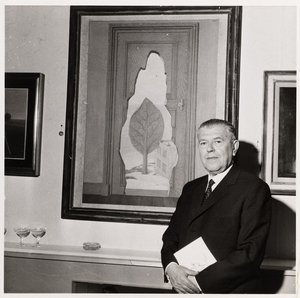
René Magritte

René Magritte

1898 - 1967 , bélgica

Datos clave

  • Artistas Que Influyeron:
    • Impresionismo
    • Futurismo
    • Cubismo
  • Estilo Artístico: Surrealismo
  • Fecha De Muerte: 15 de agosto de 1967
  • Fecha De Nacimiento: 21 de noviembre de 1898
  • Influenciado A Artistas:
    • Pop Art
    • Minimalismo
    • Arte conceptual
  • Lugar De Nacimiento: Lessines, Bélgica
  • Nacionalidad: Belga
  • Nombre Completo: René François Ghislain Magritte
  • Obras Notables:
    • Le Jockey Perdu
    • Les Amants
    • La traición de las imágenes
    • Tiempo transcurrido
    • La condición humana
Explore obras de arte organizadas por temas, estilos y características.