x


 Encargar reproducción Comprar imagen en alta resolución
 Enviar
 Detalles
 Añadir a favoritos
 Descargar
 Similares
 Radiografía
 Presentación de diapositivas
Impresión giclée o en lienzo de calidad de museo con producción rápida y opciones de acabado flexibles.





























Elija entre nuestros tamaños predefinidos que respetan las proporciones originales de la obra.

Puede introducir sus propias dimensiones para adaptarse a un marco o espacio específico. Si el tamaño seleccionado no coincide con las proporciones de la imagen original, recortaremos la obra de arte o extenderemos la imagen con un borde con efecto espejo o de color sólido. Se enviará una maqueta digital para su aprobación antes de que comience la producción.
Tenga en cuenta que la vista previa en pantalla no refleja el recorte o la extensión real. Solo la maqueta mostrará con precisión la composición final.
Aunque existen tamaños personalizados, recomendamos seleccionar una dimensión de la lista predefinida para preservar las proporciones originales.
Entrega mundial () en 2 semanas en lugar de las 4/5 semanas estándar. (22 julio)


El eclipse de las manzanas
Tamaño de la reproducción
René Magritte’s “Waltz Eclipse,” painted in 1958, isn't merely a depiction of two apples suspended in an ethereal space; it’s a deliberate provocation—a masterful exercise in Surrealist philosophy designed to unsettle the viewer and invite contemplation about the nature of reality itself. Created during Magritte’s prolific Vache Period, this artwork embodies the core tenets of Surrealism: juxtaposing incongruous elements to expose hidden contradictions within our everyday experience.
The central figures—two green apples adorned with masks—immediately capture attention. Magritte’s choice isn't accidental; apples have long been symbols of temptation, knowledge, and innocence, while masks represent concealment and disguise. Their placement side-by-side suggests a duality – the visible versus the hidden, the conscious versus the unconscious – mirroring the Surrealist preoccupation with accessing subconscious desires and anxieties. The masks’ blank faces amplify this sense of mystery, forcing us to confront what lies beneath the surface of appearances.
Dominating the upper right corner is a clock face—also suspended in air—a motif recurrent throughout Magritte’s oeuvre. Like the apples, it defies logic and challenges our understanding of time as linear progression. This element reinforces the Surrealist critique of rational thought, suggesting that time itself is subjective and malleable, much like perception. The clock serves as a visual reminder that what we perceive isn't necessarily what *is*, prompting viewers to question accepted truths.
Executed in gouache on paper, “Waltz Eclipse” showcases Magritte’s meticulous attention to detail within an overall atmospheric haze. Gouache—a pigment binder that creates opaque watercolor effects—allowed Magritte to achieve a luminous quality while maintaining precise tonal control. The muted palette contributes to the painting's dreamlike atmosphere, enhancing its emotional impact and immersing the viewer in a realm of subconscious imagery.
"Waltz Eclipse" stands as a testament to Magritte’s enduring legacy as one of the most influential Surrealist artists. It exemplifies his ability to transform familiar objects into symbols laden with philosophical significance, inviting viewers to engage in an intellectual dialogue about perception and representation. Its quiet grandeur—combined with its unsettling ambiguity—continues to inspire admiration and discussion decades after its creation, cementing its place among the masterpieces of 20th-century art.

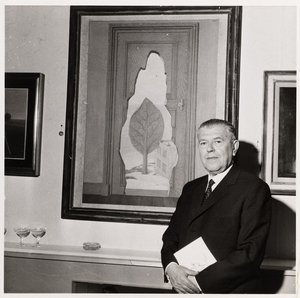
1898 - 1967 , bélgica
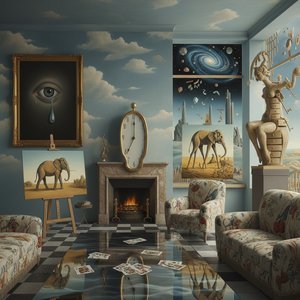
Descubre las 10 obras maestras del Surrealismo con Dalí, Magritte y Miró. Explora la historia, el simbolismo y la técnica de estos íconos del arte moderno. Encuentra reproducciones de alta calidad para tu hogar en .
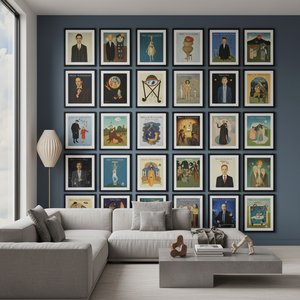
Descubre las 25 obras maestras de René Magritte, el rey del surrealismo. Explora su arte moderno, significado oculto y técnica única. Encuentra reproducciones de alta calidad e inspira tu hogar con Most-Famous-Paintings.com.

Descubre los 10 cuadros surrealistas más influyentes de artistas como Dalí y Magritte. Explora la historia, el simbolismo y las técnicas del movimiento surrealista. Encuentra reproducciones de arte de museo en Most-Famous-Paintings.com.
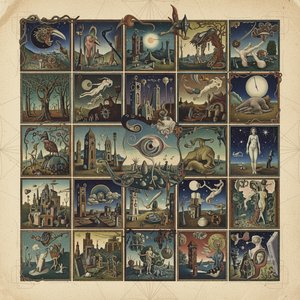
Descubre las 25 obras maestras de Max Ernst, el rey del surrealismo. Explora su arte onírico, técnicas innovadoras y simbolismo profundo. Reproducciones de alta calidad para decorar tu hogar con estilo en Most-Famous-Paintings.com

Descubre los 10 lienzos surrealistas más influyentes de artistas como Dalí y Magritte. Explora la historia, el simbolismo y las técnicas del movimiento surrealista. Encuentra reproducciones de arte de museo en Most-Famous-Paintings.com.


Manténgase al día con las últimas noticias de arte, ofertas exclusivas e ideas de decoración.
Cuéntanos sobre tu proyecto y nuestros expertos en arte te ofrecerán 3 sugerencias de obras personalizadas.
Permítenos seleccionar 3 opciones solo para ti – ¡Gratis!


 Compartir


 Ver más







 La opción de vidrio solo está disponible en tamaños inferiores a 110 cm.