Vende tu arte
Lista de deseos Carrito de compras Cart
x
Vista previaVista previa Vista previa en RAVista previa en RA Encargar reproducción pintada a mano Encargar reproducción pintada a manoComprar descarga Comprar descarga CompartirCompartir
Ver detallesVer detalles Añadir a favoritos Añadir a favoritos DescargarDescargar Ver similaresVer similares RadiografíaRadiografía Presentación de diapositivasPresentación de diapositivas

The Empty Mask (Le masque vide)

René Magritte’s ‘The Empty Mask’ (1928) is a surreal masterpiece depicting a mysterious house and floating clouds, embodying the artist's exploration of perception and hidden realities. A captivating Most-Famous-Paintings reproduction.

René Magritte (1898-1967) fue un pintor surrealista belga reconocido por sus pinturas provocadoras que desafían la realidad. Explore obras icónicas como 'Los Amantes' y su uso de objetos cotidianos en contextos inesperados. Descubra reproducciones en Most-Famous-Paintings.

Giclée / Impresión de arte

Impresiones giclée o en lienzo de calidad de museo con producción rápida y opciones de acabado flexibles. (Encargar reproducción pintada a mano Encargar reproducción pintada a manoComprar descarga Comprar descarga)

P118B $10
P118H $10
P118W $10
P438Z $10
P508JH $12
P508YH $12
P805H $10
P805Z $10
P919BZ $10
P919G $10
P919XJ $10
P959ZH $10
P968JZ $12
W106C $8
W218G $10
W218JH $8
W218Y $10
W307PJ $10
W316G $10
W316PJ $8
W316Y $10
W398PJ $8
W4111J $10
W500HY $15
W500JH $15
W692G $12
W849H $8
W940BG $15
W953PJ $8

Standard
custom
CM
INCH

Elija entre nuestros tamaños predefinidos que respetan las proporciones originales de la obra.

ancho
altura

Puede introducir sus propias dimensiones para adaptarse a un marco o espacio específico. Si el tamaño seleccionado no coincide con las proporciones de la imagen original, recortaremos la obra de arte o extenderemos la imagen con un borde con efecto espejo o de color sólido. Se enviará una maqueta digital para su aprobación antes de que comience la producción.
Tenga en cuenta que la vista previa en pantalla no refleja el recorte o la extensión real. Solo la maqueta mostrará con precisión la composición final.
Aunque existen tamaños personalizados, recomendamos seleccionar una dimensión de la lista predefinida para preservar las proporciones originales.

Envío a todo el mundo () en 2 semanas en lugar de las 4/5 semanas estándar. (18 agosto)

why_choose_icon
Envío exprés gratuito a todo el mundo
why_choose_icon
Lienzo de lino de alta calidad
why_choose_icon
Seguro de envío completo
why_choose_icon
Garantía de reembolso de aranceles aduaneros
why_choose_icon
Garantía de fidelidad cromática exacta
why_choose_icon
Política de devolución de 60 días (solo por defectos)
why_choose_icon
Garantía de devolución del 100% del dinero
why_choose_icon
Oferta por volumen

Precio total

$ 68

reproduction

The Empty Mask (Le masque vide)

Giclée / Impresión de arte

Tamaño de la reproducción

-

Precio total

$ 68

Datos clave

  • Year: 1928
  • Location: National Museum Wales
  • Artistic style: Dreamlike, enigmatic
  • Artist: René Magritte
  • Notable elements: Irregular frame, sky,
  • Medium: Oil on canvas
  • Influences:
    • Loss
    • Unseen

Cuestionario de arte

Cada pregunta tiene una única respuesta correcta.

Pregunta 1:
What is the primary subject depicted in René Magritte’s ‘The Empty Mask’?
Pregunta 2:
According to René Magritte’s essay ‘Words and Images,’ what does the image in ‘The Empty Mask’ suggest?
Pregunta 3:
The frame surrounding the depicted images in ‘The Empty Mask’ is described as:
Pregunta 4:
In what year was ‘The Empty Mask’ painted?
Pregunta 5:
Which of the following best describes René Magritte’s artistic style?

Descripción de la pieza

The Enigmatic Veil: Unpacking René Magritte’s “The Empty Mask”

René Magritte's "The Empty Mask" (Le masque vide), painted in 1928, isn’t merely a depiction of a peculiar scene; it’s an invitation to question the very nature of perception and representation – a cornerstone of the Surrealist movement. This captivating work, currently residing within the National Museum Cardiff in Wales, immediately draws the viewer into its dreamlike atmosphere, prompting a lingering sense of unease and intellectual curiosity. The painting presents a seemingly simple composition: a small, boxy house constructed from dark wood, nestled against a backdrop of a flickering fire, with four ambiguous clouds hovering above. Yet, within this apparent stillness lies a complex web of symbolic layers that Magritte meticulously crafted to challenge our assumptions about reality.

A Fragmented Reality: Style and Technique

Magritte’s style in “The Empty Mask” is quintessential Surrealism – a deliberate disruption of the expected. He employs a precise, almost photographic realism, rendering each element with meticulous detail, yet simultaneously placing them within an illogical arrangement. The house itself, resembling a miniature wooden box or perhaps a three-sided structure, feels strangely detached from its surroundings. This juxtaposition of realistic depiction and unsettling spatial relationships is characteristic of Magritte’s approach. He utilized oil on canvas, building up layers of paint to achieve the smooth, matte finish that defines much of his work. The muted color palette – primarily dark browns, grays, and blues – contributes to the painting's somber mood, further emphasizing the sense of mystery and isolation. Notably, the use of a freestanding frame around the scene is crucial; it isolates the elements, forcing the viewer to confront them as independent entities rather than part of a cohesive whole.

Symbolism and the Unseen: Layers of Meaning

The symbolism within “The Empty Mask” is deliberately open to interpretation, reflecting Magritte’s core Surrealist philosophy. The empty mask itself is undoubtedly central – it represents concealment, anonymity, and perhaps even the hidden self. It suggests a barrier between the viewer and what lies beneath, hinting at something unseen or unspoken. The house, with its stark simplicity, could symbolize domesticity, but also confinement and a lack of connection to the outside world. The fire, burning in the background, introduces an element of danger and destruction, potentially representing repressed emotions or unresolved conflicts. Crucially, Magritte’s own essay, “Words and Images,” which accompanied this painting's initial exhibition, suggested that each image within the frame "suggests that there are others behind it." This concept underscores the idea that reality is not a fixed entity but rather a series of layered perceptions, constantly shifting and revealing new possibilities. The clouds above add to this sense of ambiguity, their formless shapes mirroring the elusive nature of truth itself.

A Legacy of Questioning: Context within Surrealism

“The Empty Mask” emerged during a period of intense artistic experimentation following World War I. Surrealist artists sought to liberate the unconscious mind and challenge conventional modes of thought, rejecting rationalism in favor of dreams, fantasies, and irrationality. Magritte’s work aligns perfectly with this movement's core tenets. He wasn’t interested in simply depicting reality; he aimed to expose its constructed nature, revealing the mechanisms by which we perceive and interpret the world around us. His exploration of visual paradoxes – objects placed in illogical contexts, familiar forms rendered unfamiliar – directly challenged viewers to reconsider their assumptions about what is “real.” The painting's influence can be seen in subsequent Surrealist artists and continues to resonate today as a powerful meditation on perception, representation, and the mysteries that lie beneath the surface.

Bringing "The Empty Mask" Home: Reproduction Options

Most-Famous-Paintings offers meticulously crafted hand-painted reproductions of René Magritte’s “The Empty Mask,” allowing you to bring this iconic artwork into your own space. Our skilled artists replicate Magritte's precise technique and evocative atmosphere, ensuring a faithful representation of the original while capturing its unique emotional depth. Choose from a range of sizes and canvas materials to perfectly complement your décor. Whether you’re an art collector, interior designer, or simply someone captivated by Surrealism’s enigmatic beauty, a Most-Famous-Paintings reproduction of “The Empty Mask” is a stunning addition to any collection – a constant reminder to question, explore, and embrace the power of the unseen.

Biografía del artista

vida temprana y comienzos artísticos

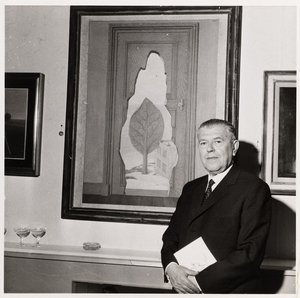
René François Ghislain Magritte, un reconocido artista surrealista belga, nació el 21 de noviembre de 1898 en Lessines, provincia de Hainaut, Bélgica. Su vida temprana permanece algo misteriosa, con poco conocimiento sobre su infancia. Sin embargo, está documentado que comenzó clases de dibujo en 1910.

evolución artística e influencias

El estilo artístico de Magritte evolucionó significativamente a lo largo de los años, influenciado por diversos movimientos como el impresionismo, el futurismo y el cubismo. Sus primeras pinturas, datadas alrededor de 1915, eran de estilo impresionista. De 1916 a 1918, estudió en la Academia Real de Bellas Artes de Bruselas, bajo Constant Montald.

período surrealista y obras notables

En 1926, Magritte produjo su primer cuadro surrealista, El jinete perdido (Le jockey perdu), marcando el comienzo de su asociación con el movimiento surrealista. Su obra se caracteriza por imágenes provocadoras, a menudo representando objetos ordinarios en contextos inusuales, desafiando las percepciones de la realidad de los observadores.
  • Les amants (1927-1928), una serie de pinturas que presentan a personas con tela cubriendo sus rostros, se cree que fue inspirada por la historia de la muerte de su madre.
  • Los amantes, otra pieza icónica, presenta a una pareja besándose con sus rostros cubiertos por telas blancas, invitando al espectador a reflexionar sobre el amor y la identidad. (disponible para su compra como una reproducción de pintura al óleo hecha a mano o impresión en lienzo en Most-Famous-Paintings.com)

vida tardía y legado

La obra de Magritte fue exhibida en los Estados Unidos en 1936 y nuevamente en dos exposiciones retrospectivas, una en el Museo de Arte Moderno en 1965 y la otra en el Metropolitan Museum of Art en 1992. Se mantuvo comprometido con la izquierda política pero abogó por la autonomía artística. Museos notables que exhiben la obra de Magritte:

Conclusión

El legado de René Magritte como maestro surrealista perdura, con sus imágenes provocadoras que continúan inspirando e intrigando. Su obra, caracterizada por su mezcla única del ordinario y lo inesperado, sigue siendo un pilar fundamental del arte surrealista. Más información sobre René Magritte
René Magritte

René Magritte

1898 - 1967 , bélgica

Datos clave

  • Artistas Que Influyeron:
    • Impresionismo
    • Futurismo
    • Cubismo
  • Estilo Artístico: Surrealismo
  • Fecha De Muerte: 15 de agosto de 1967
  • Fecha De Nacimiento: 21 de noviembre de 1898
  • Influenciado A Artistas:
    • Pop Art
    • Minimalismo
    • Arte conceptual
  • Lugar De Nacimiento: Lessines, Bélgica
  • Nacionalidad: Belga
  • Nombre Completo: René François Ghislain Magritte
  • Obras Notables:
    • Le Jockey Perdu
    • Les Amants
    • La traición de las imágenes
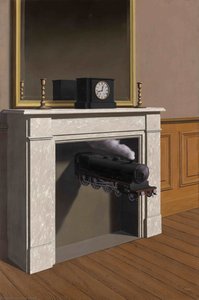
    • Tiempo transcurrido
    • La condición humana
Explore obras de arte organizadas por temas, estilos y características.