


x


 Encargar reproducción Comprar imagen en alta resolución
 Enviar
 Detalles
 Añadir a favoritos
 Descargar
 Similares
 Radiografía
 Presentación de diapositivas
 Oil On CanvasWallArtHudson River School
 1852
1852 277.0 x 232.0 cm
 Taft Museum of Art
Impresión giclée o en lienzo de calidad de museo con producción rápida y opciones de acabado flexibles.





























Elija entre nuestros tamaños predefinidos que respetan las proporciones originales de la obra.

Puede introducir sus propias dimensiones para adaptarse a un marco o espacio específico. Si el tamaño seleccionado no coincide con las proporciones de la imagen original, recortaremos la obra de arte o extenderemos la imagen con un borde con efecto espejo o de color sólido. Se enviará una maqueta digital para su aprobación antes de que comience la producción.
Tenga en cuenta que la vista previa en pantalla no refleja el recorte o la extensión real. Solo la maqueta mostrará con precisión la composición final.
Aunque existen tamaños personalizados, recomendamos seleccionar una dimensión de la lista predefinida para preservar las proporciones originales.
Entrega mundial () en 2 semanas en lugar de las 4/5 semanas estándar. (23 julio)


Landscape Mural
Tamaño de la reproducción
Robert Seldon Duncanson's "Landscape Mural," painted in 1852, isn’t merely a depiction of a river valley; it’s a carefully constructed meditation on nature, memory, and the burgeoning American identity. This monumental work, now residing within the Taft Museum of Art in Cincinnati, Ohio, stands as a pivotal piece of the Hudson River School—a movement that sought to capture the sublime beauty of America's landscapes with scientific precision and Romantic fervor. Duncanson, an African-American artist navigating a deeply segregated society, imbued this painting with layers of meaning, subtly reflecting on themes of race, spirituality, and the relationship between humanity and the natural world.
The scene unfolds beneath a brooding, yet ultimately benevolent, sky – a classic Hudson River School motif. A gently flowing river dominates the composition, its surface mirroring the clouds above in a delicate dance of reflection. The foreground is anchored by a cluster of trees, their branches reaching upwards like supplicating arms, while a distant bridge arches gracefully across the valley, hinting at civilization’s presence without overwhelming the scene's tranquility. Notice the meticulous detail with which Duncanson renders each element – the texture of bark, the ripples in the water, the subtle gradations of color in the foliage. This commitment to realism was paramount for the Hudson River School artists, who sought to elevate landscape painting to a level of scientific accuracy and artistic merit.
Duncanson employed the traditional technique of *fresco secco*, applying his pigments directly onto dry plaster. This method, favored by Renaissance masters, demanded both skill and speed – the artist had to work quickly before the plaster dried and the colors set. The resulting surface is remarkably durable, allowing the painting to retain its vibrancy across centuries. The color palette is predominantly cool—greens, blues, and grays—creating a sense of atmospheric depth and distance. Duncanson masterfully utilizes *chiaroscuro*, the dramatic contrast between light and shadow, to sculpt the forms and heighten the emotional impact of the scene. The subtle variations in tone suggest a soft, diffused light, characteristic of an overcast day – a common occurrence in the Ohio Valley during that period.
Beyond its aesthetic beauty, “Landscape Mural” carries significant historical weight. Duncanson’s work emerged during a time of profound social change in America—the abolitionist movement was gaining momentum, and discussions about race and equality were becoming increasingly urgent. While the painting itself doesn't explicitly address these issues, scholars have interpreted it as a subtle commentary on the African-American experience. The river, often associated with journeys and transitions, can be seen as a metaphor for the arduous path to freedom and self-determination. The bridge, representing connection and progress, symbolizes the hope for a more just and equitable future. Furthermore, Duncanson’s decision to depict a serene landscape—a departure from the often-grim realities of life in 19th-century America—suggests a yearning for spiritual renewal and harmony with nature.
Looking at “Landscape Mural” today, one is immediately struck by its profound sense of tranquility. The painting invites the viewer to step into the scene, to breathe in the fresh air, and to lose oneself in the beauty of the natural world. It’s a testament to Duncanson's skill as an artist—his ability to capture not just the appearance of a landscape, but also its emotional essence. The painting’s enduring appeal lies in its capacity to evoke feelings of peace, contemplation, and connection to something larger than oneself. It remains a powerful reminder of the transformative power of art and the importance of preserving our natural heritage.


1821 - 1872 , Estados Unidos de América

Descubre los 10 lienzos más emblemáticos de la Escuela del Río Hudson. Explora las obras maestras de Thomas Cole, Church y Bierstadt que capturan la belleza del paisaje americano. Encuentra reproducciones de arte exclusivas en Most-Famous-Paintings.com.

Descubre la Escuela del Río Hudson: un movimiento artístico clave en la historia de la pintura estadounidense. Explora su estética romántica, sus artistas más destacados y el concepto del sublime paisaje americano.

Discover Robert Seldon Duncanson, the first internationally acclaimed African American landscape artist. Explore his connection to the Hudson River School, abolitionism, and enduring legacy through serene vistas & powerful symbolism.

Explore the captivating world of Luminism & the Hudson River School with our expert analysis. Discover the history, artists, and enduring beauty of 19th-century American landscape painting. Find museum-quality reproductions at Most-Famous-Paintings.
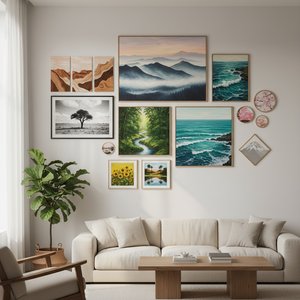
Descubre los 10 paisajes más emblemáticos de la historia del arte, desde Monet a Van Gogh. Explora su significado, técnica y belleza atemporal. Encuentra reproducciones de alta calidad e inspira tu hogar con Most-Famous-Paintings.com.


Manténgase al día con las últimas noticias de arte, ofertas exclusivas e ideas de decoración.
Cuéntanos sobre tu proyecto y nuestros expertos en arte te ofrecerán 3 sugerencias de obras personalizadas.
Permítenos seleccionar 3 opciones solo para ti – ¡Gratis!


 Compartir

 Ver más







 La opción de vidrio solo está disponible en tamaños inferiores a 110 cm.


