


x

Impresiones giclée o en lienzo de calidad de museo con producción rápida y opciones de acabado flexibles. ( Comprar pintura hecha a mano Comprar imagen)





























Elija entre nuestros tamaños predefinidos que respetan las proporciones originales de la obra.

Puede introducir sus propias dimensiones para adaptarse a un marco o espacio específico. Si el tamaño seleccionado no coincide con las proporciones de la imagen original, recortaremos la obra de arte o extenderemos la imagen con un borde con efecto espejo o de color sólido. Se enviará una maqueta digital para su aprobación antes de que comience la producción.
Tenga en cuenta que la vista previa en pantalla no refleja el recorte o la extensión real. Solo la maqueta mostrará con precisión la composición final.
Aunque existen tamaños personalizados, recomendamos seleccionar una dimensión de la lista predefinida para preservar las proporciones originales.
Envío a todo el mundo () en 2 semanas en lugar de las 4/5 semanas estándar. (24 agosto)


San Tomás de Aquino
Dimensiones de la reproducción
Sandro Botticelli's “St. Thomas Aquinas” is more than just a portrait; it’s a carefully constructed meditation on faith, reason, and the human intellect. Painted around 1480-85 during the height of the Florentine Renaissance, this captivating work offers a rare glimpse into the mind of one of history's most influential theologians. The painting immediately draws the viewer in with its intimate composition – a close-up study of a bearded man, rendered with Botticelli’s signature grace and attention to detail. He is presented not as a distant figure of religious authority, but as an approachable scholar, engaged in contemplation within a space that subtly speaks to his intellectual pursuits.
Botticelli's mastery lies in his ability to imbue seemingly simple subjects with profound symbolic weight. The subject himself, St. Thomas Aquinas (1225-1274), was a Dominican friar and philosopher whose synthesis of Aristotelian philosophy and Christian theology profoundly shaped Western thought. Here, Botticelli doesn’t depict Aquinas in grand ecclesiastical robes; instead, he presents him as a man of learning, holding a quill pen – a symbol of writing and the dissemination of knowledge – alongside an open book. The inclusion of this small container, likely containing ink, further emphasizes his role as a scholar dedicated to preserving and expanding upon established wisdom.
Examining the painting’s technique reveals Botticelli's deep understanding of Renaissance artistic conventions. The composition follows a classic pyramidal structure, providing stability and visual harmony. The lighting, originating from an unseen source above and slightly to the side, creates dramatic chiaroscuro – strong contrasts between light and shadow – that sculpts the subject’s face and robes with remarkable realism. Note the deliberate roughness of the brushwork, particularly in the depiction of skin and fabric; this impasto technique adds texture and depth, grounding the image in a tangible reality.
Botticelli's use of color is equally significant. The palette is dominated by rich browns, golds, reds, and blacks – colors associated with piety, wisdom, and the authority of the Church. The golden halo encircling Aquinas’ head serves as a potent symbol of his holiness and divine connection, while the dark background effectively isolates the figure, directing the viewer's attention to his contemplative expression.
To fully appreciate “St. Thomas Aquinas,” it’s essential to consider Botticelli’s place within the broader context of the Florentine Renaissance. He began his career as a goldsmith's assistant, developing a meticulous eye for detail and an appreciation for craftsmanship – qualities that would later inform his painting style. His early training under Fra Filippo Lippi, a leading painter of the time, provided him with invaluable experience in mastering the techniques of oil painting on canvas.
Botticelli’s artistic style evolved significantly throughout his career. Initially influenced by the Gothic tradition, he gradually embraced the principles of linear perspective and classical ideals that characterized the High Renaissance. “St. Thomas Aquinas” represents a transitional phase in his work, blending elements of both styles while retaining his distinctive sense of elegance and grace. The painting’s subject matter – religious figures and mythological scenes – reflects Botticelli's patronage by powerful families like the Medici, who commissioned works that celebrated their wealth and status.
“St. Thomas Aquinas” is a testament to Botticelli’s artistic skill and his ability to capture the essence of human intellect and faith. The painting evokes a sense of solemnity, piety, and wisdom – qualities that continue to resonate with viewers today. It's not merely a portrait; it’s an invitation to contemplate the enduring legacy of St. Thomas Aquinas and the power of knowledge to illuminate the human spirit. Reproductions of this iconic work offer a beautiful way to bring this profound image into your home or office, serving as a constant reminder of the pursuit of wisdom and understanding.

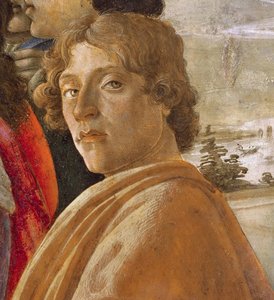
1445 - 1510 , Italia

Explore the profound history and technical brilliance of oil on panel painting. From Renaissance masters to modern techniques, discover why this rigid support offers unparalleled precision and permanence for fine art lovers and collectors.


Manténgase al día con las últimas noticias de arte, ofertas exclusivas e ideas de decoración.
Cuéntanos sobre tu proyecto y nuestros expertos en arte te ofrecerán 3 sugerencias de obras personalizadas.
Permítenos seleccionar 3 opciones exclusivas para ti – ¡Gratis!


 Ver en contexto
 Enviar
 Compartir
 Detalles

 Descargar
 Similares
 Radiografía
 Presentación de diapositivas

 Ver más







 La opción de vidrio solo está disponible en tamaños inferiores a 110 cm.


