Vende tu arte
Lista de deseos Carrito de compras Cart
Vista previaVista previa Vista previa ARVista previa AR Cambiar a pintura hecha a mano Cambiar a pintura hecha a manoCambiar a imagen Cambiar a imagen CompartirCompartir
Ver detallesVer detalles Añadir a favoritos Añadir a favoritos DescargarDescargar Ver similaresVer similares RadiografíaRadiografía Presentación automáticaPresentación automática

St. Jerome

Sandro Botticelli's 'St. Jerome' depicts the saint contemplating mortality with haunting realism. Explore themes of faith, repentance, and the human condition in this iconic Renaissance masterpiece.

Explore la cautivadora obra de arte de Sandro Botticelli (1445-1510), un maestro de la pintura del Renacimiento Temprano. Conocido por su elegante linealidad, obras icónicas como 'El Nacimiento de Venus' & 'La Primavera', y por conectar los estilos gótico y renacentista. ¡Descubre su legado!

Giclée / Impresión de arte

Impresiones giclée o en lienzo de calidad de museo con producción rápida y opciones de acabado flexibles. (Cambiar a pintura hecha a mano Cambiar a pintura hecha a manoCambiar a imagen Cambiar a imagen)

P118B $10
P118H $10
P118W $10
P438Z $10
P508JH $12
P508YH $12
P805H $10
P805Z $10
P919BZ $10
P919G $10
P919XJ $10
P959ZH $10
P968JZ $12
W106C $8
W218G $10
W218JH $8
W218Y $10
W307PJ $10
W316G $10
W316PJ $8
W316Y $10
W398PJ $8
W4111J $10
W500HY $15
W500JH $15
W692G $12
W849H $8
W940BG $15
W953PJ $8

Standard
custom
CM
INCH

Elija entre nuestros tamaños predefinidos que respetan las proporciones originales de la obra.

ancho
altura

Puede introducir sus propias dimensiones para adaptarse a un marco o espacio específico. Si el tamaño seleccionado no coincide con las proporciones de la imagen original, recortaremos la obra de arte o extenderemos la imagen con un borde con efecto espejo o de color sólido. Se enviará una maqueta digital para su aprobación antes de que comience la producción.
Tenga en cuenta que la vista previa en pantalla no refleja el recorte o la extensión real. Solo la maqueta mostrará con precisión la composición final.
Aunque existen tamaños personalizados, recomendamos seleccionar una dimensión de la lista predefinida para preservar las proporciones originales.

Envío a todo el mundo () en 2 semanas en lugar de las 4/5 semanas estándar. (31 julio)

why_choose_icon
Envío exprés gratuito a todo el mundo
why_choose_icon
Lienzo de lino de alta calidad
why_choose_icon
Seguro de envío completo
why_choose_icon
Garantía de reembolso de aranceles aduaneros
why_choose_icon
Garantía de fidelidad cromática exacta
why_choose_icon
Política de devolución de 60 días (solo por defectos)
why_choose_icon
Garantía de devolución del 100% del dinero
why_choose_icon
Oferta por volumen

Precio total

$ 68

reproduction

St. Jerome

Giclée / Impresión de arte

Tamaño de la reproducción

-

Precio total

$ 68

Datos clave

  • Artist: Sandro Botticelli
  • Location: State Hermitage Museum
  • Artistic style: Elegant; Nervous line
  • Movement: Early Renaissance
  • Notable elements or techniques: Stylized landscape; Penitence gesture
  • Title: St Jerome
  • Subject or theme: Religious Lamentation; Saint Jerome's devotion

Cuestionario de arte

Cada pregunta tiene una única respuesta correcta.

Pregunta 1:
What is Sandro Botticelli primarily known for?
Pregunta 2:
The skull held by Saint Jerome symbolizes:
Pregunta 3:
During Botticelli's artistic career, he was heavily influenced by:
Pregunta 4:
What is the dominant mood conveyed in "St Jerome"?
Pregunta 5:
Where is Botticelli’s “St Jerome” currently housed?

Detalles de la pieza

Sandro Botticelli’s St. Jerome: A Meditation on Faith and Mortality

Botticelli's "St. Jerome" stands as an emblem of the Florentine Renaissance, embodying its humanist ideals alongside profound spiritual contemplation. Painted between 1498 and 1505 during Botticelli’s mature artistic period—a time deeply influenced by Girolamo Savonarola’s fervent sermons advocating moral reform—this painting transcends mere depiction; it invites viewers into a dialogue with themes of asceticism, repentance, and the inescapable reality of death.

Subject Matter and Composition

The artwork portrays Saint Jerome, revered as the translator of the Bible into Latin and a champion of monastic piety, in a strikingly austere setting. He is depicted seated upon a rocky outcrop—a deliberate choice reflecting the desolate landscape favored by contemplative saints—holding a skull aloft in his left hand while gazing intently at it. This gesture immediately establishes the painting’s central preoccupation: mortality. The positioning of Jerome emphasizes his solitude and vulnerability, mirroring the spiritual quest for which he is famed. Two birds perched on branches flanking the saint reinforce this sense of isolation and symbolize hope amidst despair—a subtle yet powerful visual element characteristic of Botticelli's artistic sensibility.

Style and Technique

Botticelli’s masterful technique exemplifies the refined style prevalent during his era. Employing tempera paint on canvas (later transferred from a panel), he achieves remarkable luminosity and detail through meticulous layering of pigments. The artist skillfully utilizes linear perspective to create depth within the landscape, grounding Jerome's figure in a tangible environment while simultaneously conveying an ethereal quality. Botticelli’s characteristic gracefulness—evident in the flowing drapery and delicately rendered facial features—is palpable throughout the composition. This painting is considered part of the San Marco Altarpiece, alongside “St Dominic,” demonstrating Botticelli’s collaborative spirit with fellow artists of his time.

Symbolism: The Skull and Beyond

The skull held by Saint Jerome serves as a cornerstone of symbolic representation. It embodies not merely physical death but also spiritual decay—a reminder that earthly existence is fleeting and that true fulfillment lies in confronting one's mortality with humility and acceptance. The barren landscape underscores this theme, symbolizing the ascetic life dedicated to God and highlighting the absence of worldly distractions. Furthermore, Jerome’s gaze upon the skull prompts introspection and encourages viewers to contemplate their own spiritual journey. The book resting beside him symbolizes Jerome’s unwavering devotion to scripture—the source of his wisdom and moral guidance.

Legacy and Emotional Impact

“St. Jerome” remains a testament to Botticelli's ability to distill complex theological concepts into visually arresting imagery. Its enduring appeal stems from its profound exploration of human experience—specifically, the confrontation with death and the pursuit of spiritual purity. The painting’s serene beauty combined with its solemn message continues to inspire artists and scholars alike, cementing Botticelli’s place as one of the most influential figures in Renaissance art. It serves as a poignant meditation on faith, repentance, and the acceptance of life's inevitable end—a timeless masterpiece that resonates across centuries.

Biografía del artista

vida temprana y formación

Sandro Botticelli, nacido Alessandro di Mariano di Vanni Filipepi alrededor de 1445, fue una figura clave en el Renacimiento temprano de la pintura italiana. Inicialmente eclipsado post mortem, la obra de Botticelli fue revitalizada a finales del siglo XIX por los pre-rafaelitas, lo que llevó a una reevaluación de sus contribuciones artísticas. Botticelli nació en Florencia, Italia, y vivió toda su vida en el mismo barrio. Su familia, incluyendo a su padre Mariano di Vanni d'Amadeo Filipepi, estuvo involucrada en diversas profesiones, lo que les permitió entrar en contacto con artistas. Giorgio Vasari informó que Botticelli fue inicialmente entrenado como joyero.

Estilo artístico y obras notables

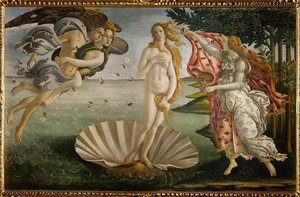
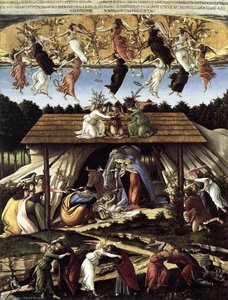
La obra de Botticelli se caracteriza por una elegante linealidad, que conecta el gótico tardío italiano con el Renacimiento temprano. Sus obras más famosas, El nacimiento de Venus y Primavera, se exhiben en la Galería Uffizi en Florencia, que alberga una importante colección de su arte. * El nacimiento de Venus (ver en Most-Famous-Paintings) * Primavera (explorar el arte de Sandro Botticelli en Most-Famous-Paintings) * La natividad mística (Galería Nacional, Londres), fechada en 1501, es la única obra de Botticelli con una fecha clara.

Legado e influencia

El estilo de Botticelli evolucionó hacia un enfoque más personal en la década de 1490, divergente de sus contemporáneos como Leonardo da Vinci y el estilo del Alto Renacimiento emergente. Su obra ha sido reconocida como una contribución significativa al movimiento artístico del Renacimiento italiano. * El movimiento artístico del Renacimiento italiano * Sandro Botticelli en Wikipedia
  • Artistas notables del Renacimiento italiano incluyen a Sandro Botticelli, Leonardo da Vinci, Miguel Ángel y Tiziano.
  • La Galería Uffizi de Florencia alberga una importante colección de arte de Botticelli.
  • La obra de Botticelli ha sido reconocida como una figura clave en el Renacimiento temprano de la pintura italiana.
Fechas clave: * 1445: Sandro Botticelli nació en Florencia, Italia. * 1474: Pasó tiempo en Pisa. * 1481-1482: Trabajó en la Capilla Sixtina en Roma. * 1501: La natividad mística (Galería Nacional, Londres) fue fechada.
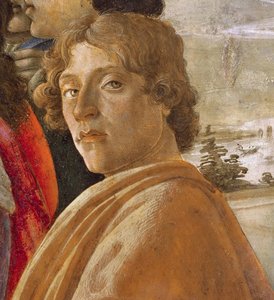
Sandro Botticelli

Sandro Botticelli

1445 - 1510 , Italia

Datos clave

  • Artistas Que Influyeron:
    • Fra Angelico
    • Paolo Uccello
  • Estilo Artístico: Renacimiento Temprano
  • Fecha De Muerte: 1510
  • Fecha De Nacimiento: c. 1445
  • Influenciado A Artistas: ['Pre-Rafaelitas']
  • Lugar De Nacimiento: Florencia, Italia
  • Nacionalidad: Italiana
  • Nombre Completo: Sandro Botticelli
  • Obras Notables:
    • El Nacimiento de Venus
    • Primavera
    • Natividad Mística
Explore obras de arte organizadas por temas, estilos y características.