


x
Óleo sobre lienzo pintado a mano en el tamaño y marco de su elección, realizado por encargo por nuestros artistas. ( Pedir impresión Comprar descarga)





























Elija entre nuestros tamaños predefinidos que respetan las proporciones originales de la obra.

Puede ingresar sus propias dimensiones para adaptarse a un marco o espacio específico. Si el tamaño seleccionado no coincide con las proporciones de la imagen original, recortaremos la obra o extenderemos la pintura con elementos adicionales pintados a mano. Se le enviará una maqueta digital para su aprobación antes de comenzar la producción.
Tenga en cuenta que la vista previa en pantalla no refleja el recorte o la extensión reales. Solo la maqueta mostrará con precisión la composición final.
Si bien existen tamaños personalizados, recomendamos seleccionar una dimensión de la lista predefinida para preservar las proporciones originales.
Envío a todo el mundo () en 3-4 semanas en lugar de las 5 semanas estándar. (15 agosto). Sin comprometer la calidad.


Abraham et les anges
Tamaño de la reproducción
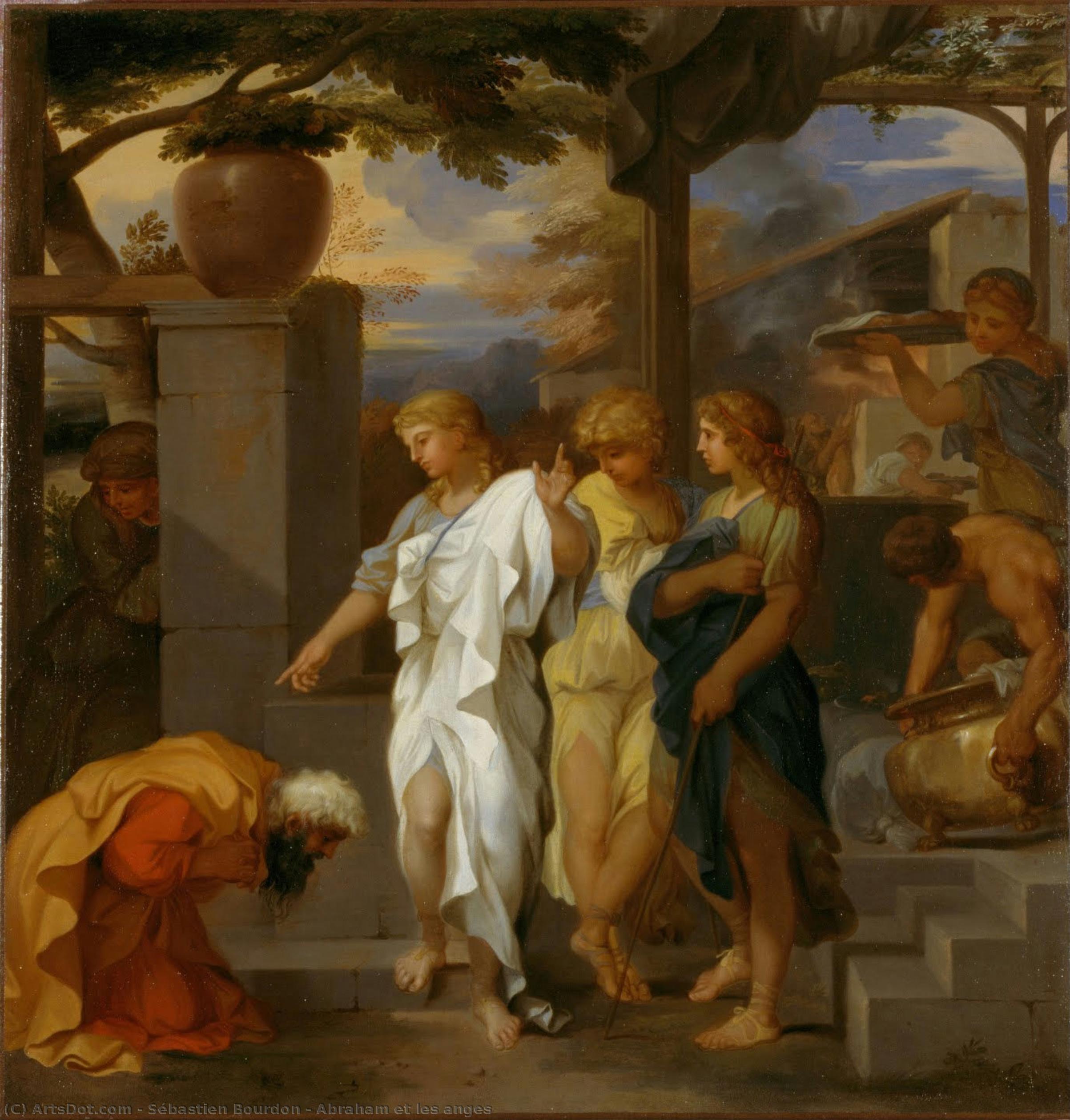
Sébastien Bourdon’s “Abraham et les anges” (Abraham and the Angels) is not merely a biblical depiction; it's a profound meditation on faith, generosity, and divine intervention rendered with the dramatic intensity characteristic of the late 17th-century Baroque. Painted between 1653 and 1657 during Bourdon’s Parisian period – a time when he was working for the influential Duke de Chevreuse – this small-scale oil painting offers a glimpse into a world where religious narrative intertwined seamlessly with aristocratic patronage. The scene, drawn from Genesis chapter 18, captures a pivotal moment: Abraham's extraordinary hospitality to three angelic visitors who announce the imminent birth of his son Isaac. It’s a tableau brimming with layered symbolism and executed with a masterful command of light, shadow, and human form.
Bourdon’s artistic lineage is immediately apparent. He was deeply influenced by the Roman Baroque masters – particularly Caravaggio – and this influence manifests in the painting's stark contrasts and dramatic use of chiaroscuro. The composition is carefully constructed to draw the viewer’s eye towards Abraham, a figure kneeling in humble deference before the radiant angels. Their forms are sculpted with meticulous detail, each fold of drapery rendered with an almost sculptural quality. Notice how Bourdon uses light not just to illuminate figures but also to create a sense of depth and atmosphere – the warm glow emanating from the angels contrasts sharply with the darker recesses of the courtyard setting, emphasizing the sacredness of the encounter.
The painting’s setting—a courtyard or porch, likely inspired by classical Roman architecture—is crucial to its meaning. The reference to “Mambré” (a biblical figure associated with a sacred oak) immediately anchors the scene in the Old Testament narrative. This architectural detail subtly elevates the earthly realm of Abraham's home into something imbued with divine significance. The arrangement of figures within this space is deliberate; Abraham, at the center, represents humanity’s capacity for faith and obedience. The angels, messengers of God, embody divine grace and intervention. And Sarah, though unseen, is the silent recipient of this miraculous promise – a symbol of hope and future fertility.
Beyond the immediate narrative, the scene resonates with broader themes of hospitality and welcoming the stranger. Abraham’s willingness to offer food and shelter to uninvited guests reflects a core tenet of Jewish faith: treating all people with kindness and compassion, regardless of their background or status. This act of generosity is not simply an earthly gesture; it's presented as a demonstration of Abraham’s unwavering loyalty to God.
Bourdon’s skill lies in his ability to synthesize diverse influences into a distinctly personal style. While he clearly admired Caravaggio’s dramatic lighting, he also incorporated elements of the French courtly tradition – evident in the refined drapery and the elegant poses of the figures. His brushwork is remarkably controlled, creating a surface that is both luminous and textured. The use of rich pigments—particularly golds and reds—contributes to the painting's overall sense of opulence and grandeur.
Furthermore, “Abraham et les anges” provides valuable insight into the artistic climate of Paris during Bourdon’s time. It exemplifies the flourishing Baroque movement that was transforming the city’s art scene. Bourdon’s work reflects a shift away from the more restrained Mannerism of earlier periods and towards a greater emphasis on emotional expression, dramatic composition, and dynamic movement – characteristics that would define the French Baroque for decades to come.
Despite its historical context, “Abraham et les anges” continues to resonate with viewers today. The painting’s depiction of faith, generosity, and divine grace transcends time and culture. It invites us to contemplate the meaning of hospitality, the importance of compassion, and the enduring power of belief. The subtle expressions on Abraham's face—a mixture of humility, wonder, and anticipation—capture a profound human experience: the recognition of something greater than oneself. It’s a work that speaks not only to the eye but also to the heart, offering a timeless meditation on the mysteries of faith and the enduring values of humanity.


1616 - 1671 , Francia

Explore the rich history of biblical art from Giotto to the Renaissance masters with Most-Famous-Paintings. Discover symbolism, techniques & enduring legacies. Museum-quality reproductions & expert insights.

Explore the captivating seascapes of Abraham Hulk Senior, a leading Anglo-Dutch marine painter of the 19th century. Discover his signature style, family legacy & collectable artworks at Most-Famous-Paintings.

Explore the profound history of biblical art! Discover Renaissance masterpieces by Giotto & more. Uncover symbolism, artistic techniques, and lasting influence. Expert insights at Most-Famous-Paintings.

Explore the rich history of biblical art from Giotto to the Renaissance masters. Discover symbolism, techniques & enduring legacies with Most-Famous-Paintings – your source for museum-quality reproductions and expert art insights.

Explore the captivating world of Dutch Golden Age still life with Abraham van Beyeren. Discover his innovative techniques, symbolic banquet scenes & lasting influence on art history. Learn about collecting these masterpieces.


Manténgase al día con las últimas noticias de arte, ofertas exclusivas e ideas de decoración.
Cuéntanos sobre tu proyecto y nuestros expertos en arte te ofrecerán 3 sugerencias de obras personalizadas.
Dejamos que nosotros seleccionemos 3 opciones exclusivas para ti – ¡Gratis!


 Vista previa
 Compartir
 Compartir
 Ver detalles

 Descargar
 Ver similares
 Radiografía
 Presentación de diapositivas


 Leer más







 La opción de vidrio solo está disponible en tamaños inferiores a 110 cm.


