


x

Óleo sobre lienzo pintado a mano en el tamaño y marco de su elección, realizado por encargo por nuestros artistas. ( Cambiar a impresión Cambiar a imagen)





























Elija entre nuestros tamaños predefinidos que respetan las proporciones originales de la obra.

Puede ingresar sus propias dimensiones para adaptarse a un marco o espacio específico. Si el tamaño seleccionado no coincide con las proporciones de la imagen original, recortaremos la obra o extenderemos la pintura con elementos adicionales pintados a mano. Se le enviará una maqueta digital para su aprobación antes de comenzar la producción.
Tenga en cuenta que la vista previa en pantalla no refleja el recorte o la extensión reales. Solo la maqueta mostrará con precisión la composición final.
Si bien existen tamaños personalizados, recomendamos seleccionar una dimensión de la lista predefinida para preservar las proporciones originales.
Envío a todo el mundo () en 3-4 semanas en lugar de las 5 semanas estándar. (6 agosto). Sin comprometer la calidad.


Lozenge Composition 3 Lines Blue Gray Yellow
Tamaño de la reproducción
Piet Mondrian’s ‘Lozenge Composition 3 Lines Blue Gray Yellow’ is not merely a painting; it’s a visual manifesto, a distillation of an artistic philosophy that sought to unlock the underlying principles of universal harmony. Emerging from the vibrant currents of early 20th-century abstraction, this work embodies the core tenets of Neoplasticism – a style Mondrian himself championed as a pathway to spiritual and aesthetic purity. The painting’s impact resides not in what it depicts, for it depicts nothing recognizable, but in *how* it is constructed: a carefully calibrated arrangement of lines, planes, and colors that resonates with an almost mathematical precision. The diamond-shaped canvas itself immediately signals a departure from tradition, rejecting the conventional rectangular format to subtly disrupt our expectations and invite a fresh perspective.
To understand ‘Lozenge Composition 3 Lines Blue Gray Yellow’ one must consider Mondrian’s artistic evolution. Born in Amersfoort, Netherlands, in 1872, he began his career painting naturalistic landscapes, influenced by the Hague School and Dutch Impressionism. However, a growing dissatisfaction with representing the visible world propelled him towards abstraction. A pivotal move to Paris in 1912 exposed him to Cubism, which initially sparked experimentation with deconstructing forms. But Mondrian didn’t simply adopt Cubist principles; he pushed them further, stripping away all representational elements until only the essential geometric structures remained. This relentless pursuit of reduction led to the development of Neoplasticism – a style predicated on the belief that art should reflect the underlying order of the universe. He sought to liberate painting from illusionistic representation and to express its fundamental essence through pure abstraction.
The composition itself is deceptively simple. Thick black lines define a network of rectangles and triangles on a predominantly white ground. A cool blue triangle anchors the upper left corner, while a vibrant yellow square provides a counterpoint in the lower right quadrant. The central space is dominated by a large lozenge shape filled with subtle shades of gray and white, intersected by those defining black lines. This isn’t randomness; every element is deliberately placed to achieve a dynamic equilibrium. Mondrian believed that these primary colors – red, blue, and yellow – along with the non-colors of black, white, and gray, represented the fundamental building blocks of reality. The straight lines, devoid of curves or ornamentation, symbolized clarity, order, and objectivity. The absence of shading or texture further emphasizes this flatness, rejecting illusionistic depth in favor of a purely two-dimensional space.
‘Lozenge Composition 3 Lines Blue Gray Yellow’ is more than just an aesthetically pleasing arrangement; it's a testament to Mondrian’s unwavering belief in the power of abstraction to reveal deeper truths. His work profoundly influenced not only painting but also architecture, design, and fashion, shaping the visual landscape of the 20th century and beyond. The painting continues to inspire contemporary artists and designers, demonstrating the enduring relevance of his vision – a subtle yet powerful statement for any space.
Created in 1925 during Mondrian’s Parisian period, ‘Lozenge Composition 3 Lines Blue Gray Yellow’ emerged from the influential De Stijl movement. This Dutch artistic group, founded by Mondrian and Theo van Doesburg, championed a radical aesthetic based on geometric abstraction and primary colors. Influenced by thinkers like Rudolf Steiner and Henri Bergson, De Stijl sought to synthesize art and science, aiming for a harmonious unity that transcended subjective experience. The painting reflects the movement’s core principles – simplification, universality, and balance – embodying a desire to express spiritual truth through pure visual form.
Mondrian's meticulous technique involved applying oil paint in thin layers onto canvas with precise brushstrokes. He adhered strictly to his compositional rules, ensuring that each element contributed to the overall equilibrium of the artwork. The black lines delineate the geometric shapes—rectangles and triangles—creating a framework that emphasizes clarity and order. The use of white provides a neutral backdrop, allowing the colors to stand out prominently. The deliberate placement of the blue triangle and yellow square represents a conscious effort to achieve visual harmony, reflecting Mondrian’s belief in the fundamental role of color and form in conveying spiritual significance.

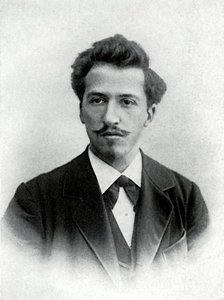
1872 - 1944 , Países Bajos

Explore the revolutionary De Stijl movement & Neo-Plasticism with our expert guide. Discover Piet Mondrian, Theo van Doesburg, and the lasting impact of this influential art style. Learn about collecting & investing in De Stijl masterpieces.

Descubre los fundamentos filosóficos de la abstracción geométrica. Explora el suprematismo de Malévich y el neoplasticismo de Mondrian, su impacto en el arte moderno y su legado perdurable. Análisis experto.
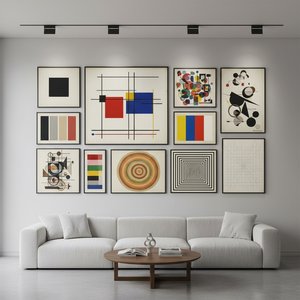
Descubre las 10 obras maestras de la abstracción geométrica que revolucionaron el arte moderno. Explora a Mondrian, Malevich y Kandinsky en Most-Famous-Paintings.com. Reproducciones de alta calidad para tu hogar.

Explore the evolution of geometric abstraction from Cubism to contemporary art. Discover key artists like Malevich & Mondrian, investment insights, and expert collecting advice at Most-Famous-Paintings.
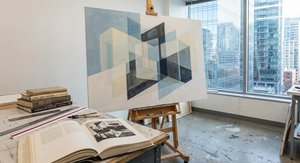
Explore the captivating world of geometric abstraction! Discover its origins, key artists like Malevich & Mondrian, and why this movement remains highly valued by art collectors today. Expert insights at Most-Famous-Paintings.


Manténgase al día con las últimas noticias de arte, ofertas exclusivas e ideas de decoración.
Cuéntanos sobre tu proyecto y nuestros expertos en arte te ofrecerán 3 sugerencias de obras personalizadas.
Seleccionamos 3 opciones exclusivas para ti – ¡Gratis!


 Vista previa
 Compartir
 Compartir
 Ver detalles

 Descargar
 Ver similares
 Radiografía
 Presentación de diapositivas

 Leer más







 La opción de vidrio solo está disponible en tamaños inferiores a 110 cm.


