x

 Oil On CanvasWallArtBaroque
 1614Early Modern
 63.0 x 49.0 cm
 Palazzo del Quirinale
Óleo sobre lienzo pintado a mano en el tamaño y marco de su elección, realizado por encargo por nuestros artistas. ( Pedir impresión Comprar descarga)





























Elija entre nuestros tamaños predefinidos que respetan las proporciones originales de la obra.

Puede ingresar sus propias dimensiones para adaptarse a un marco o espacio específico. Si el tamaño seleccionado no coincide con las proporciones de la imagen original, recortaremos la obra o extenderemos la pintura con elementos adicionales pintados a mano. Se le enviará una maqueta digital para su aprobación antes de comenzar la producción.
Tenga en cuenta que la vista previa en pantalla no refleja el recorte o la extensión reales. Solo la maqueta mostrará con precisión la composición final.
Si bien existen tamaños personalizados, recomendamos seleccionar una dimensión de la lista predefinida para preservar las proporciones originales.
Envío a todo el mundo () en 3-4 semanas en lugar de las 5 semanas estándar. (14 agosto). Sin comprometer la calidad.


St Catherine
Tamaño de la reproducción
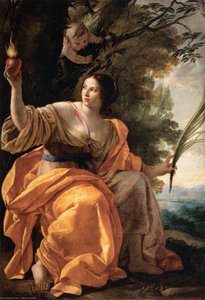
To stand before Simon Vouet's depiction of St Catherine is to step directly into the vibrant, emotionally charged atmosphere of early seventeenth-century Paris. This portrait captures more than just a likeness; it arrests a moment—a confluence of piety, earthly beauty, and the burgeoning drama characteristic of the Baroque period. The central figure, resplendent in her deep blue gown, commands attention with an almost magnetic gaze. Her long, flowing hair seems to catch the light, framing a face that possesses both serene contemplation and a subtle, knowing directness as she meets the viewer's eye. It is a study in captivating presence.
Vouet’s technical brilliance shines through every visible brushstroke. Observe how the artist has rendered the textures within this composition: the rich drape of the blue fabric contrasts beautifully with the rough, earthy texture of the brick wall that forms the backdrop. This juxtaposition—the smooth idealism of the subject against the tangible reality of the setting—is a hallmark of sophisticated Baroque painting. The handling of light is particularly masterful; it seems to emanate from an unseen source, selectively illuminating her features and lending a sculptural quality to her form while allowing the background elements to recede into atmospheric depth. This careful play between illumination and shadow gives the entire piece a profound sense of three-dimensionality.
Painted in 1614, this work places us squarely within Simon Vouet's dynamic early career. As a pivotal figure bridging Mannerism toward the full bloom of French Baroque painting, Vouet was constantly evolving his style, absorbing influences from his travels across Italy and beyond. The inclusion of other figures subtly placed in the periphery—one near the top left, another further back on the right—adds narrative complexity. These secondary characters ground the main subject within a social or devotional context, suggesting that St Catherine is not merely an individual portrait but part of a larger, unfolding human drama.
The symbolism woven into St Catherine invites deep contemplation. The blue dress itself often carries connotations of purity, heavenly grace, and fidelity in art history. Coupled with the subject's poised demeanor, it suggests an inner life rich with virtue, even amidst the casual backdrop of the brickwork. For the modern admirer or collector, this painting offers more than mere decoration; it is a conduit to historical emotion. It speaks to themes of enduring faith juxtaposed against the fleeting nature of earthly existence—a timeless dialogue that continues to resonate.
For those seeking an artwork that elevates any interior space, this reproduction offers unparalleled depth and narrative weight. The combination of vibrant color, sophisticated composition, and palpable historical artistry ensures that St Catherine will become a focal point, drawing the eye and sparking conversation. Owning a piece echoing Vouet’s genius means acquiring not just paint on canvas, but a tangible connection to the golden age of French art.

Simón Vouet fue una figura clave en la transición de la pintura francesa del manierismo al estilo barroco. Nacido en una familia artística – su padre Laurent era pintor y su hermano Aubin también se dedicó al arte – Vouet recibió una formación temprana que sentó las bases para su futuro éxito. Su nieto, Ludovico Dorigny, continuaría el legado artístico de la familia.
Durante su estancia italiana, Vouet absorbió una diversa gama de influencias. Estudió las técnicas de iluminación dramática pioneras por Caravaggio, abrazó elementos del manierismo italiano y analizó meticulosamente las paletas de colores y el di sotto in su (perspectiva acortada) empleadas por Paolo Veronese. También se inspiró en las obras de Carracci, Guercino, Lanfranco y Guido Reni, sintetizando estos diversos estilos en una visión artística única.
El legado de Simón Vouet reside en su papel fundamental como puente entre el arte italiano y francés. Importó con éxito el dinamismo y la grandeza del barroco italiano, transformándolo en un estilo que resonaba con los gustos de la corte y la aristocracia francesas. Su influencia es innegable en el desarrollo de la pintura francesa durante el siglo XVII, y sus contribuciones continúan siendo reconocidas por los historiadores del arte en la actualidad.

1590 - 1649 , Francia

Explore the profound elegance of Baroque Classicism. Discover how 17th-century masters synthesized dramatic emotion with classical order through the lens of the Counter-Reformation and the works of legends like Carlo Maratta and Andrea Sacchi.

Explore the profound drama of 17th-century Baroque art. Discover how masters used chiaroscuro, movement, and emotional intensity to redefine history through the lens of the Counter-Reformation. An expert guide for art historians and collectors seeking deep cultural insight.

Explore the dramatic power of Baroque art through an expert guide to light, shadow, and emotion. Discover how the Counter-Reformation shaped 17th-century masterpieces and learn about the profound techniques used by the Old Masters to inspire awe.

Explore the dramatic evolution from Mannerist distortion to Baroque grandeur. Discover how light, shadow, and emotion redefined art history through a masterclass in technical mastery and religious fervor.

Explore the profound differences between Baroque drama and Rococo elegance. Our expert guide delves into art history, chiaroscuro, and the evolution of European masterpieces for collectors and enthusiasts seeking deep historical context.


Manténgase al día con las últimas noticias de arte, ofertas exclusivas e ideas de decoración.
Cuéntanos sobre tu proyecto y nuestros expertos en arte te ofrecerán 3 sugerencias de obras personalizadas.
Dejamos que nosotros seleccionemos 3 opciones exclusivas para ti – ¡Gratis!


 Vista previa
 Compartir
 Compartir
 Ver detalles

 Descargar
 Ver similares
 Radiografía
 Presentación de diapositivas
 Leer más







 La opción de vidrio solo está disponible en tamaños inferiores a 110 cm.