x

Impresiones giclée o en lienzo de calidad de museo con producción rápida y opciones de acabado flexibles. ( Encargar reproducción pintada a mano Comprar descarga)





























Elija entre nuestros tamaños predefinidos que respetan las proporciones originales de la obra.

Puede introducir sus propias dimensiones para adaptarse a un marco o espacio específico. Si el tamaño seleccionado no coincide con las proporciones de la imagen original, recortaremos la obra de arte o extenderemos la imagen con un borde con efecto espejo o de color sólido. Se enviará una maqueta digital para su aprobación antes de que comience la producción.
Tenga en cuenta que la vista previa en pantalla no refleja el recorte o la extensión real. Solo la maqueta mostrará con precisión la composición final.
Aunque existen tamaños personalizados, recomendamos seleccionar una dimensión de la lista predefinida para preservar las proporciones originales.
Envío a todo el mundo () en 2 semanas en lugar de las 4/5 semanas estándar. (22 agosto)


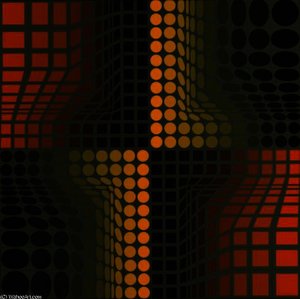
Circles In Perspective
Tamaño de la reproducción
“Circles In Perspective” by Victor Vasarely is more than just a painting; it's an invitation to question the very nature of perception. Created by one of the pioneers of Op Art, this vibrant work encapsulates the artist’s lifelong fascination with geometry and its impact on human vision. The canvas explodes with a carefully orchestrated arrangement of small circles – predominantly in shades of blue and green – that seem to shift and dance before your eyes. Vasarely wasn't simply depicting circles; he was manipulating them to create an illusion, a deliberate disruption of the viewer’s natural tendency to perceive depth and form. This piece exemplifies the core tenets of Op Art, a movement born in the mid-20th century that sought to translate scientific theories about optical illusions into dynamic visual experiences.
Born Károly Vaszary in 1906 in Pécs, Croatia – then part of Austria-Hungary – Vasarely’s artistic journey began unexpectedly. Initially drawn to medicine, he ultimately found his true calling in visual expression, a path forged through rigorous study and experimentation. His formative years were deeply influenced by the Bauhaus movement and Sándor Bortnyik's “Műhely” workshop, where he absorbed the principles of functional design and geometric abstraction. This training instilled within him a profound understanding of how our eyes and brains process information, leading him to meticulously craft works designed to stimulate and challenge this very system. The polka dots subtly integrated into the composition further enhance this effect, adding another layer of complexity to the optical experience.
Vasarely’s technique was remarkably precise. He employed a layering method, meticulously applying paint in thin washes to build up the circles and create the illusion of depth. The careful arrangement of these shapes – varying in size and subtly offset – generates a dynamic visual effect that seems to move across the canvas. The dominant blues and greens were chosen not just for their aesthetic appeal but also for their optical properties, further amplifying the sense of movement and vibration within the artwork. This deliberate control over color and form is characteristic of Vasarely’s approach, reflecting his scientific interest in visual perception.
"Circles In Perspective" speaks to a deeper human desire – the yearning for order and harmony amidst chaos. The geometric precision inherent in the composition suggests an attempt to impose structure on the world, while simultaneously embracing its inherent dynamism. Vasarely’s work evokes feelings of wonder, curiosity, and perhaps even slight disorientation, prompting viewers to actively engage with the artwork and reconsider their own perceptions. It's a testament to the power of art to challenge our assumptions and reveal the intricate workings of the human mind. This piece is an ideal addition to any collection seeking a bold statement or a captivating exploration of optical illusion.
Victor Vasarely (nacido Károly Vaszary) fue una figura clave en el desarrollo del Op Art y el arte cinético. Su obra buscaba trascender la pintura tradicional explorando ilusiones ópticas y creando experiencias visuales dinámicas. Nacido en Pécs, entonces parte de Austria-Hungría (ahora Croacia), su vida temprana incluyó estudiar medicina en la Universidad Eötvös Loránd de Budapest antes de dedicarse por completo al arte.
La contribución de Vasarely a la historia del arte es multifacética. Se movió más allá de las técnicas pictóricas tradicionales para crear obras que involucran activamente la percepción del espectador. Su enfoque sistemático desafió las nociones convencionales de creatividad artística y allanó el camino para el arte generado por computadora y el diseño digital. Al abrazar la reproducibilidad y las aplicaciones comerciales, Vasarely difuminó los límites entre el arte fino y la cultura popular, dejando una huella perdurable en ambos.

1906 - 1997 , Croacia

Explore the profound impact of Minimalism and Geometric Abstraction. From Mondrian to Malevich, discover how stripping art to its essential forms revolutionized modern aesthetics through our expert-led historical guide.

Explore the science of Op Art through the lens of masters like Victor Vasarely. Discover how geometric abstraction uses optical illusions to create movement and delve into the neuroaesthetics of perception with our expert art history guide.

Master the complexities of Geometric Abstraction. Our expert guide explores the evolution from Cubist deconstruction to Bauhaus precision, decoding the power of shape and form. Perfect for art students seeking deep historical context and academic insight into modern masterpieces.


Manténgase al día con las últimas noticias de arte, ofertas exclusivas e ideas de decoración.
Cuéntanos sobre tu proyecto y nuestros expertos en arte te ofrecerán 3 sugerencias de obras personalizadas.
Dejamos que nosotros seleccionemos 3 opciones exclusivas para ti – ¡Gratis!


 Vista previa
 Compartir
 Compartir
 Ver detalles

 Descargar
 Ver similares
 Radiografía
 Presentación de diapositivas

 Leer más







 La opción de vidrio solo está disponible en tamaños inferiores a 110 cm.