


x

 Comprar impresión Comprar imagen en alta resolución
 Enviar
 Detalles
 Añadir a favoritos
 Descargar
 Similares
 Radiografía
 Presentación de diapositivas
Óleo sobre lienzo pintado a mano en el tamaño y marco de su elección, realizado por encargo por nuestros artistas.





























Elija entre nuestros tamaños predefinidos que respetan las proporciones originales de la obra.

Puede ingresar sus propias dimensiones para adaptarse a un marco o espacio específico. Si el tamaño seleccionado no coincide con las proporciones de la imagen original, recortaremos la obra o extenderemos la pintura con elementos adicionales pintados a mano. Se le enviará una maqueta digital para su aprobación antes de comenzar la producción.
Tenga en cuenta que la vista previa en pantalla no refleja el recorte o la extensión reales. Solo la maqueta mostrará con precisión la composición final.
Si bien existen tamaños personalizados, recomendamos seleccionar una dimensión de la lista predefinida para preservar las proporciones originales.
Entrega mundial () en 3-4 semanas en lugar de las 5 semanas estándar. (21 julio). Sin compromisos con la calidad.


SIR-RIS
Tamaño de la reproducción
Victor Vasarely’s ‘SIR-RIS,’ a captivating sculpture rendered in meticulous black and white, stands as a cornerstone of Op Art – a movement that fundamentally challenged our understanding of visual perception. This isn't merely a representation of form; it’s an invitation to actively participate in the illusion, a testament to Vasarely’s mastery of manipulating space and light through geometric precision. The photograph captures ‘SIR-RIS’ in all its arresting complexity: a stylized cube, seemingly fractured by intersecting lines that generate a dynamic, almost dizzying effect. The stark contrast between the sculpture's intricate pattern and the clean white pedestal immediately draws the eye, emphasizing the artwork’s deliberate disruption of conventional visual experience.
Vasarely’s approach was rooted in a rigorous exploration of mathematical principles and their application to artistic creation. ‘SIR-RIS’ exemplifies this perfectly. The sculpture's design relies heavily on parallel lines that curve and intersect, creating a powerful sense of movement and distortion. These aren’t random arrangements; they are precisely calculated to exploit the way our eyes perceive depth and distance. The use of black and white amplifies this effect, eliminating color as a distraction and forcing the viewer to focus solely on the interplay of lines and shapes. The polished metal surface, likely chosen for its reflective qualities, further enhances this illusion, creating an almost three-dimensional experience within the two-dimensional image.
Born in 1906 in Pécs, Croatia (then part of Austria-Hungary), Victor Vasarely’s journey began far from the world of abstract art. Initially studying medicine, he was drawn to visual expression, a path solidified by his enrollment in Sándor Bortnyik's workshop – a hub for Bauhaus-influenced design. This formative experience instilled within him a fascination with functional geometry and its potential to create dynamic visual experiences. ‘SIR-RIS’ is a direct descendant of this lineage, echoing the principles of Op Art—a movement that sought to stimulate the eye through optical illusions. Vasarely's work anticipated many developments in kinetic art and influenced generations of designers and artists who explored the relationship between perception and form. The sculpture’s creation involved careful planning and execution, likely utilizing templates or precise tools to ensure the accuracy of the repeating pattern – a testament to the artist’s dedication to his craft.
Beyond its purely visual impact, ‘SIR-RIS’ reflects Vasarely's broader vision for the future. His work often explored themes of urban development and technological advancement, envisioning a world shaped by geometric order and rational design. The sculpture can be interpreted as a representation of a structured, yet dynamic, cityscape – a “city of tomorrow” where form and function are inextricably linked. The deliberate fragmentation and distortion suggest a critical engagement with the complexities of modern life, prompting viewers to question their own perceptions and assumptions about reality. Vasarely’s legacy extends beyond artistic innovation; it represents a profound exploration of how we experience and interpret the world around us.
Victor Vasarely (nacido Károly Vaszary) fue una figura clave en el desarrollo del Op Art y el arte cinético. Su obra buscaba trascender la pintura tradicional explorando ilusiones ópticas y creando experiencias visuales dinámicas. Nacido en Pécs, entonces parte de Austria-Hungría (ahora Croacia), su vida temprana incluyó estudiar medicina en la Universidad Eötvös Loránd de Budapest antes de dedicarse por completo al arte.
La contribución de Vasarely a la historia del arte es multifacética. Se movió más allá de las técnicas pictóricas tradicionales para crear obras que involucran activamente la percepción del espectador. Su enfoque sistemático desafió las nociones convencionales de creatividad artística y allanó el camino para el arte generado por computadora y el diseño digital. Al abrazar la reproducibilidad y las aplicaciones comerciales, Vasarely difuminó los límites entre el arte fino y la cultura popular, dejando una huella perdurable en ambos.

1906 - 1997 , Croacia
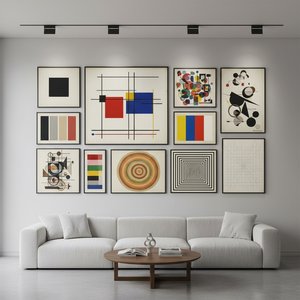
Descubre las 10 obras maestras de la abstracción geométrica que revolucionaron el arte moderno. Explora a Mondrian, Malevich y Kandinsky en Most-Famous-Paintings.com. Reproducciones de alta calidad para tu hogar.

Explore the evolution of geometric abstraction from Cubism to contemporary art. Discover key artists like Malevich & Mondrian, investment insights, and expert collecting advice at Most-Famous-Paintings.

Explore the captivating world of geometric abstraction! Discover its origins, key artists like Kandinsky & Mondrian, and why this movement remains highly valued by art collectors today. Expert insights at Most-Famous-Paintings.

Explore the revolutionary world of Victor Vasarely, father of Op Art. Discover his geometric masterpieces, artistic system, & lasting impact on modern design. A guide for discerning art collectors.
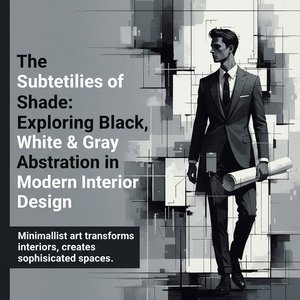
Descubre cómo la abstracción en blanco y negro eleva el diseño arquitectónico moderno. Expertos revelan secretos de iluminación, materiales y minimalismo para espacios sofisticados y atemporales.


Manténgase al día con las últimas noticias de arte, ofertas exclusivas e ideas de decoración.
Cuéntanos sobre tu proyecto y nuestros expertos en arte te ofrecerán 3 sugerencias de obras personalizadas.
Permítenos seleccionar 3 opciones solo para ti – ¡Gratis!


 Compartir


 Ver más







 La opción de vidrio solo está disponible en tamaños inferiores a 110 cm.


