


x

Meie kunstnike poolt tellimusel valmistatud käsitsi maalitud õli-kainaste teos teie soovitud suuruses ja raamis. ( Osta print Osta pilt)





























Vali meie eelmääratud suurused, mis vastavad teose algupärastele proportsioonidele.

Sa võite sisestada oma mõõtmed konkreetse raami või ruumi sobivuse tagamiseks. Kui teie valitud suurus ei vasta originaalpildi proportsioonidele, siis kärvime kunstiteost või laiendame maali täiendavate käsitsi maalitud elementidega. Enne tootmise algust saadetakse teile heakskiitmiseks digitaalne eelvaade.
Palun pidage meeles, et ekraanil kuvatav eelvaade ei kajasta tegelikku kärpimist või laiendamist. Ainult eelvaade näitab täpselt lõplikku kompositsiooni.
Kuigi on saadaval kohandatud suurused, soovitame originaalproportsioonide säilimiseks valida mõõdud eelmääratletud nimekirjast.
Maailmline tarne 3–4 nädala jooksul tavalise 5 nädala asemel. (14 august). Kvaliteedis kompromisse ei tehta.


Spring Night
Reproduktsiooni suurus
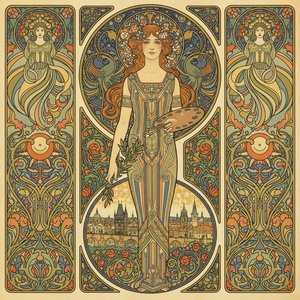
The Czech artist Alphonse Maria Mucha stands as an undisputed icon of Art Nouveau, a movement that sought to elevate decorative arts into realms of intellectual and emotional contemplation. His oeuvre transcends mere ornamentation; it embodies a profound fascination with mythology, folklore, and the transformative power of nature—themes exquisitely rendered in “Spring Night,” a painting that captures not just a picturesque woodland scene but also the very essence of Mucha’s artistic philosophy.
Born in Brno in 1860, Mucha initially pursued classical training at Prague’s Academy of Fine Arts, yet swiftly rejected its rigid formalism. Recognizing the limitations of academic conventions, he embarked on a daring journey to Paris in 1887, where he established his studio and cultivated an independent artistic vision. This decision proved pivotal, propelling him into the epicenter of Art Nouveau’s burgeoning creative energy.
Mucha's distinctive style is immediately recognizable by its undulating lines—a deliberate departure from straight edges—and an obsession with organic forms inspired by botanical illustrations. He meticulously studied the works of Gustave Moreau and Pierre-Auguste Renoir, absorbing their mastery of color and composition while forging his own unique aesthetic path. “Spring Night” exemplifies this approach perfectly; the trees are depicted as spiraling trunks adorned with blossoms that seem to ripple with movement.
“Spring Night” emerged during the Belle Époque, a period of unprecedented optimism and cultural flourishing in Europe. Art Nouveau responded directly to the anxieties of industrialization by celebrating beauty and craftsmanship as antidotes to urban alienation. Mucha’s paintings weren't merely decorative; they were intended to elevate the viewer’s consciousness—to transport them into realms of fantasy and wonder.
The painting is replete with symbolic references rooted in Slavic mythology. The central figures, bathed in soft moonlight, represent idealized femininity—a recurring motif throughout Mucha’s work. Their posture exudes serenity and grace, mirroring the tranquility of the surrounding woodland environment. Furthermore, the blossoms scattered across the trees symbolize rebirth and renewal, reinforcing the painting's overarching message of hope and transformation.
"Spring Night" succeeds in evoking a profound emotional response—a yearning for respite from the pressures of daily life and an appreciation for the sublime beauty of nature. Mucha’s masterful use of color—pale greens, blues, and whites—creates an atmosphere of ethereal luminescence that captivates the eye and nourishes the soul. It remains a testament to Art Nouveau's enduring power to inspire contemplation and elevate artistic expression beyond mere visual gratification.


1860 - 1939 , Tšehhi Vabariik
Explore the life & art of Alphonse Mucha, master of Art Nouveau! Discover his iconic posters, stunning illustrations, and the monumental Slav Epic. A comprehensive guide for collectors & enthusiasts.

Immerse yourself in the romantic allure of Art Nouveau. Explore the sinuous curves and floral elegance of the Belle Époque through our exquisite, hand-painted reproductions. Discover a timeless connection to nature’s beauty with our museum-quality collection.

Discover the enchanting world of Art Nouveau. Explore the organic beauty, flowing lines, and Belle Époque elegance that defined an era of unparalleled craftsmanship and natural inspiration.

Sukeldu Art Nouveau maailma! Avasta 10 ikoonilist meistriteost – Klimt, Mucha jt – ja nende ajatu ilu. Loe kunstnike lugusid ning saa inspiratsiooni sisekujunduseks. Kvaliteetsed kunsti reproduktsioonid Most-Famous-Paintings.com-ilt! Uuri kogu kollektsiooni veebis.

Discover the enchanting world of Art Nouveau. Explore the flowing lines of Alphonse Mucha and learn how to integrate these timeless, organic masterpieces into your collection with expert guidance on fine art appreciation and preservation.


Püsige kursis viimaste kunstiuudistega, eksklusiivsete pakkumistega ja sisustamisideetega.
Kirjeldage meile oma projekti ja meie kunstieksperdid pakuvad teile 3 isikupärast kunstiettepanekut.
Laske meil koostada just teile mõeldud 3 valikut – tasuta!


 Eelvaade
 Saada
Saada Jaga
Jaga
 Teave teose kohta

 Laadi alla
 Sarnased teosed
 Röntgenuuring
 Slaidietendus
 Loe lähemalt







 Klaasivalik on saadaval ainult suuruses kuni 110 cm


