Müü võimsalt oma kunsti
Soovitusnimekiri Ostukorv Cart
EelvaadeEelvaade AR-eelvaadeAR-eelvaade Osta print Osta printOsta käsitsi maalitud maal Osta käsitsi maalitud maal SaadaSaada
Teave teose kohtaTeave teose kohta Lisa lemmikutesse Lisa lemmikutesse Laadi allaLaadi alla Sarnased teosedSarnased teosed RöntgenuuringRöntgenuuring SlaidietendusSlaidietendus

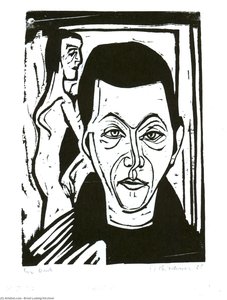
Three Faces

Explore the raw emotional depth of Kirchner's 'Three Faces,' a striking German Expressionist etching from 1929; discover this powerful study of human emotion today.

Ernst Ludwig Kirchner oli Saksa ekspressionist ja Die Brücke liikme üks juhtiv mõtleja. Tema töö keskendus linnapiiskele ja inimese kujunditele ning oli täielikult vastuolus akadeemilise kunstiga. Kirchneri stiil oli tuntud oma värvide kasutuse ja väljendusrikaste pintslitööde poolest, mis olid olulised ekspressionistlikule kunstile maailmas.

Ostke kõrglahutusel ja täiustatud digitaalne pilt, mis on oluliselt parem kui veebilehel näidatud eelvaade.

Iga fail on meie spetsialistide poolt hoolikalt ette valmistatud, kasutades kaasaegseid tööriistu ja professionaalset käsitsi retušeerimist. Tagame, et igal pildil on erakordne selgus, täpne värvitäpsus ja peen detail.

Lõplik fail saadetakse e-posti teel 72 tunni jooksul, olles optimeeritud koheseks kasutamiseks professionaalsetes, toimetuslikes ja trüki keskkondades. See on sama kvaliteet, mida usaldavad tipptasemel disainistuudiod, kirjastused ja galeriid.

Digitaalne kunstiteos

Laadi alla kõrge resolutsiooniga fail isiklikuks vaatamiseks, trükkimiseks ja loomingulisteks projektideks. (Osta print Osta printOsta käsitsi maalitud maal Osta käsitsi maalitud maal)

Lõppsumma

$ 24,90

Sisse kuulub iga digitaalse pildi tellimusega

Eksperdi digitaalne kohaletoimetamine, garanteeritud

Valides Most-Famous-Paintings.com, ei saa sa lihtsalt pilti – saad professionaalselt parandatud digitaalse teose, mida on valmistatud täpsusega ja mis on toetatud rahuldamatusgarantiiga. Siin on kõik, mis sinu tellimusega automaatselt kaasneb:

shipping_icon
Kiire digitaalne saatmine

Teie kõrge resolutsiooniga digitaalne pildifail saadetakse teile e-posti 72 tunni jooksul pärast tellimist – kohe kasutamiseks valmis.

canvas_icon
Tehisintellektiga täiustatud digitaalne fail

Teie teos on professionaalselt optimeeritud arenenud tehisintellekti tööriistade ja käsitsi redigeerimise abil, tagades maksimaalse detailitaseme, selguse ja värvitäpsuse.

insurance_icon
Tasuta eluaegne uuesti saatmine

Kas kustutasid faili kogukalu unustamisel või kustutamisel? Puudub mure – saad selle uuesti igal ajal ilma lisatasuta.

tax_icon
Puuduvad importimaksed – alati

Nautige oma teoseid koheselt ilma tolli-, maksude või tarnimaskuludeta – digiletchargused on alati maksuvabadud.

color_icon
Värvitäpsuse garantii

Me tagame, et teie digitaalne pilt kajastaks originaali värve professionaalsete tööriistade ja värvihalduse abil võimalikult täpselt.

return_icon
60-päevane rahulolu garantii

Kui te ei ole oma digipildiga rahul, parandame seda või tagastame 100% summast 60 päeva jooksul – küsimusi ei esita.

guarantee_icon
100% raha tagastamise garantii

Ei ole rahul? Saate täielise tagastaja 60 päeva jooksul pärast digitaalse faili kättesaamist – küsimata.

discount_icon
Suurema tellimuse soodustused

Osta 3 pilti, säästa 10% - Osta 5, säästa 15% - Osta 10+, säästa 20%. Sobib suurepäraselt loomingulisteks projektideks, galeriideks ja agentuurideks.

Teave teose kohta

  • Artist: Ernst Ludwig Kirchner
  • Dimensions: 26 x 20 cm
  • Medium: Etching
  • Artistic style: Expressionism
  • Movement: German Expressionism
  • Title: Three Faces

Kunstiviktoriin

Iga küsimuse kohta on ainult üks õige vastus.

Küsimus 1:
What artistic movement is Ernst Ludwig Kirchner most associated with?
Küsimus 2:
The artwork 'Three Faces' was created in what year?
Küsimus 3:
What medium is the artwork 'Three Faces' described as being?
Küsimus 4:
The description notes that the three faces display different expressions. Which emotion is associated with the face on the left?
Küsimus 5:
Kirchner's biography mentions that his early influences included admiration for which master artist?

Kollektsiooni kirjeldus

The Unmasking of Emotion in Kirchner's Etching

To gaze upon Ernst Ludwig Kirchner’s etching, "Three Faces," is not merely to observe lines on paper; it is to step directly into the volatile emotional landscape of early 20th-century Berlin. This black and white study, dating from 1929, captures a moment of profound psychological tension through the stark medium of the etching process. The composition presents three distinct visages clustered together, each one offering a different facet of the human condition—a silent, arresting tableau that speaks volumes without uttering a single word. Kirchner, deeply immersed in the fervor and anxiety of German Expressionism, possessed an unparalleled ability to distill complex inner turmoil into stark, graphic forms.

Technique and Visual Dialogue

The choice of etching as a medium is crucial to understanding the work's raw power. The inherent nature of etching lends itself to sharp contrasts—the deep blacks against the pristine white ground—which serve to heighten the drama of the expressions. Notice how Kirchner manipulates shadow and line weight; these are not decorative elements but carriers of emotional charge. The viewer’s eye is immediately drawn across the trio, forced into a comparative study. The contrast between the left face's palpable frown, the middle figure's seemingly bright smile, and the right face's more brittle, perhaps even strained grin creates an immediate visual dialogue. It suggests that emotion itself is rarely singular or simple.

Historical Echoes of Modern Anxiety

Painted in 1929, this work emerges from a period of immense societal upheaval, standing at the precipice of global conflict and radical social change. Kirchner’s art was always deeply engaged with the pulse of modern life—the alienation of the city, the mask worn in public spaces, and the struggle to maintain authentic selfhood amidst rapid modernization. "Three Faces" can be interpreted as a commentary on societal performance; are we all merely performing happiness for an audience? The tension captured here resonates far beyond its specific date, speaking to the universal anxieties of feeling observed, judged, or misunderstood.

Symbolism and Emotional Resonance

The grouping of three faces is inherently symbolic. It suggests a triangulation of experience—perhaps the self versus society, or genuine emotion versus social expectation. The differing expressions invite deep contemplation from the collector or admirer. Is the smile on the right one of joy, or is it the forced composure required to navigate difficult times? Kirchner masterfully uses these subtle variations in musculature and gaze to explore the chasm between inner reality and outer presentation. Owning a reproduction of this piece allows one to bring that thoughtful, questioning energy into a living space, transforming a mere wall hanging into a philosophical anchor.

Bringing Expressionism Home

For those seeking art that possesses both historical weight and immediate emotional impact, "Three Faces" is an unparalleled choice. Its graphic intensity translates beautifully across reproductions, allowing the stark power of Kirchner's original etching to grace any interior setting—from a minimalist gallery wall to a richly decorated study. It serves as a constant, quiet reminder that beneath every composed facade lies a complex, shifting emotional narrative waiting to be observed.

Kunstniku biograafia

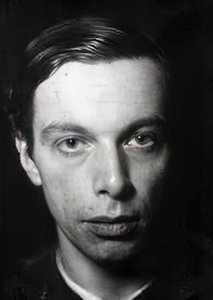
Ernst Ludwig Kirchner (1880-1938): A Life Forged in Expression

Ernst Ludwig Kirchner, a name synonymous with the raw emotional power of German Expressionism, was born into a world poised on the brink of dramatic change. His arrival in Aschaffenburg, Bavaria, in 1880, marked the beginning of a life deeply intertwined with artistic innovation and personal turmoil. The shifting landscapes of his childhood – dictated by his father’s profession – instilled within him a sense of displacement that would later become a recurring theme in his art. From Frankfurt to Perlen, and finally settling in Chemnitz, young Kirchner absorbed the burgeoning anxieties of a rapidly modernizing Germany. Though initially steered towards architecture at the Königliche Technische Hochschule in Dresden, it was the profound conviction that painting could convey inner experience—a rejection of academic conventions—that ultimately defined his artistic path. He found kinship with fellow rebels – Fritz Bleyl, Karl Schmidt-Rottluff, and Erich Heckel – forging bonds that would irrevocably alter the course of 20th-century art.

Early Life and Artistic Beginnings

Kirchner’s formative years were shaped by a family preoccupied with intellectual pursuits. His father, a chemical technician specializing in paper production, instilled in him a meticulous attention to detail—a characteristic that would later translate into his exacting artistic technique. Maria Kirchner, his mother, descended from Huguenot ancestry, fostering within him an appreciation for cultural heritage and a sensitivity to the nuances of human emotion. From Aschaffenburg he moved to Frankfurt/Main and Perlen nr. Lucerne where he attended secondary school alongside Karl Schmidt-Rottluff and Erich Heckel—artists who would become lifelong companions and collaborators. These formative relationships profoundly influenced his artistic worldview, shaping his belief in the importance of shared experience and mutual inspiration. Recognizing his innate talent for drawing and painting, Kirchner pursued architectural studies at Dresden’s Königliche Technische Hochschule, but simultaneously enrolled in courses focused on figurative art, honing his skills in life drawing and composition—skills that would prove invaluable to his subsequent artistic endeavors.

Die Brücke: A Revolutionary Collective

The genesis of Kirchner's artistic breakthrough occurred in 1905 when he joined *Die Brücke* (“The Bridge”), a groundbreaking collective dedicated to forging a new aesthetic language rooted in emotional intensity and psychological exploration. Alongside Bleyl, Schmidt-Rottluff, and Heckel, Kirchner established a studio in Dresden where they experimented with innovative techniques—primarily woodblock printing—drawing inspiration from sources far removed from the prevailing artistic trends of the time. The group’s manifesto articulated a radical rejection of academic idealism, advocating instead for an uncompromising confrontation with reality—a stance that mirrored their broader philosophical convictions. They drew heavily upon influences from primitive art – particularly African and Oceanic sculpture – recognizing its expressive power and its ability to bypass rational thought. Furthermore, they embraced the bold chromatic palette pioneered by Vincent van Gogh, utilizing vibrant hues to convey emotional states rather than merely representing visual appearances. This stylistic fusion—characterized by distortion, simplified forms, and emotionally charged brushwork—became synonymous with Die Brücke’s distinctive artistic vision.

Berlin and Artistic Maturity

In 1911 Kirchner relocated to Berlin, establishing a studio in Wilmersdorf alongside fellow artist Max Pechstein—a partnership that would endure until Pechstein's departure from the group in 1913. Berlin became Kirchner’s epicenter of artistic activity, fostering connections with writers, intellectuals, and artists who shared his commitment to challenging conventional norms. He meticulously documented the urban landscape—particularly the gritty streets and tenements of Berlin—capturing not only their physical appearance but also the psychological atmosphere they engendered. His paintings conveyed a palpable sense of alienation and unease—reflecting the anxieties prevalent in German society during the period leading up to World War I. Kirchner’s artistic style evolved throughout his career, embracing increasingly expressive techniques while retaining a steadfast dedication to conveying inner experience. He continued to explore themes of solitude, vulnerability, and psychological torment—subjects that would resonate powerfully with audiences across generations.

Legacy and Recognition

Kirchner's contribution to German Expressionism is undeniable. His uncompromising artistic vision—characterized by bold color palettes, distorted forms, and emotionally resonant imagery—established him as one of the movement’s foremost figures. Despite facing persecution during the Nazi era—when over 600 of his artworks were confiscated and deemed “degenerate”—Kirchner's legacy persists as a testament to the enduring power of art to confront societal injustices and champion artistic freedom. His paintings continue to inspire artists today, serving as a poignant reminder of the importance of emotional honesty and stylistic innovation. Ernst Ludwig Kirchner’s oeuvre remains an invaluable resource for understanding the complexities of early 20th-century art—a beacon illuminating the path toward authentic expression and unwavering conviction in one's artistic beliefs.
Ernst Ludwig Kirchner

Ernst Ludwig Kirchner

1880 - 1938 , Saksa

Lühikesed faktid

  • Artistic Movement Or Style: Ekspressionism
  • Artists Who Influenced This Artist:
    • Albrecht Dürer
    • Vincent van Gogh
    • Edvard Munch
  • Date Of Birth: 6 mai 1880
  • Date Of Death: 15 juuni 1938
  • Full Name: Ernst Ludwig Kirchner
  • Nationality: Saksa
  • Notable Artworks:
    • The Street (1908)
    • Leaping Dancer (1912)
    • Self-Portrait (1910)
  • Place Of Birth: Aschaffenburg, Saksamaa