x

Muuseumikvaliteediga giclée- või kangasprint kiire tootmisega ja paindlikud viimistlusvõimalused. ( Osta käsitsi maalitud maal Osta pilt)





























Vali meie eelmääratud suurused, mis vastavad teose algupärastele proportsioonidele.

Saate sisestada oma mõõdud, et need sobiks konkreetse raami või ruumi sisse. Kui valitud suurus ei vasta originaalteose proportsioonidele, lõigame teose ära või laiendame pilti peegeldatud või ühtlase servaga. Enne tootmisprotsessi algust saadetakse Teie kinnitamiseks digitaalne näidis.
Palun märka, et ekraanil kuvatav eelvaade ei kajasta tegelikku lõigamist või laiendamist. Ainult näidis kujutab täpselt lõplikku kompositsiooni.
Kuigi erimõõdu on saadaval, soovitame originaaproportsioonide säilitamiseks valida mõõt ette määratud nimekirjast.
Ülemaailmne tarne () 2 nädala jooksul, tavalise 4/5 nädala asemel. (23 august)


Contrast of Forms
Reproduktsiooni suurus
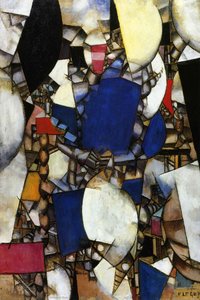
The canvas breathes with an energy that defies stillness—a palpable pulse emanating from Fernand Léger’s 1918 masterpiece, "Contrast of Forms." More than just a depiction of a man playing guitar amidst abstract shapes, it serves as a profound meditation on the relationship between humanity and technology. In this work, Léger does not merely react to the burgeoning industrial revolution; he actively attempts to translate its rhythmic, metallic heartbeat into visual terms, forging a new aesthetic born from observation and intellectual curiosity. To gaze upon this piece is to witness the moment where the organic human spirit meets the uncompromising precision of the machine age.
The composition presents a captivating visual dialogue between the figure and his environment. A man, cradling his guitar, stands anchored amidst a whirlwind of geometric patterns and fragmented objects. Scattered throughout this structured chaos are recognizable elements—a clock positioned toward the upper left, a bowl near the center, a chair in the lower right, and a bottle on the far edge. These objects are not merely still life subjects; they are deconstructed into their essential components, stripped of their traditional weight to become part of a larger, dynamic architecture of shapes. This interplay creates an experience that is both intellectually stimulating for the collector and visually arresting for anyone seeking a focal point of modern energy.
Léger's approach firmly establishes itself within the Constructivist movement, a period characterized by a rejection of fleeting Impressionist light in favor of geometric abstraction. Utilizing straight lines, squares, circles, and triangles, Léger employs a visual language of crystalline precision. This style, often referred to as "Tubism"—a distinctive offshoot of Cubism—celebrates the beauty of industrial forms through bold, cylindrical shapes that mirror the strength of modern machinery. There is no hint of organic softness or illusionistic depth here; instead, there is an unapologetic embrace of the flat, powerful plane.
The technique employed in "Contrast of Forms" reveals a masterful command over texture and light. Léger utilized a layered approach, applying thin washes of color over thicker impasto to create a surface that captures both luminosity and physical weight. His palette is striking and unapologetic, dominated by primary reds, yellows, and blues—hues often associated with the vitality of industrial signaling and the raw energy of urban life. These colors do not seek a quiet harmony; rather, they collide, creating a chromatic tension that keeps the viewer's eye in constant motion across the canvas.
For the discerning art lover or interior designer, "Contrast of Forms" offers much more than mere decoration. It is an invitation to bring the dynamism of the early 20th-century avant-garde into a contemporary living space. The painting’s ability to balance heavy, structural forms with vibrant, energetic color makes it a versatile masterpiece for high-end curation. Whether placed in a minimalist gallery setting or as a bold statement piece in a sophisticated study, the work commands attention through its rhythmic complexity.
Owning a high-quality reproduction of this work allows one to inhabit the same world of progress and structural beauty that Léger envisioned. It serves as a reminder of a time when art sought to bridge the gap between the human hand and the mechanical gear, offering a timeless aesthetic that remains as relevant in today's digital age as it was during the height of the industrial revolution. To display this piece is to celebrate the enduring power of form, color, and the relentless march of human innovation.

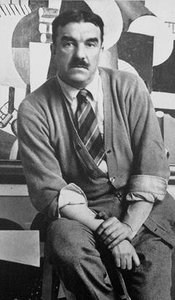
1881 - 1955 , Prantsusmaa

Explore the profound impact of Minimalism and Geometric Abstraction. From Mondrian to Malevich, discover how stripping art to its essential forms revolutionized modern aesthetics through our expert-led historical guide.

Master the complexities of Geometric Abstraction. Our expert guide explores the evolution from Cubist deconstruction to Bauhaus precision, decoding the power of shape and form. Perfect for art students seeking deep historical context and academic insight into modern masterpieces.
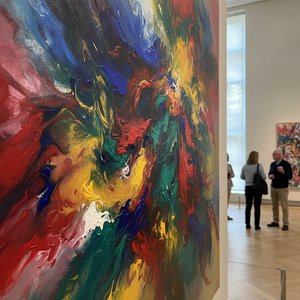
Explore the profound emotional depth of Lyrical Abstraction. Discover how masters like Raymond Parker used color and form to bridge Impressionism and Abstract Expressionism. Learn about this pivotal movement through our expert-led art history guide.

Discover the profound intersection of geometry and emotion in Cubist Expressionism. Explore art history through our expert analysis of modern masters and find museum-quality, hand-painted oil reproductions of iconic masterpieces for your collection.


Püsige kursis viimaste kunstiuudistega, eksklusiivsete pakkumistega ja sisustamisideetega.
Kirjeldage meile oma projekti ja meie kunstieksperdid pakuvad teile 3 isikupärast kunstiettepanekut.
Laske meil koostada just teile mõeldud 3 valikut – tasuta!


 Eelvaade
 Saada
Saada Jaga
Jaga
 Teave teose kohta

 Laadi alla
 Sarnased teosed
 Röntgenuuring
 Slaidietendus

 Loe lähemalt







 Klaasivalik on saadaval ainult suuruses kuni 110 cm