


x

Ostke kõrglahutusel ja täiustatud digitaalne pilt, mis on oluliselt parem kui veebilehel näidatud eelvaade.
Iga fail on meie spetsialistide poolt hoolikalt ette valmistatud, kasutades kaasaegseid tööriistu ja professionaalset käsitsi retušeerimist. Tagame, et igal pildil on erakordne selgus, täpne värvitäpsus ja peen detail.
Lõplik fail saadetakse e-posti teel 72 tunni jooksul, olles optimeeritud koheseks kasutamiseks professionaalsetes, toimetuslikes ja trüki keskkondades. See on sama kvaliteet, mida usaldavad tipptasemel disainistuudiod, kirjastused ja galeriid.
Laadi alla kõrge resolutsiooniga fail isiklikuks vaatamiseks, trükkimiseks ja loomingulisteks projektideks. ( Osta print Osta käsitsi maalitud maal)
Valides Most-Famous-Paintings.com, ei saa sa lihtsalt pilti – saad professionaalselt parandatud digitaalse teose, mida on valmistatud täpsusega ja mis on toetatud rahuldamatusgarantiiga. Siin on kõik, mis sinu tellimusega automaatselt kaasneb:

Teie kõrge resolutsiooniga digitaalne pildifail saadetakse teile e-posti 72 tunni jooksul pärast tellimist – kohe kasutamiseks valmis.

Teie teos on professionaalselt optimeeritud arenenud tehisintellekti tööriistade ja käsitsi redigeerimise abil, tagades maksimaalse detailitaseme, selguse ja värvitäpsuse.

Kas kustutasid faili kogukalu unustamisel või kustutamisel? Puudub mure – saad selle uuesti igal ajal ilma lisatasuta.

Nautige oma teoseid koheselt ilma tolli-, maksude või tarnimaskuludeta – digiletchargused on alati maksuvabadud.

Me tagame, et teie digitaalne pilt kajastaks originaali värve professionaalsete tööriistade ja värvihalduse abil võimalikult täpselt.

Kui te ei ole oma digipildiga rahul, parandame seda või tagastame 100% summast 60 päeva jooksul – küsimusi ei esita.

Ei ole rahul? Saate täielise tagastaja 60 päeva jooksul pärast digitaalse faili kättesaamist – küsimata.

Osta 3 pilti, säästa 10% - Osta 5, säästa 15% - Osta 10+, säästa 20%. Sobib suurepäraselt loomingulisteks projektideks, galeriideks ja agentuurideks.
Fernand Léger's 1916 painting, "The Proof That Man Descended From Monkeys," is far more than a whimsical depiction of a man perched atop a ladder. It’s a pivotal work in the evolution of early 20th-century art, a bold statement about modernity, and a surprisingly poignant reflection on humanity's place within the natural world. Created during the tumultuous years of World War I, this piece embodies Léger’s innovative “Tubism” style – a movement he pioneered alongside Pablo Picasso and Georges Braque – that sought to capture the dynamism of industrial life through simplified, geometric forms.
The scene itself is instantly arresting. A man, rendered in Léger's signature blocky style, sits precariously on a ladder, chains encircling his neck. He’s not a heroic figure; rather, he appears bewildered and slightly absurd, a symbol of the disorientation felt by many during this period of rapid social and technological change. Below him, a chaotic scene unfolds – soldiers, engineers, and laborers engage in various tasks, all depicted with a raw, almost brutal honesty. The composition is deliberately fragmented, mirroring the shattered sense of order that war had brought to Europe.
Léger’s Tubism was born out of a desire to translate the impact of machinery and urban life onto canvas. Rejecting traditional representational techniques, he employed simplified forms – cylinders, cones, and cubes – to capture the essence of industrial objects and processes. This wasn't simply an aesthetic choice; it was a philosophical one. Léger believed that these geometric shapes represented a new way of seeing the world, a world dominated by technology and industry.
The painting’s palette is deliberately restrained, utilizing bold primary colors – reds, yellows, blues – punctuated by black and white. This stark contrast emphasizes the forms and creates a sense of visual energy. Léger's brushwork is loose and expressive, adding to the dynamism of the composition. Notice how he uses overlapping planes and fragmented perspectives to create a feeling of movement and instability.
The title itself – “The Proof That Man Descended From Monkeys” – immediately introduces a layer of complex symbolism. It’s a direct reference to Darwin's theory of evolution, which was gaining traction at the time. Léger wasn't simply illustrating scientific theory; he was using it as a metaphor for humanity’s relationship with nature and technology. The man on the ladder can be interpreted as representing mankind’s struggle to adapt to this new world, a world increasingly shaped by forces beyond our control.
Furthermore, the painting's creation coincided with the horrors of World War I. Léger’s depiction of industrial labor reflects the widespread mobilization of men and resources for war production. The chaotic scene below the ladder can be seen as a commentary on the senselessness and brutality of conflict. It is important to note that this artwork was created during a time of immense social upheaval, reflecting anxieties about progress, identity, and humanity's future.
"The Proof That Man Descended From Monkeys" remains a significant work in the history of modern art. It’s a testament to Léger’s innovative approach to form and color, and his ability to capture the spirit of modernity with remarkable clarity. Reproductions of this artwork offer a unique opportunity to experience this pivotal moment in artistic expression – a bold exploration of symbolism, technology, and the human condition.

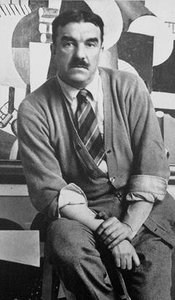
1881 - 1955 , Prantsusmaa


Püsige kursis viimaste kunstiuudistega, eksklusiivsete pakkumistega ja sisustamisideetega.
Kirjeldage meile oma projekti ja meie kunstieksperdid pakuvad teile 3 isikupärast kunstiettepanekut.
Laske meil koostada just teile mõeldud 3 valikut – tasuta!


 Eelvaade
 Saada
Saada Jaga
Jaga
 Teave teose kohta

 Laadi alla
 Sarnased teosed
 Röntgenuuring
 Slaidietendus

 Loe lähemalt


