Müü võimsalt oma kunsti
Soovitusnimekiri Ostukorv Cart
EelvaadeEelvaade AR-eelvaadeAR-eelvaade Osta print Osta printOsta käsitsi maalitud maal Osta käsitsi maalitud maal SaadaSaada
Teave teose kohtaTeave teose kohta Lisa lemmikutesse Lisa lemmikutesse Laadi allaLaadi alla Sarnased teosedSarnased teosed RöntgenuuringRöntgenuuring SlaidietendusSlaidietendus

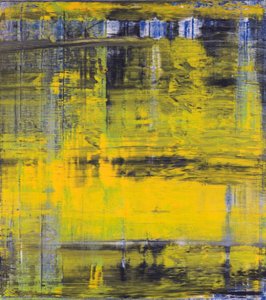
Grey (Bark)

Richter’s textured grey canvas embodies abstract expressionism's understated elegance; capturing the mood of quiet contemplation and hinting at the artist's formative years amidst German division. Explore this iconic piece and bring Richter’s vision home.

Gerhard Richter oli üks maailma suurimatest ja mõjutavamaid kunstnike, kes kasutasid fotorealistlikku ja abstrakti stiili ning pakkus tänu oma kriitilise lähenemuse ja innovatsioonile suurepäärasele kunstilisele ekspressioonile.

Ostke kõrglahutusel ja täiustatud digitaalne pilt, mis on oluliselt parem kui veebilehel näidatud eelvaade.

Iga fail on meie spetsialistide poolt hoolikalt ette valmistatud, kasutades kaasaegseid tööriistu ja professionaalset käsitsi retušeerimist. Tagame, et igal pildil on erakordne selgus, täpne värvitäpsus ja peen detail.

Lõplik fail saadetakse e-posti teel 72 tunni jooksul, olles optimeeritud koheseks kasutamiseks professionaalsetes, toimetuslikes ja trüki keskkondades. See on sama kvaliteet, mida usaldavad tipptasemel disainistuudiod, kirjastused ja galeriid.

Digitaalne kunstiteos

Laadi alla kõrge resolutsiooniga fail isiklikuks vaatamiseks, trükkimiseks ja loomingulisteks projektideks. (Osta print Osta printOsta käsitsi maalitud maal Osta käsitsi maalitud maal)

Lõppsumma

$ 24,90

Sisse kuulub iga digitaalse pildi tellimusega

Eksperdi digitaalne kohaletoimetamine, garanteeritud

Valides Most-Famous-Paintings.com, ei saa sa lihtsalt pilti – saad professionaalselt parandatud digitaalse teose, mida on valmistatud täpsusega ja mis on toetatud rahuldamatusgarantiiga. Siin on kõik, mis sinu tellimusega automaatselt kaasneb:

shipping_icon
Kiire digitaalne saatmine

Teie kõrge resolutsiooniga digitaalne pildifail saadetakse teile e-posti 72 tunni jooksul pärast tellimist – kohe kasutamiseks valmis.

canvas_icon
Tehisintellektiga täiustatud digitaalne fail

Teie teos on professionaalselt optimeeritud arenenud tehisintellekti tööriistade ja käsitsi redigeerimise abil, tagades maksimaalse detailitaseme, selguse ja värvitäpsuse.

insurance_icon
Tasuta eluaegne uuesti saatmine

Kas kustutasid faili kogukalu unustamisel või kustutamisel? Puudub mure – saad selle uuesti igal ajal ilma lisatasuta.

tax_icon
Puuduvad importimaksed – alati

Nautige oma teoseid koheselt ilma tolli-, maksude või tarnimaskuludeta – digiletchargused on alati maksuvabadud.

color_icon
Värvitäpsuse garantii

Me tagame, et teie digitaalne pilt kajastaks originaali värve professionaalsete tööriistade ja värvihalduse abil võimalikult täpselt.

return_icon
60-päevane rahulolu garantii

Kui te ei ole oma digipildiga rahul, parandame seda või tagastame 100% summast 60 päeva jooksul – küsimusi ei esita.

guarantee_icon
100% raha tagastamise garantii

Ei ole rahul? Saate täielise tagastaja 60 päeva jooksul pärast digitaalse faili kättesaamist – küsimata.

discount_icon
Suurema tellimuse soodustused

Osta 3 pilti, säästa 10% - Osta 5, säästa 15% - Osta 10+, säästa 20%. Sobib suurepäraselt loomingulisteks projektideks, galeriideks ja agentuurideks.

Teave teose kohta

  • Dimensions: 90 x 65 cm
  • Movement: Capitalist Realism
  • Title: Grey (Bark)
  • Location: Private Collection
  • Year: 1973
  • Influences: Minimalism
  • Notable elements or techniques: Photorealistic layering

Kunstiviktoriin

Iga küsimuse kohta on ainult üks õige vastus.

Küsimus 1:
What is the artist’s name?
Küsimus 2:
In what year was this painting created?
Küsimus 3:
What artistic style is predominantly represented in this artwork?
Küsimus 4:
The photograph captures the painting's texture, characterized by...
Küsimus 5:
Gerhard Richter is known for his exploration of themes related to memory and perception. How does 'Grey (Bark)' contribute to this overarching artistic concern?

Kollektsiooni kirjeldus

A Meditation on Texture and Uncertainty

In the vast landscape of contemporary art, few works possess the quiet, arresting power of Gerhard Richter’s Grey (Bark). Created in 1973, this masterpiece invites the viewer into a profound dialogue with the surface itself. At first glance, the painting presents an expanse of monochromatic gray, yet a closer inspection reveals a world of subtle irregularities and meticulously crafted textures. These rhythmic bumps and undulations are not mere accidents of the brush; they are intentional evocations of natural bark, suggesting a weathered resilience that speaks to the endurance of the natural world. The work exists in that ethereal space between what is seen and what is felt, offering an experience that is as much about tactile sensation as it is about visual perception.

Richter’s signature brilliance lies in his ability to blur the boundaries between photorealism and abstraction. While the surface may initially resemble a monochromatic photograph, the painting deliberately avoids capturing a definitive, literal image. Instead, it prioritizes suggestion over representation, a technique that mirrors the artist's deeper philosophical inquiries into the reliability of human memory and sight. By blending these two seemingly opposing styles, Richter creates a sense of "uncertainty" that becomes the very soul of the piece. For the collector or interior designer, this ambiguity provides a sophisticated focal point—a work that changes character depending on the light, the angle of view, and the contemplative state of the observer.

Mastery of Materiality and Historical Resonance

The technical execution of Grey (Bark) is a testament to Richter’s mastery over oil paint. To achieve such a complex surface, the artist employed a sophisticated layering process, alternating between thin, translucent washes and thicker, more sculptural impasto. This meticulous buildup of pigment allows light to interact with the canvas in a way that creates depth within a seemingly flat color field. The result is a surface that feels alive, possessing a materiality that anchors the abstract concept in physical reality. It is this very tension—between the ethereal gray hue and the rugged, tactile texture—that gives the painting its enduring emotional weight.

To understand the gravity of this work, one must consider the historical moment of its creation. Emerging from the post-World War II era, Richter’s 1973 production was part of a broader movement toward conceptual art and abstraction that sought to navigate the anxieties of a fractured Germany. The neutral gray palette can be seen as a symbol of contemplation and a refusal to offer easy, propagandistic answers, reflecting a period of profound social and political questioning. In Grey (Bark), we find a beautiful synthesis of history and emotion: a piece that uses the motif of bark to symbolize transformation and connection, offering a sense of stability and organic strength amidst the complexities of the modern human experience.


Kunstniku biograafia

A Life Shaped by Division: The Early Years and Artistic Formation of Gerhard Richter

Gerhard Richter’s artistic journey began amidst the turbulent backdrop of postwar Germany, a nation scarred by war and grappling with the ideological divisions of the Cold War. Born in Dresden in 1932, his formative years were profoundly impacted by the rise of Nazism and the subsequent devastation inflicted upon his hometown during World War II. This early exposure to conflict instilled within him an inherent skepticism—a questioning spirit that would become a cornerstone of his artistic worldview for decades to come. His father, Wilhelm Richter, was a schoolteacher who navigated the challenges of life under Nazi rule with quiet resilience, while his mother, Gisela Richter, nurtured a love for literature and music within their family home – fostering an environment rich in cultural stimulation. These familial influences subtly shaped Richter’s artistic sensibilities, contributing to his distinctive blend of pragmatism and intellectual curiosity. Initially trained in socialist realism at the Dresden Academy of Fine Arts—a stylistic mandate imposed by the East German state—Richter quickly recognized the limitations inherent in adhering rigidly to ideological dogma. Even within this constrained environment, however, a yearning for artistic freedom persisted, fueled by a growing dissatisfaction with prescribed aesthetic conventions and an ardent desire to explore more expansive creative horizons. This burgeoning discontent propelled him toward experimentation—a deliberate dismantling of stylistic boundaries that would define his formative years. He sought inspiration from artists who challenged established norms, embracing dissonance as a catalyst for innovation. Pablo Picasso’s fragmented imagery and Jean Arp’s geometric abstractions served as crucial touchstones during this period, shaping Richter's evolving artistic vocabulary.

Escaping Constraints: Düsseldorf and the Exploration of Style

The pivotal moment arrived in 1961 when Richter made the courageous decision to abandon East Germany—seeking refuge in the vibrant art scene of Düsseldorf. This relocation represented a radical transformation in his artistic trajectory, liberating him from the constraints of socialist realism and immersing him in an environment brimming with intellectual ferment. Düsseldorf’s artistic community welcomed Richter's arrival with open arms, fostering an atmosphere conducive to experimentation and challenging conventional artistic perspectives. Recognizing the need for stylistic independence—a rejection of prescribed aesthetic formulas—Richter embarked on a period of intense exploration that would solidify his early mature work. He swiftly dismantled socialist realism’s rigid conventions, embracing diverse approaches simultaneously. Photorealism—characterized by meticulous replication of photographic images with astonishing precision—stood alongside abstract compositions infused with bold colors and dynamic brushstrokes. This duality wasn't about finding *a* style; it was about questioning the very notion of stylistic coherence, accepting contradiction as a fundamental principle. His collaboration with Sigmar Polke yielded the provocative term ‘Capitalist Realism,’ encapsulating their shared critique of artistic institutions and their appropriation of imagery from advertising and mass media. This period wasn’t merely about stylistic innovation; it was about confronting broader societal anxieties—a reflection of the anxieties prevalent during the Cold War era. Richter's technique evolved dramatically, incorporating innovative methods like squeegee printing—a process utilizing tools typically employed for window cleaning—to manipulate paint on canvas in unpredictable ways. This embrace of chance and spontaneity underscored his artistic philosophy—allowing him to relinquish control and invite unforeseen outcomes. He meticulously studied the work of Picasso and Arp, absorbing their stylistic innovations and integrating them into his own evolving visual language.

Blurring Boundaries: Photorealism, Abstraction, and the Power of Chance

Richter’s artistic repertoire expanded throughout the 1960s and beyond—embracing a remarkable spectrum of techniques and thematic concerns. His photorealistic paintings—based on family photographs or newspaper images—were not mere reproductions; they were investigations into perception and representation. By rendering these images with clinical detachment, he compelled viewers to confront the inherent ambiguity of photographic truth—a deliberate provocation designed to unsettle conventional assumptions about visual reality. Simultaneously, Richter pursued abstraction—creating canvases layered with vibrant hues and gestural marks—often utilizing squeegee printing to manipulate paint on canvas in ways that defied control. This embrace of spontaneity mirrored his artistic ethos—yielding unexpected results while rejecting stylistic rigidity. His ‘Color Charts,’ systematic arrangements of colored squares—challenged the notion of painting as purely decorative expression—examining color’s organizational potential and questioning its role in artistic communication. His influence extended far beyond Düsseldorf, inspiring countless artists who adopted his innovative methods and embraced his unwavering commitment to artistic exploration. Richter's legacy transcends stylistic trends; it resides in his profound engagement with historical and political themes—a reflection of the anxieties inherent in navigating a fragmented world. He didn’t offer definitive answers but posed compelling questions—prompting viewers to scrutinize their own preconceptions and engage in critical dialogue. Richter’s art continues to resonate today, demonstrating the enduring power of artistic experimentation and intellectual rigor. His unwavering dedication to pushing boundaries solidified his position as one of Germany's most celebrated artists—a figure whose work remains a testament to the transformative potential of creative vision.
Gerhard Richter

Gerhard Richter

1932 - , Saksa

Lühikesed faktid

  • Artistic Movement Or Style:
    • Фотореализм
    • Абстракция
  • Artists Who Influenced This Artist:
    • Жан Арп
    • Пабло Пикассо
  • Date Of Birth: 9 февраля 1932 г.
  • Full Name: Gerhard Richter
  • Nationality: Немецкий
  • Notable Artworks:
    • Жилет
    • С. с ребенком
    • Октябрь 18, 1977
  • Place Of Birth: Дрезден, Германия