x


Muuseumikvaliteediga giclée- või kangasprint kiire tootmisega ja paindlikud viimistlusvõimalused. ( Switch to hand made Painting Switch to Image)





























Vali meie eelmääratud suurused, mis vastavad teose algupärastele proportsioonidele.

Saate sisestada oma mõõdud, et need sobiks konkreetse raami või ruumi sisse. Kui valitud suurus ei vasta originaalteose proportsioonidele, lõigame teose ära või laiendame pilti peegeldatud või ühtlase servaga. Enne tootmisprotsessi algust saadetakse Teie kinnitamiseks digitaalne näidis.
Palun märka, et ekraanil kuvatav eelvaade ei kajasta tegelikku lõigamist või laiendamist. Ainult näidis kujutab täpselt lõplikku kompositsiooni.
Kuigi erimõõdu on saadaval, soovitame originaaproportsioonide säilitamiseks valida mõõt ette määratud nimekirjast.
Ülemaailmne tarne () 2 nädala jooksul, tavalise 4/5 nädala asemel. (29 juuli)


L'HIVER
Reproduktsiooni suurus
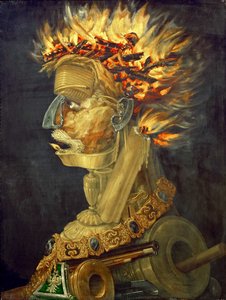
Giuseppe Arcimboldo (1527 – 1593), a Milanese artist who defied convention and cemented his place in art history, stands apart from his contemporaries. While many painters of the Renaissance focused on idealized depictions of human form—a pursuit driven by humanist ideals—Arcimboldo embarked on an audacious experiment: transforming portraits into elaborate still lifes composed entirely of fruits, vegetables, flowers, and other natural elements. His masterpiece, “L’Hiver” (Winter), housed in the Louvre Museum, exemplifies this singular approach and continues to captivate viewers with its ingenious illusionistic technique and profound symbolic resonance.
Historical Context: Arcimboldo’s work emerged during a time of intellectual ferment in Europe, fueled by rediscovery of classical texts and burgeoning scientific inquiry. The Renaissance fascination with the natural world—expressed vividly in botanical illustrations and anatomical studies—provided fertile ground for Arcimboldo's conceptual breakthrough. He wasn’t merely creating an aesthetically pleasing image; he was engaging in a dialogue with humanist thought, suggesting that human form could be mirrored in the patterns and textures of nature.
Symbolism & Emotional Impact: The choice of fruits and vegetables as portrait subjects carries significant symbolic weight. Winter itself represents dormancy, death, and rebirth—themes central to Renaissance cosmology. Arcimboldo’s depiction underscores the cyclical nature of existence and subtly conveys a message about resilience and transformation. More than just visually arresting, “L’Hiver” prompts contemplation on humanity's relationship with the environment and its ability to adapt to challenging circumstances. The artwork evokes a feeling of wonder—a delight in the unexpected juxtaposition of artifice and nature—leaving viewers pondering Arcimboldo’s genius.
Materials & Craftsmanship: Arcimboldo employed oil paint on panel, applying his technique with meticulous care. He began by gluing meticulously arranged fruits and vegetables onto a surface before transferring the image to canvas or panel using a process akin to mezzotint engraving—a method that ensured exceptional detail and tonal accuracy. This painstaking craftsmanship speaks volumes about Arcimboldo’s dedication to artistic excellence.

1527 - 1593 , Itaalia

Explore the rich history of still life painting & the symbolism of fruit across art movements. Discover masterpieces from Caravaggio to Cézanne with Most-Famous-Paintings – expert guidance & museum-quality reproductions.

Explore the rich history & symbolism of still life painting with Most-Famous-Paintings. Discover masterpieces from the Dutch Golden Age, learn about vanitas art, and find expert guidance for collecting timeless artworks.

Explore the captivating world of Severin Roesen, a major American still life painter influenced by Dutch masters. Discover his lush compositions and the symbolism within his art – a window into 19th-century America.

Avastage klassikalisest natüürstildist kaasaegse abstraktsionismini ulatuvat kunstivalikut Most-Famous-Paintings'is! Tellige kvaliteetsed reproduktsioonid, kohandatud maalid ja professionaalne konsultatsioon luksusliku kodu loomiseks.

Explore the evolution of contemplation in Western art from Renaissance masters to Modernism. Discover iconic artworks & find museum-quality reproductions at Most-Famous-Paintings.


Püsige kursis viimaste kunstiuudistega, eksklusiivsete pakkumistega ja sisustamisideetega.
Kirjeldage meile oma projekti ja meie kunstieksperdid pakuvad teile 3 isikupärast kunstiettepanekut.
Laske meil koostada just teile mõeldud 3 valikut – tasuta!


 Preview
 Saada
Saada Jaga
Jaga
 Teave teose kohta

 Laadi alla
 Sarnased teosed
 Röntgenuuring
 Slaidietendus

 Loe lähemalt







 Klaasivalik on saadaval ainult suuruses kuni 110 cm