x
Meie kunstnike poolt tellimusel valmistatud käsitsi maalitud õli-kainaste teos teie soovitud suuruses ja raamis. ( Osta print Osta pilt)
Vali meie eelmääratud suurused, mis vastavad teose algupärastele proportsioonidele.

Sa võite sisestada oma mõõtmed konkreetse raami või ruumi sobivuse tagamiseks. Kui teie valitud suurus ei vasta originaalpildi proportsioonidele, siis kärvime kunstiteost või laiendame maali täiendavate käsitsi maalitud elementidega. Enne tootmise algust saadetakse teile heakskiitmiseks digitaalne eelvaade.
Palun pidage meeles, et ekraanil kuvatav eelvaade ei kajasta tegelikku kärpimist või laiendamist. Ainult eelvaade näitab täpselt lõplikku kompositsiooni.
Kuigi on saadaval kohandatud suurused, soovitame originaalproportsioonide säilimiseks valida mõõdud eelmääratletud nimekirjast.
Maailmline tarne 3–4 nädala jooksul tavalise 5 nädala asemel. (18 august). Kvaliteedis kompromisse ei tehta.


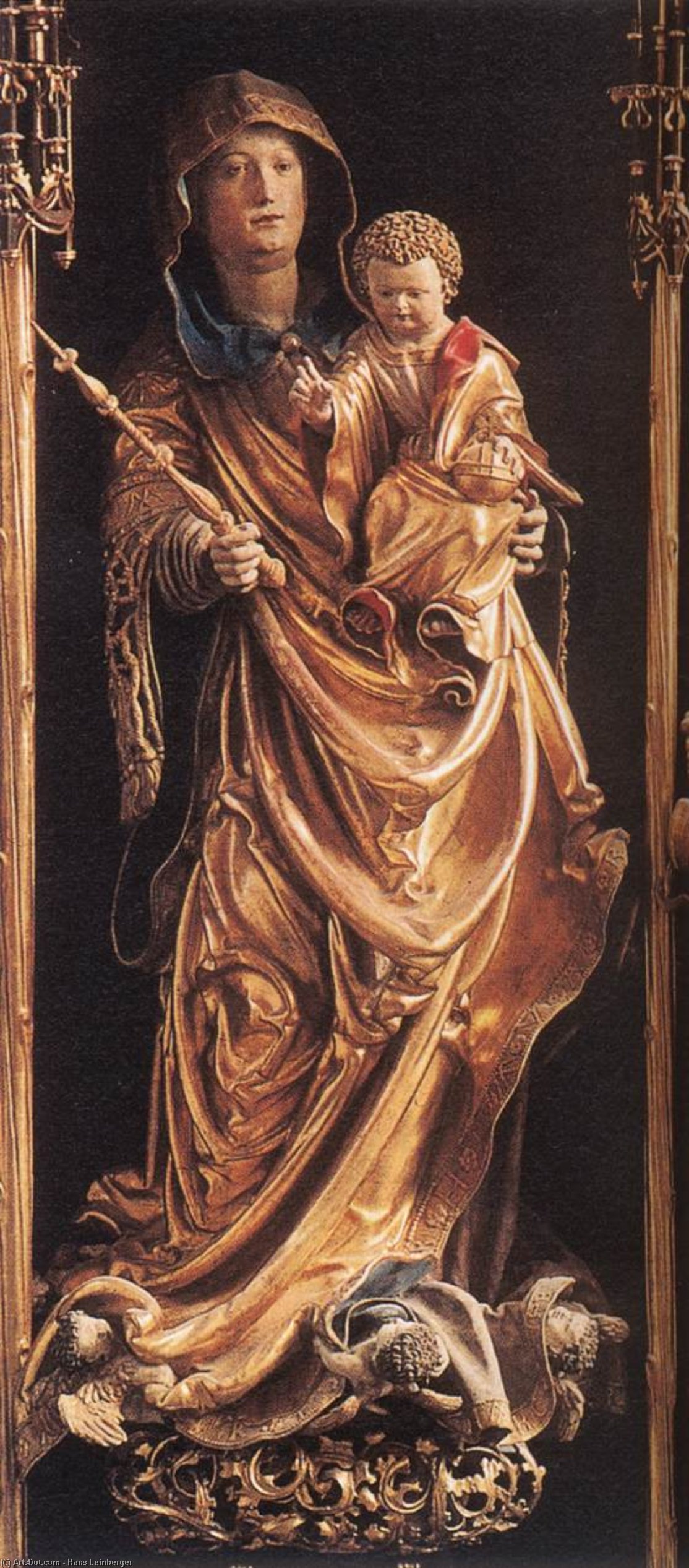
Virgin and Child
Reproduktsiooni suurus

Hans Leinberger (c.1475/1480 – after 1531) remains a figure shrouded in some mystery, yet his legacy endures as one of Altbayern’s most prominent sculptors of the Early Renaissance. While biographical details are scarce—his birthplace and precise artistic education remain elusive—scholarly research has illuminated his remarkable career and contribution to German art history.
Leinberger emerged onto the artistic scene around 1510 in Landshut, Bavaria, where he established a workshop that would become synonymous with innovation and stylistic refinement. His patron, Louis X, Duke of Bavaria, recognized Leinberger’s talent and commissioned significant projects, notably the monumental statue of Albert IV for Innsbruck’s Hofkirche—a testament to Dürer's influence and Leinberger’s ability to capture regal dignity.
Leinberger's artistic style is characterized by its sensitivity to detail and its ability to convey psychological depth—qualities that distinguish him from earlier Gothic sculptors. His work embodies the humanist impulse to represent human form accurately, while simultaneously honoring religious dogma. Leinberger’s enduring influence can be seen in subsequent generations of Bavarian sculptors who adopted his techniques and aesthetic sensibilities.
Despite the paucity of surviving sculptures—only two Madonna figures remain—Leinberger's contribution to German Renaissance art is undeniable. He stands as a symbol of Altbayern’s artistic flourishing during Louis X’s reign, securing his place among the masters of his time and cementing his legacy as a sculptor who seamlessly blended Gothic tradition with humanist innovation.

1478 - 1531 , Germany


Püsige kursis viimaste kunstiuudistega, eksklusiivsete pakkumistega ja sisustamisideetega.
Kirjeldage meile oma projekti ja meie kunstieksperdid pakuvad teile 3 isikupärast kunstiettepanekut.
Laske meil koostada just teile mõeldud 3 valikut – tasuta!


 Eelvaade
 Saada
Saada Jaga
Jaga
 Teave teose kohta

 Laadi alla
 Sarnased teosed
 Röntgenuuring
 Slaidietendus

 Loe lähemalt




































 Klaasivalik on saadaval ainult suuruses kuni 110 cm