x

Meie kunstnike poolt tellimusel valmistatud käsitsi maalitud õli-kainaste teos teie soovitud suuruses ja raamis. ( Osta print Osta pilt)





























Vali meie eelmääratud suurused, mis vastavad teose algupärastele proportsioonidele.

Sa võite sisestada oma mõõtmed konkreetse raami või ruumi sobivuse tagamiseks. Kui teie valitud suurus ei vasta originaalpildi proportsioonidele, siis kärvime kunstiteost või laiendame maali täiendavate käsitsi maalitud elementidega. Enne tootmise algust saadetakse teile heakskiitmiseks digitaalne eelvaade.
Palun pidage meeles, et ekraanil kuvatav eelvaade ei kajasta tegelikku kärpimist või laiendamist. Ainult eelvaade näitab täpselt lõplikku kompositsiooni.
Kuigi on saadaval kohandatud suurused, soovitame originaalproportsioonide säilimiseks valida mõõdud eelmääratletud nimekirjast.
Maailmline tarne 3–4 nädala jooksul tavalise 5 nädala asemel. (19 august). Kvaliteedis kompromisse ei tehta.


Napoleon in His Study
Reproduktsiooni suurus
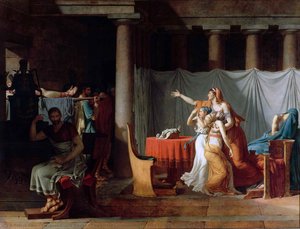
Jacques Louis David’s “Napoleon in His Study,” completed in 1812, stands as a cornerstone of Neoclassicism—a movement that sought to recapture the grandeur and moral seriousness of ancient Greece and Rome. More than just an aesthetically pleasing depiction, this monumental canvas offers a profound glimpse into the mind of Napoleon Bonaparte himself, encapsulating his ambition, intellect, and the weighty responsibilities borne by the Emperor who reshaped Europe.
Artistic Context: The late 18th century witnessed a dramatic shift away from the opulent Baroque style towards Neoclassicism. Artists like David rejected Rococo’s frivolity, favoring instead clarity, restraint, and idealized forms rooted in classical ideals. David's meticulous draftsmanship—a hallmark of his oeuvre—was driven by an unwavering belief in portraying truth through beauty, mirroring the philosophical currents of Enlightenment thinkers who championed reason and virtue.
Symbolism: Beyond its formal elements, “Napoleon in His Study” is laden with symbolic significance. Napoleon's posture exudes confidence and authority, reflecting his unwavering conviction in his own destiny. The book he holds represents not merely erudition but also strategic thinking—a crucial component of his military prowess. Even the seemingly insignificant vase positioned centrally may symbolize the Emperor’s patronage of culture and art, underscoring his desire to elevate France to its former glory.
Technique: David's meticulous attention to detail is evident in every brushstroke—from the subtle folds of Napoleon’s uniform to the texture of the desk surface. He achieved this level of realism through painstaking preparatory sketches and a methodical layering process, ensuring that each element contributes to the overall impression of grandeur and solemn contemplation. The painting exemplifies the Neoclassical commitment to accuracy and emotional resonance.
Legacy: “Napoleon in His Study” continues to inspire artists and scholars alike. It serves as a testament to David’s artistic genius and his ability to capture the spirit of an era—a pivotal moment in European history marked by revolution, ambition, and the enduring fascination with idealized leadership. Its influence can be seen in countless subsequent portraits and artworks that strive for similar levels of psychological insight and stylistic elegance.


1748 - 1800 , Prantsusmaa

Explore the life & art of Jacques-Louis David, leading Neoclassical painter of the French Revolution. Discover iconic works like 'The Death of Marat' and his lasting impact on art history. Expert analysis & high-quality reproductions at Most-Famous-Paintings.

Explore the captivating world of Anne-Louis Girodet, a pivotal figure bridging Neoclassicism & Romanticism. Discover his masterpieces and unique artistic vision with Most-Famous-Paintings.

Explore the captivating world of Neoclassical portraiture! Discover the power & ideals behind masterpieces by David, Girodet & more. Expert analysis, custom reproductions & art appraisal at Most-Famous-Paintings.

Explore the profound tension between Neoclassicism's rational order and Romanticism's emotional depth. An expert journey through the masters of art history, from David to Delacroix, perfect for collectors and enthusiasts seeking a deeper understanding of artistic evolution.

Explore the artistic brilliance of the Enlightenment era! Discover Rococo's elegance & Neoclassicism’s virtue with expert insights into 18th-century masterpieces. Learn about David, Kauffmann & more.


Püsige kursis viimaste kunstiuudistega, eksklusiivsete pakkumistega ja sisustamisideetega.
Kirjeldage meile oma projekti ja meie kunstieksperdid pakuvad teile 3 isikupärast kunstiettepanekut.
Laske meil koostada just teile mõeldud 3 valikut – tasuta!


 Eelvaade
 Saada
Saada Jaga
Jaga
 Teave teose kohta

 Laadi alla
 Sarnased teosed
 Röntgenuuring
 Slaidietendus

 Loe lähemalt







 Klaasivalik on saadaval ainult suuruses kuni 110 cm