x


 Preview
 Tellimaks maali Osta digipilt
 Saada
Saada
 Teave teose kohta
 Lisa lemmikutesse
 Laadi alla
 Sarnased teosed
 Röntgenuuring
 Slaidietendus
Muuseumikvaliteediga giclée- või kangasprint kiire tootmisega ja paindlikud viimistlusvõimalused.





























Vali meie eelmääratud suurused, mis vastavad teose algupärastele proportsioonidele.

Saate sisestada oma mõõdud, et need sobiks konkreetse raami või ruumi sisse. Kui valitud suurus ei vasta originaalteose proportsioonidele, lõigame teose ära või laiendame pilti peegeldatud või ühtlase servaga. Enne tootmisprotsessi algust saadetakse Teie kinnitamiseks digitaalne näidis.
Palun märka, et ekraanil kuvatav eelvaade ei kajasta tegelikku lõigamist või laiendamist. Ainult näidis kujutab täpselt lõplikku kompositsiooni.
Kuigi erimõõdu on saadaval, soovitame originaaproportsioonide säilitamiseks valida mõõt ette määratud nimekirjast.
Ülemaailmne tarne () 2 nädala jooksul, tavalise 4/5 nädala asemel. (26 juuli)


La dame en bleu
Reproduktsiooni suurus
James Ensor’s “La Dame en Bleu,” or “The Blue Lady,” stands as a cornerstone of Expressionist art, capturing not merely an image but a profound psychological state. Painted around 1874 and currently housed in the National Museum Cardiff, this portrait transcends mere representation; it delves into themes of isolation, contemplation, and unsettling beauty—elements characteristic of Ensor’s distinctive artistic vision.
“La Dame en Bleu” firmly establishes Ensor within the burgeoning Expressionist movement, rejecting Impressionistic ideals of objective observation in favor of subjective emotional response. Unlike Renoir’s luminous depictions of Parisian life, Ensor eschews polished surfaces and vibrant colors for a darker palette—a deliberate choice designed to convey inner turmoil.
Ensor's technique is characterized by thick impasto brushstrokes that lend texture and physicality to the canvas. These bold strokes capture not only the visual appearance of the woman but also the artist’s palpable preoccupation with conveying psychological depth. The meticulous rendering of fabrics—particularly the dress—demonstrates Ensor’s dedication to capturing subtle nuances of form and color.
Painted in 1874, “La Dame en Bleu” emerged during a period of artistic ferment as Impressionism wrestled with its legacy. Artists like Renoir were pushing boundaries, experimenting with new approaches to capturing light and atmosphere—yet Ensor deliberately rejected these conventions, prioritizing emotional intensity over aesthetic beauty.
Ensor’s rejection of academic formalism resonated deeply with the avant-garde sensibilities of his time. He was a pioneer in exploring unsettling imagery and confronting uncomfortable truths about human psychology—a bold stance that cemented his position as one of the most influential figures in early 20th-century art.
"La Dame en Bleu" compels viewers to confront questions of identity, vulnerability, and the complexities of human experience. The woman’s gaze—direct yet distant—suggests a profound awareness of her surroundings while simultaneously maintaining an inner world untouched by external pressures. Ensor's masterful use of color and texture contributes to this unsettling effect, inviting contemplation on themes of isolation and psychological resilience.

James Sidney Edouard, Baron Ensor (Ostend, 13 April 1860 – 19 November 1949) was a Flemish-Belgian painter and printmaker, an important influence on expressionism and surrealism who lived in Ostend for almost his entire life. He was associated with the artistic group Les XX.
James Ensor’s father, James Frederic Ensor, born in Brussels to English parents, was a cultivated man who studied engineering in England and Germany. Ensor's mother, Maria Catharina Haegheman, was Belgian. Ensor himself lacked interest in academic study and left school at the age of fifteen to begin his artistic training with two local painters. From 1876, he attended drawing lessons at the College of the Blessed Virgin in Ostend.
Ensor’s early paintings reflected a more traditional approach, depicting scenes of everyday life rendered in somber tones. Works like *Russian Music* (1881) and *The Drunkards* (1883) reveal a nascent talent grappling with realism, but even within these early pieces, hints of the unsettling imagery to come are present. A pivotal shift occurred as Ensor’s palette brightened and his subject matter grew increasingly bizarre. He began to populate his canvases with carnivals, skeletons, puppets, and allegorical figures—a world steeped in fantasy and often bordering on the grotesque. This wasn't merely a stylistic change; it was a deliberate exploration of the darker aspects of human existence, a rejection of societal norms, and an embrace of the irrational.
In 1883 Ensor, along with a few older students of the Brussels‘ academy, would take leave of the artists‘ association *L'Essor*. They established the artists‘ association* Les Vingt*. This will play an important role in the dissemination of various international *avant-garde* movements. Ensor’s father’s shop in Ostend was a main purveyor of carnival paraphernalia, and this fascination would permeate his artwork.
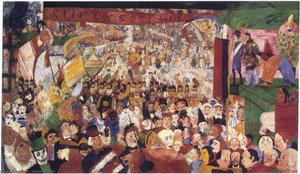
Throughout his career, Ensor produced a series of works that continue to shock and fascinate audiences today. *The Scandalized Masks* (1883) stands as an early testament to his fascination with the power of disguise and its ability to reveal hidden emotions. Perhaps his most controversial work, *Christ’s Entry into Brussels* (1888-1889), remains a powerful satire of religious hypocrisy and societal indifference—a painting initially met with harsh criticism but now celebrated as a masterpiece. The unsettling image of Christ entering a city teeming with grotesque masked figures is a potent commentary on the disconnect between spiritual ideals and human behavior.
James Ensor was recognized as a pivotal figure in the transition from 19th-century Symbolism to early 20th-century Expressionism and Surrealism—a true pioneer of modern art. His fearless exploration of the subconscious, his embrace of grotesque imagery, and his rejection of academic conventions paved the way for future generations of artists who dared to challenge artistic norms. He is remembered as a visionary artist whose uncompromising vision continues to inspire contemplation and debate.

1860 - 1949 , Belgium
Avastage Egon Schiele 25 parimat teost! Sukelduge ekspressionismi maailma, portreekunstis ja Austria maalikunsti sügavustesse. Leidke inspiratsiooni oma interjöörile Most-Famous-Paintings.com-is – kvaliteetsed reproduktsioonid ja kunstikollektsioonid ootavad teid!

Explore the unsettling yet captivating world of James Ensor, a pioneer of Expressionism. Discover his satirical masterpieces, symbolic imagery & lasting influence on modern art. High-quality reproductions available at Most-Famous-Paintings.

Explore the captivating landscapes of James Stark (1794-1859), a leading Norwich School painter. Discover his Dutch Master influences, critical acclaim, and enduring legacy in contemporary realism. Art collecting insights & investment potential.

Avastage mängulise kujunduse psühholoogilist mõju maalides! Uurime huumori, veideruse ja alateadvuse rolli emotsionaalses heaolus ja sotsiaalses seotuses. Kvaliteetne artikkel kunstihuvilistele.

Explore the rich history of portrait painting with expert insights into Renaissance masterpieces & modern innovations. Discover artists, movements & commission a custom oil painting at Most-Famous-Paintings.


Püsige kursis viimaste kunstiuudistega, eksklusiivsete pakkumistega ja sisustamisideetega.
Kirjeldage meile oma projekti ja meie kunstieksperdid pakuvad teile 3 isikupärast kunstiettepanekut.
Laske meil koostada just teile mõeldud 3 valikut – tasuta!


 Jaga
Jaga


 Loe lähemalt







 Klaasivalik on saadaval ainult suuruses kuni 110 cm