x

Meie kunstnike poolt tellimusel valmistatud käsitsi maalitud õli-kainaste teos teie soovitud suuruses ja raamis. ( Osta print Osta pilt)
Vali meie eelmääratud suurused, mis vastavad teose algupärastele proportsioonidele.

Sa võite sisestada oma mõõtmed konkreetse raami või ruumi sobivuse tagamiseks. Kui teie valitud suurus ei vasta originaalpildi proportsioonidele, siis kärvime kunstiteost või laiendame maali täiendavate käsitsi maalitud elementidega. Enne tootmise algust saadetakse teile heakskiitmiseks digitaalne eelvaade.
Palun pidage meeles, et ekraanil kuvatav eelvaade ei kajasta tegelikku kärpimist või laiendamist. Ainult eelvaade näitab täpselt lõplikku kompositsiooni.
Kuigi on saadaval kohandatud suurused, soovitame originaalproportsioonide säilimiseks valida mõõdud eelmääratletud nimekirjast.
Maailmline tarne 3–4 nädala jooksul tavalise 5 nädala asemel. (20 august). Kvaliteedis kompromisse ei tehta.


Revealed
Reproduktsiooni suurus

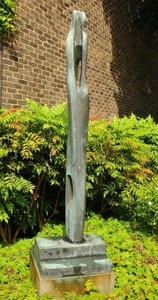
In the quiet, deliberate arrangements of Kishio Suga, one finds a profound meditation on the very essence of existence. Born in 1944 in Morioka, Japan, Suga emerged as a pivotal figure in the transformative landscape of post-war Japanese art. His practice is not merely about the creation of objects, but rather about orchestrating an encounter between the viewer, the material, and the void. As a central protagonist of the Mono-ha movement, which rose to prominence in the late 1960s and 1970s, Suga’s work serves as a bridge between the tangible world of raw matter and the intangible realm of spatial perception.
The philosophy underpinning his work is deeply rooted in the concept of "not-making." Unlike traditional sculptors who seek to impose their will upon clay or stone to create representational forms, Suga approaches his medium with a sense of radical humility. He engages with the interdependency of elements, allowing materials to speak through their inherent properties. His practice involves a delicate choreography of natural and industrial substances—stone, steel plates, glass, wood, wire, and water—arranged in states that feel both ephemeral and eternally grounded. Through this method, he invites us to witness the tension and harmony that exist when disparate forces meet within a shared space.
To understand Kishio Suga is to understand the seismic shift brought about by the Mono-ha (School of Things) movement. During a period of intense social and political upheaval in Japan, Suga and his contemporaries sought to strip away the layers of Western-centric abstraction and sculptural ego. Instead, they turned their gaze toward the "thingness" of the world. In Suga’s installations, there is no hierarchy between a heavy slab of granite and a delicate strand of cotton; each element is granted equal importance, contributing to a larger, site-specific dialogue.
His mastery lies in his ability to manipulate the perceptual boundaries of a room. By placing a steel plate atop a wooden block or allowing light to interact with glass and oil, he creates a sense of "site-specificity" that transcends mere placement. The work is never finished until it is integrated into its environment; the surrounding air, the floor, and even the viewer's movement become essential components of the piece. This approach challenges the traditional notion of art as a portable commodity, instead presenting it as an experiential event that exists in a delicate balance with its surroundings.
Throughout his long and distinguished career, Suga has continued to refine this language of minimal intervention. His achievements are marked by a consistent ability to evoke deep emotional responses through seemingly simple gestures. He does not demand attention through spectacle; rather, he commands it through a quiet, undeniable presence. His work remains a cornerstone of contemporary installation art, influencing generations of artists who seek to explore the boundaries between the physical and the metaphysical.
The historical significance of Kishio Suga resides in his contribution to a new way of seeing. He has taught us that:

1944 - , Japan
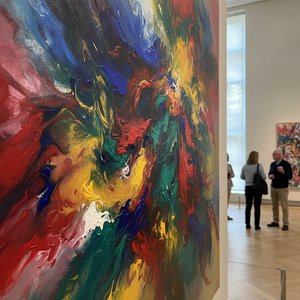
Explore the profound emotional depth of Lyrical Abstraction. Discover how masters like Raymond Parker used color and form to bridge Impressionism and Abstract Expressionism. Learn about this pivotal movement through our expert-led art history guide.

Explore the profound emotional depth of Color Field painting. Discover the history of mid-century abstraction, from Rothko to Newman, and learn how pure color transforms the viewer's experience through our expert art history guide.


Püsige kursis viimaste kunstiuudistega, eksklusiivsete pakkumistega ja sisustamisideetega.
Kirjeldage meile oma projekti ja meie kunstieksperdid pakuvad teile 3 isikupärast kunstiettepanekut.
Laske meil koostada just teile mõeldud 3 valikut – tasuta!


 Eelvaade
 Saada
Saada Jaga
Jaga
 Teave teose kohta

 Laadi alla
 Sarnased teosed
 Röntgenuuring
 Slaidietendus

 Loe lähemalt




































 Klaasivalik on saadaval ainult suuruses kuni 110 cm