x

 1971
1971 28.0 x 36.0 cm
Ostke kõrglahutusel ja täiustatud digitaalne pilt, mis on oluliselt parem kui veebilehel näidatud eelvaade.
Iga fail on meie spetsialistide poolt hoolikalt ette valmistatud, kasutades kaasaegseid tööriistu ja professionaalset käsitsi retušeerimist. Tagame, et igal pildil on erakordne selgus, täpne värvitäpsus ja peen detail.
Lõplik fail saadetakse e-posti teel 72 tunni jooksul, olles optimeeritud koheseks kasutamiseks professionaalsetes, toimetuslikes ja trüki keskkondades. See on sama kvaliteet, mida usaldavad tipptasemel disainistuudiod, kirjastused ja galeriid.
Laadi alla kõrge resolutsiooniga fail isiklikuks vaatamiseks, trükkimiseks ja loomingulisteks projektideks. ( Osta print Osta käsitsi maalitud maal)
Valides Most-Famous-Paintings.com, ei saa sa lihtsalt pilti – saad professionaalselt parandatud digitaalse teose, mida on valmistatud täpsusega ja mis on toetatud rahuldamatusgarantiiga. Siin on kõik, mis sinu tellimusega automaatselt kaasneb:

Teie kõrge resolutsiooniga digitaalne pildifail saadetakse teile e-posti 72 tunni jooksul pärast tellimist – kohe kasutamiseks valmis.

Teie teos on professionaalselt optimeeritud arenenud tehisintellekti tööriistade ja käsitsi redigeerimise abil, tagades maksimaalse detailitaseme, selguse ja värvitäpsuse.

Kas kustutasid faili kogukalu unustamisel või kustutamisel? Puudub mure – saad selle uuesti igal ajal ilma lisatasuta.

Nautige oma teoseid koheselt ilma tolli-, maksude või tarnimaskuludeta – digiletchargused on alati maksuvabadud.

Me tagame, et teie digitaalne pilt kajastaks originaali värve professionaalsete tööriistade ja värvihalduse abil võimalikult täpselt.

Kui te ei ole oma digipildiga rahul, parandame seda või tagastame 100% summast 60 päeva jooksul – küsimusi ei esita.

Ei ole rahul? Saate täielise tagastaja 60 päeva jooksul pärast digitaalse faili kättesaamist – küsimata.

Osta 3 pilti, säästa 10% - Osta 5, säästa 15% - Osta 10+, säästa 20%. Sobib suurepäraselt loomingulisteks projektideks, galeriideks ja agentuurideks.

To look through the lens of Larry Clark is to confront the unvarnished, often uncomfortable truths of American adolescence. Born in Tulsa, Oklahoma, in 1943, Clark’s artistic journey began not in a formal studio, but within the intimate, gritty confines of his own upbringing. As the son of an itinerant baby photographer, he was immersed in the mechanics of the camera from a young age, yet his true subject matter would eventually drift far from the sanitized innocence of portraiture. Instead, Clark turned his gaze toward the fringes of suburban life, capturing the turbulent, often shadowed existence of youth culture during the late 1960s and early 1970s. His work serves as a visceral bridge between the quiet desperation of the American heartland and the explosive, rebellious energy of the counterculture movement.
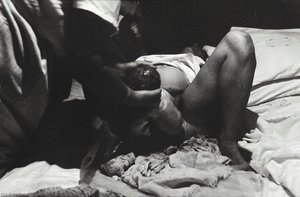
The foundation of Clark’s legendary status was laid in his seminal photographic series, Tulsa. Published in 1971, this collection of black-and-white imagery acted as a profound sociological document, stripping away the myth of suburban perfection to reveal a landscape of drug use, sexual exploration, and profound alienation. Through these photographs, Clark did not merely observe; he participated, documenting the lives of his own circle of friends with a level of intimacy that felt both voyeuristic and deeply empathetic. His technique relied on a stark realism, utilizing dramatic lighting and candid, unposed compositions to evoke a sense of palpable melancholy and raw vulnerability. By focusing on the textures of skin, the shadows of back alleys, and the fleeting expressions of disillusionment, he transformed documentary photography into a psychological exploration of the human condition.
As his career evolved, Clark transitioned from the still image to the moving picture, bringing his unflinching aesthetic to the realm of film. His directorial debut, the 1995 film Kids, became a cultural lightning rod, sparking intense national debate regarding artistic freedom and the depiction of societal decay. Much like his photography, the film utilized an uncompromisingly honest approach to tackle themes of drug addiction, sexuality, and the loss of innocence among teenagers. This ability to navigate the boundaries of controversy allowed Clark to cement his role as a provocateur, a storyteller who refused to look away from the darker impulses of the youth subcultures he inhabited—from the gritty streets of New York to the sun-drenched, yet equally rebellious, worlds of surfing and skateboarding.
The historical significance of Larry Clark’s body of work lies in its ability to shatter long-held American myths. He challenged the notion that violence and drug use were exclusively urban phenomena, instead presenting them as pervasive elements of the suburban experience. His later works, such as Teenage Lust, continued this trajectory, weaving together personal history and collective memory through a tapestry of graphic and emotive imagery. Through his multifaceted career as a photographer, director, and writer, Clark has left an indelible mark on contemporary art, reminding us that true beauty often resides in the most unsettling moments of our shared reality. His legacy remains a powerful testament to the importance of the witness, capturing the fleeting, often painful transition from childhood to the complexities of adulthood.

1943 -


Püsige kursis viimaste kunstiuudistega, eksklusiivsete pakkumistega ja sisustamisideetega.
Kirjeldage meile oma projekti ja meie kunstieksperdid pakuvad teile 3 isikupärast kunstiettepanekut.
Laske meil koostada just teile mõeldud 3 valikut – tasuta!


 Eelvaade
 Saada
Saada Jaga
Jaga
 Teave teose kohta

 Laadi alla
 Sarnased teosed
 Röntgenuuring
 Slaidietendus
 Loe lähemalt