


x

 Oil On CanvasWallArtSurrealist Style
 1926Modern
 47.0 x 65.0 cm
Muuseumikvaliteediga giclée- või kangasprint kiire tootmisega ja paindlikud viimistlusvõimalused. ( Osta käsitsi maalitud maal Osta pilt)





























Vali meie eelmääratud suurused, mis vastavad teose algupärastele proportsioonidele.

Saate sisestada oma mõõdud, et need sobiks konkreetse raami või ruumi sisse. Kui valitud suurus ei vasta originaalteose proportsioonidele, lõigame teose ära või laiendame pilti peegeldatud või ühtlase servaga. Enne tootmisprotsessi algust saadetakse Teie kinnitamiseks digitaalne näidis.
Palun märka, et ekraanil kuvatav eelvaade ei kajasta tegelikku lõigamist või laiendamist. Ainult näidis kujutab täpselt lõplikku kompositsiooni.
Kuigi erimõõdu on saadaval, soovitame originaaproportsioonide säilitamiseks valida mõõt ette määratud nimekirjast.
Ülemaailmne tarne () 2 nädala jooksul, tavalise 4/5 nädala asemel. (21 august)


Bella in Mourillon
Reproduktsiooni suurus
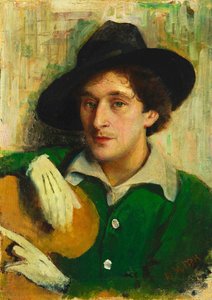
Marc Chagall’s “Bella in Mourillon,” painted in 1926 during his Parisian exile, stands as a poignant emblem of Surrealism—a movement that sought to liberate the imagination from rational constraints. More than just a depiction of a woman holding flowers, this artwork delves into profound themes of grief, remembrance, and the enduring power of dreams, cementing Chagall’s place among the most influential artists of the 20th century.
Symbolism: The bouquet of flowers serves as a powerful symbol of mourning and remembrance, mirroring Bella's sorrowful expression. However, their vibrant colors – predominantly white, pink, and green – introduce an element of hope amidst the darkness, suggesting that beauty can endure even in times of grief. The clock on the wall—a recurring motif in Chagall’s oeuvre—represents the relentless march of time and underscores the inevitability of change. Similarly, the book symbolizes knowledge and contemplation, inviting viewers to engage with themes of memory and introspection.
Emotional Impact: “Bella in Mourillon” succeeds in capturing a palpable sense of melancholy and tenderness. Chagall’s masterful manipulation of color and form evokes feelings of nostalgia and invites contemplation on universal human experiences—namely loss, love, and the yearning for connection. It's a piece that lingers in the mind long after viewing, prompting reflection on the complexities of life and the importance of preserving cherished memories.

1887 - 1985 , Valgevene

Explore the profound history and technical brilliance of oil on panel painting. From Renaissance masters to modern techniques, discover why this rigid support offers unparalleled precision and permanence for fine art lovers and collectors.


Püsige kursis viimaste kunstiuudistega, eksklusiivsete pakkumistega ja sisustamisideetega.
Kirjeldage meile oma projekti ja meie kunstieksperdid pakuvad teile 3 isikupärast kunstiettepanekut.
Laske meil koostada just teile mõeldud 3 valikut – tasuta!


 Eelvaade
 Saada
Saada Jaga
Jaga
 Teave teose kohta

 Laadi alla
 Sarnased teosed
 Röntgenuuring
 Slaidietendus
 Loe lähemalt







 Klaasivalik on saadaval ainult suuruses kuni 110 cm


