


x

Muuseumikvaliteediga giclée- või kangasprint kiire tootmisega ja paindlikud viimistlusvõimalused. ( Osta käsitsi maalitud maal Osta pilt)





























Vali meie eelmääratud suurused, mis vastavad teose algupärastele proportsioonidele.

Saate sisestada oma mõõdud, et need sobiks konkreetse raami või ruumi sisse. Kui valitud suurus ei vasta originaalteose proportsioonidele, lõigame teose ära või laiendame pilti peegeldatud või ühtlase servaga. Enne tootmisprotsessi algust saadetakse Teie kinnitamiseks digitaalne näidis.
Palun märka, et ekraanil kuvatav eelvaade ei kajasta tegelikku lõigamist või laiendamist. Ainult näidis kujutab täpselt lõplikku kompositsiooni.
Kuigi erimõõdu on saadaval, soovitame originaaproportsioonide säilitamiseks valida mõõt ette määratud nimekirjast.
Ülemaailmne tarne () 2 nädala jooksul, tavalise 4/5 nädala asemel. (23 august)


Chichikov shaves
Reproduktsiooni suurus
Marc Chagall’s “Chichikov Shaves,” created in 1923 during his formative years in Paris, stands as a quintessential example of Naïve Art—a movement that championed unfiltered emotion and imaginative vision over meticulous realism. More than just a depiction of shaving, this lithograph delves into the complexities of identity and memory, mirroring Chagall’s own artistic journey and deeply rooted in his Jewish heritage.
The artwork immediately captivates with its dynamic composition. Chagall employs a flattened perspective—a hallmark of Naïve Art—compressing space to create an unsettling yet alluring atmosphere. Figures are positioned at oblique angles, disrupting conventional spatial relationships and emphasizing movement. Thick hatching and crosshatching dominate the rendering of Chichikov’s hair and clothing, conveying texture and volume with remarkable accuracy despite the lack of traditional shading. These expressive lines contribute significantly to the overall mood—a blend of tranquility and unease.
Executed in a striking monochrome palette of black, white, and gray, “Chichikov Shaves” eschews color’s decorative role for emotional impact. The stark contrast between light and dark areas amplifies dramatic shadows and highlights, creating a theatrical effect. Beyond the visual aesthetic, the monochromatic scheme underscores the painting's introspective nature. Notably, the mirror reflects Chichikov’s image—a recurring motif in Chagall’s oeuvre—representing not merely physical appearance but also psychological self-awareness. The distorted reflection hints at hidden anxieties and adds to the artwork’s enigmatic quality.
Chagall's artistic style draws inspiration from folk art traditions, particularly those prevalent in Vitebsk—the town that profoundly shaped his worldview. This influence is evident in the simplified forms and stylized depictions of figures and objects. The painting’s subject matter—a seemingly mundane activity elevated by Chagall’s imaginative sensibility—reflects a broader preoccupation with exploring themes of memory, myth, and spirituality.
"Chichikov Shaves" transcends mere representation; it invites contemplation. Its dreamlike atmosphere evokes feelings of nostalgia and wonder, prompting viewers to consider the interplay between inner experience and external reality. Chagall’s masterful use of line and texture—combined with the symbolic significance of the mirror—creates a powerfully evocative artwork that continues to resonate with audiences today.

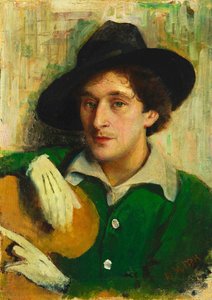
1887 - 1985 , Valgevene

Explore 10 legendary lithographs by Toulouse-Lautrec, Munch & Picasso that redefined art! Discover the stories behind these iconic prints and find museum-quality reproductions for your home decor at Most-Famous-Paintings.com. Explore the full collection online.

Explore the profound beauty of Naïve Art. Discover its unique characteristics, historical significance, and how this unfiltered, sincere aesthetic can elevate professional interior design through high-quality, hand-painted reproductions.

Discover the profound beauty of Naïve Art. Explore how self-taught masters bypass academic tradition to capture raw emotional truth through vibrant color and soulful simplicity. A cultural journey for the true art lover seeking depth beyond convention.

Explore the rich history of printmaking with Most-Famous-Paintings. Discover techniques from intaglio to lithography, learn about collecting valuable prints & find museum-quality reproductions. Expert insights for art enthusiasts and collectors.

Embark on a soulful journey through the unfiltered beauty of Naïve Art and Primitivism. Explore the profound emotional truth and charming simplicity shared by self-taught masters and icons like Picasso. Discover the raw, sincere essence of art history with our expert curation.


Püsige kursis viimaste kunstiuudistega, eksklusiivsete pakkumistega ja sisustamisideetega.
Kirjeldage meile oma projekti ja meie kunstieksperdid pakuvad teile 3 isikupärast kunstiettepanekut.
Laske meil koostada just teile mõeldud 3 valikut – tasuta!


 Eelvaade
 Saada
Saada Jaga
Jaga
 Teave teose kohta

 Laadi alla
 Sarnased teosed
 Röntgenuuring
 Slaidietendus

 Loe lähemalt







 Klaasivalik on saadaval ainult suuruses kuni 110 cm


