


x

Ostke kõrglahutusel ja täiustatud digitaalne pilt, mis on oluliselt parem kui veebilehel näidatud eelvaade.
Iga fail on meie spetsialistide poolt hoolikalt ette valmistatud, kasutades kaasaegseid tööriistu ja professionaalset käsitsi retušeerimist. Tagame, et igal pildil on erakordne selgus, täpne värvitäpsus ja peen detail.
Lõplik fail saadetakse e-posti teel 72 tunni jooksul, olles optimeeritud koheseks kasutamiseks professionaalsetes, toimetuslikes ja trüki keskkondades. See on sama kvaliteet, mida usaldavad tipptasemel disainistuudiod, kirjastused ja galeriid.
Laadi alla kõrge resolutsiooniga fail isiklikuks vaatamiseks, trükkimiseks ja loomingulisteks projektideks. ( Osta print Osta käsitsi maalitud maal)
Valides Most-Famous-Paintings.com, ei saa sa lihtsalt pilti – saad professionaalselt parandatud digitaalse teose, mida on valmistatud täpsusega ja mis on toetatud rahuldamatusgarantiiga. Siin on kõik, mis sinu tellimusega automaatselt kaasneb:

Teie kõrge resolutsiooniga digitaalne pildifail saadetakse teile e-posti 72 tunni jooksul pärast tellimist – kohe kasutamiseks valmis.

Teie teos on professionaalselt optimeeritud arenenud tehisintellekti tööriistade ja käsitsi redigeerimise abil, tagades maksimaalse detailitaseme, selguse ja värvitäpsuse.

Kas kustutasid faili kogukalu unustamisel või kustutamisel? Puudub mure – saad selle uuesti igal ajal ilma lisatasuta.

Nautige oma teoseid koheselt ilma tolli-, maksude või tarnimaskuludeta – digiletchargused on alati maksuvabadud.

Me tagame, et teie digitaalne pilt kajastaks originaali värve professionaalsete tööriistade ja värvihalduse abil võimalikult täpselt.

Kui te ei ole oma digipildiga rahul, parandame seda või tagastame 100% summast 60 päeva jooksul – küsimusi ei esita.

Ei ole rahul? Saate täielise tagastaja 60 päeva jooksul pärast digitaalse faili kättesaamist – küsimata.

Osta 3 pilti, säästa 10% - Osta 5, säästa 15% - Osta 10+, säästa 20%. Sobib suurepäraselt loomingulisteks projektideks, galeriideks ja agentuurideks.
Marc Chagall's "The Drunkard," painted in 1914, isn’t merely a depiction of a man lost to intoxication; it’s a profound exploration of vulnerability, societal pressure, and the enduring power of memory. Emerging from his formative years in Vitebsk, Belarus—a city steeped in both Jewish tradition and Russian Orthodox influence—the painting embodies Chagall's signature style: a vibrant collision of dreamlike imagery and stark emotional honesty. The work immediately arrests the viewer with its dramatic simplicity – a near-monochromatic palette dominated by black, white, and shades of grey, punctuated only by subtle tonal shifts that sculpt form and convey mood. This deliberate restriction forces us to focus on the core elements: the slumped figure of the drunkard and the outstretched hand offering support.
The composition itself is a masterclass in controlled imbalance. A forceful diagonal line, created by the supporting figure’s arm, pulls the eye downwards and slightly to the right, mirroring the downward trajectory of the man's head and body. This instability isn’t accidental; it speaks to the precariousness of his situation, both physical and emotional. The geometric background—a network of simplified shapes reminiscent of buildings or urban structures—adds another layer of complexity. These forms aren’t merely decorative; they suggest a confining environment, perhaps representing the societal pressures that contribute to the man's plight, or even the weight of tradition and expectation.
“The Drunkard” firmly situates itself within the burgeoning Expressionist movement, though Chagall’s unique perspective quickly distinguishes it. Like many Expressionists, Chagall prioritized conveying raw emotion over realistic representation. However, he achieves this through a remarkably controlled technique—likely lithography or a similar printmaking process. The bold, thick outlines defining the figures are characteristic of this medium, lending an almost graphic quality to the scene. The flatness of the image, devoid of traditional shading and texture, further emphasizes the work’s emotional intensity. This deliberate simplification allows the viewer to project their own feelings onto the subject, fostering a deeply personal connection with the artwork.
The use of line is particularly significant. It's not used to meticulously render form but rather to delineate edges and create a sense of movement. The lines are dynamic and slightly distorted, contributing to the overall feeling of unease and disorientation. This stylistic choice aligns perfectly with the painting’s thematic concerns – the man’s loss of control and the unsettling nature of his predicament.
Beyond its formal elements, “The Drunkard” is rich in symbolic meaning. The supporting figure, often interpreted as a caregiver or perhaps even a representation of faith, offers assistance but also bears the visible weight of that support. His posture suggests a quiet resignation, hinting at the burden of responsibility and the difficulty of truly helping someone lost to their own demons. The drunkard’s slumped form embodies vulnerability and isolation – he is both physically supported and emotionally distanced from connection. The tilted head and averted gaze further reinforce this sense of detachment.
Considering Chagall's personal history, rooted in the Hasidic Jewish community, it’s not surprising that themes of faith, tradition, and the struggle between individual desire and societal expectations permeate his work. “The Drunkard” can be seen as a meditation on these complex dynamics, offering a poignant glimpse into the human condition.
“The Drunkard,” completed just before World War I, resonates with an enduring power. It’s a work that transcends its specific historical context to speak to universal themes of suffering, compassion, and the search for meaning in a chaotic world. Chagall's masterful use of color, line, and composition creates a visually arresting image that simultaneously evokes empathy and contemplation. Reproductions of this iconic painting continue to captivate audiences today, serving as a potent reminder of our shared humanity and the importance of offering support to those who stumble along life’s difficult path.

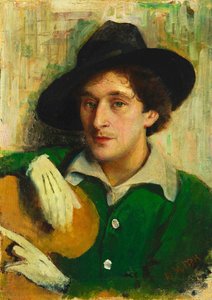
1887 - 1985 , Valgevene


Püsige kursis viimaste kunstiuudistega, eksklusiivsete pakkumistega ja sisustamisideetega.
Kirjeldage meile oma projekti ja meie kunstieksperdid pakuvad teile 3 isikupärast kunstiettepanekut.
Laske meil koostada just teile mõeldud 3 valikut – tasuta!


 Eelvaade
 Saada
Saada Jaga
Jaga
 Teave teose kohta

 Laadi alla
 Sarnased teosed
 Röntgenuuring
 Slaidietendus

 Loe lähemalt


