x


Meie kunstnike poolt tellimusel valmistatud käsitsi maalitud õli-kainaste teos teie soovitud suuruses ja raamis. ( Switch to Print Switch to Image)





























Vali meie eelmääratud suurused, mis vastavad teose algupärastele proportsioonidele.

Sa võite sisestada oma mõõtmed konkreetse raami või ruumi sobivuse tagamiseks. Kui teie valitud suurus ei vasta originaalpildi proportsioonidele, siis kärvime kunstiteost või laiendame maali täiendavate käsitsi maalitud elementidega. Enne tootmise algust saadetakse teile heakskiitmiseks digitaalne eelvaade.
Palun pidage meeles, et ekraanil kuvatav eelvaade ei kajasta tegelikku kärpimist või laiendamist. Ainult eelvaade näitab täpselt lõplikku kompositsiooni.
Kuigi on saadaval kohandatud suurused, soovitame originaalproportsioonide säilimiseks valida mõõdud eelmääratletud nimekirjast.
Maailmline tarne 3–4 nädala jooksul tavalise 5 nädala asemel. (30 juuli). Kvaliteedis kompromisse ei tehta.


Para III
Reproduktsiooni suurus
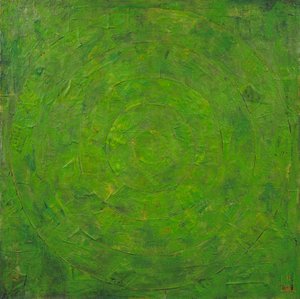
Morris Louis (1912–1962), an American Color Field painter, revolutionized abstract art in the mid-century with his groundbreaking approach to pigment application. His monumental canvases like “Para III,” created in 1959, exemplify this distinctive style—a deliberate rejection of traditional representation and a fervent embrace of pure color as expressive language.
“Para III” immediately captivates viewers with its overwhelming vibrancy. Dominating the canvas is a tapestry of crimson, scarlet, and magenta hues that bleed outwards from vertical bands of pigment, creating an illusion of flowing light and movement. The artist’s meticulous technique—the pioneering use of Magna paint—allowed for unprecedented control over color dispersion and layering, resulting in a surface texture that resembles solidified wax.
Louis's method involved pouring Magna onto unstretched canvas, allowing the pigment to spread organically across the surface. This process eschewed brushes entirely, prioritizing spontaneity and responding directly to the interplay of light and atmosphere. The resulting “silkscreen” effect is not merely accidental; it’s a calculated decision designed to convey an emotional state—a profound contemplation of nature and a yearning for transcendence.
Influenced by artists like Ralph Albert Blakelock and William James Glackens, Louis sought to capture the essence of feeling rather than depicting visual details. Blakelock's tonalist landscapes – particularly “Moonlight” – instilled in Louis a fascination with capturing subtle gradations of color and conveying mood through atmospheric perspective. Similarly, Glackens’ still lifes—such as “Still Life with Roses & Fruit”—demonstrated the power of color to evoke emotion and stimulate contemplation.
“Para III” resonates deeply with viewers due to its ability to bypass rational thought and tap into primal instincts. The bold colors pulsate with energy, mirroring the dynamism of the natural world—specifically, the forest setting depicted in Blakelock’s work. It's a piece that invites introspection and encourages contemplation on themes of beauty, solitude, and spiritual awakening.
Furthermore, Louis’s exploration of Magna paint represents a significant advancement in pigment technology. This acrylic emulsion, developed specifically for him by Leo Newman, offered superior adhesion and color stability compared to conventional oil paints, allowing for greater artistic freedom and expanding the possibilities of Color Field painting.


1912 - 1962 , USA
Avastage Kazimir Malevitši 25 parimat teost! Sukelduge suprematismi ja abstraktse kunsti maailma. Leidke inspiratsiooni interjööridisainiks ning ostke kvaliteetseid reproduktsioone Most-Famous-Paintings.com-is. Avastage täielik kollektsioon veebis!

Explore the captivating world of Beatrice Parsons, a pioneering British abstract expressionist. Discover her journey from garden watercolors to evocative color field paintings and learn about her place within art history.

Explore the profound spiritual resonance of Color Field Painting with insights into Rothko, Newman & Still. Discover the techniques & legacy of this influential abstract art movement.
Avastage Mark Rothko 25 parimat teost! Sukelduge ekspressionismi sügavustesse, emotsionaalsetesse värvimaalid ja kunstniku lugudesse. Leidke täiuslik seinakaunistus Most-Famous-Paintings.com-ist – kvaliteetsed reproduktsioonid ja interjööride inspiratsioon.
Journey through Wassily Kandinsky's 25 most iconic abstract paintings. Explore his revolutionary use of color, form & spiritual expressionism. Find museum-quality Kandinsky reproductions and elevate your home decor with Most-Famous-Paintings.com. Discover all masterpieces on Most-Famous-Paintings.com!


Püsige kursis viimaste kunstiuudistega, eksklusiivsete pakkumistega ja sisustamisideetega.
Kirjeldage meile oma projekti ja meie kunstieksperdid pakuvad teile 3 isikupärast kunstiettepanekut.
Laske meil koostada just teile mõeldud 3 valikut – tasuta!


 Preview
 Saada
Saada Jaga
Jaga
 Teave teose kohta

 Laadi alla
 Sarnased teosed
 Röntgenuuring
 Slaidietendus


 Loe lähemalt







 Klaasivalik on saadaval ainult suuruses kuni 110 cm