x

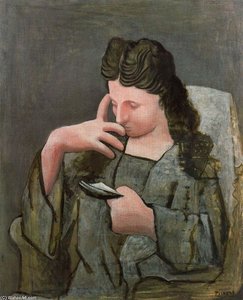
 Acrylic On CanvasWallArtCubist Style
 1919Modern
 28.0 x 26.0 cm
Ostke kõrglahutusel ja täiustatud digitaalne pilt, mis on oluliselt parem kui veebilehel näidatud eelvaade.
Iga fail on meie spetsialistide poolt hoolikalt ette valmistatud, kasutades kaasaegseid tööriistu ja professionaalset käsitsi retušeerimist. Tagame, et igal pildil on erakordne selgus, täpne värvitäpsus ja peen detail.
Lõplik fail saadetakse e-posti teel 72 tunni jooksul, olles optimeeritud koheseks kasutamiseks professionaalsetes, toimetuslikes ja trüki keskkondades. See on sama kvaliteet, mida usaldavad tipptasemel disainistuudiod, kirjastused ja galeriid.
Laadi alla kõrge resolutsiooniga fail isiklikuks vaatamiseks, trükkimiseks ja loomingulisteks projektideks. ( Osta print Osta käsitsi maalitud maal)
Valides Most-Famous-Paintings.com, ei saa sa lihtsalt pilti – saad professionaalselt parandatud digitaalse teose, mida on valmistatud täpsusega ja mis on toetatud rahuldamatusgarantiiga. Siin on kõik, mis sinu tellimusega automaatselt kaasneb:

Teie kõrge resolutsiooniga digitaalne pildifail saadetakse teile e-posti 72 tunni jooksul pärast tellimist – kohe kasutamiseks valmis.

Teie teos on professionaalselt optimeeritud arenenud tehisintellekti tööriistade ja käsitsi redigeerimise abil, tagades maksimaalse detailitaseme, selguse ja värvitäpsuse.

Kas kustutasid faili kogukalu unustamisel või kustutamisel? Puudub mure – saad selle uuesti igal ajal ilma lisatasuta.

Nautige oma teoseid koheselt ilma tolli-, maksude või tarnimaskuludeta – digiletchargused on alati maksuvabadud.

Me tagame, et teie digitaalne pilt kajastaks originaali värve professionaalsete tööriistade ja värvihalduse abil võimalikult täpselt.

Kui te ei ole oma digipildiga rahul, parandame seda või tagastame 100% summast 60 päeva jooksul – küsimusi ei esita.

Ei ole rahul? Saate täielise tagastaja 60 päeva jooksul pärast digitaalse faili kättesaamist – küsimata.

Osta 3 pilti, säästa 10% - Osta 5, säästa 15% - Osta 10+, säästa 20%. Sobib suurepäraselt loomingulisteks projektideks, galeriideks ja agentuurideks.
Pablo Picasso's "Tricorne (study)," created in 1919, offers an intimate look into the creative process of a master. This delicate pencil drawing, measuring just 28 x 26 cm, isn’t a finished work intended for grand display; rather, it is a preparatory sketch brimming with energy and anticipation. It serves as a vital stepping stone towards Picasso's larger involvement in the world of ballet, specifically his designs for Sergei Diaghilev’s Ballets Russes production of Manuel de Falla’s “El sombrero de tres picos” – or "The Three-Cornered Hat." The drawing reveals Picasso grappling with composition and character, distilling a vibrant theatrical vision onto paper with remarkable economy.
To understand the significance of this study, one must consider its context. Following World War I, Picasso found himself increasingly drawn to stage design, collaborating with Diaghilev, a visionary impresario known for pushing artistic boundaries. The Ballets Russes were renowned for their innovative choreography and lavish productions, and Picasso’s involvement brought a revolutionary aesthetic to the company. “Tricorne” wasn't simply about illustrating a story; it was an opportunity to reimagine Spanish culture through a Cubist lens. The sketch depicts figures – both human and equine – clustered around what appears to be a central platform or table within an architectural space defined by arches. The composition, while employing perspective, isn’t rigidly adhered to, creating a slightly flattened effect that hints at the stylized world Picasso was building for the ballet. This deliberate distortion is characteristic of his evolving style, moving beyond strict Cubist fragmentation towards a more fluid and expressive form.
The power of “Tricorne (study)” lies not in color, but in its masterful use of line and tone. Executed entirely in black and white, Picasso relies on variations in line weight – from bold outlines to delicate shading – to define form and create a sense of depth. The technique is reminiscent of his earlier sketches, yet infused with the burgeoning stylistic innovations that would come to define his mature work. The absence of color forces the viewer to focus on the essential elements: gesture, composition, and the interplay of light and shadow implied through dense line work. This study isn’t about replicating reality; it's about capturing an *impression* – a fleeting moment of energy and drama poised to burst forth onto the stage. The simplified forms and expressive lines speak volumes, conveying a sense of movement and anticipation that transcends the limitations of monochrome.
While abstract in its execution, “Tricorne (study)” is deeply rooted in Spanish culture. The ballet itself draws inspiration from a 17th-century Spanish novel, and Picasso’s designs aimed to evoke the spirit of Andalusia – its vibrant traditions, passionate characters, and sun-drenched landscapes. The presence of horses within the sketch alludes to the importance of equestrianism in Spanish life and folklore. The figures gathered around the central platform suggest a social gathering, perhaps a celebration or a dramatic confrontation. Though the narrative remains ambiguous, the drawing hints at themes of love, rivalry, and the complexities of human relationships. This study is more than just a technical exercise; it’s an exploration of national identity and artistic expression, filtered through the unique vision of one of the 20th century's most influential artists.


1881 - 1973 , Hispaania


Püsige kursis viimaste kunstiuudistega, eksklusiivsete pakkumistega ja sisustamisideetega.
Kirjeldage meile oma projekti ja meie kunstieksperdid pakuvad teile 3 isikupärast kunstiettepanekut.
Laske meil koostada just teile mõeldud 3 valikut – tasuta!


 Eelvaade
 Saada
Saada Jaga
Jaga
 Teave teose kohta

 Laadi alla
 Sarnased teosed
 Röntgenuuring
 Slaidietendus
 Loe lähemalt