


x

Ostke kõrglahutusel ja täiustatud digitaalne pilt, mis on oluliselt parem kui veebilehel näidatud eelvaade.
Iga fail on meie spetsialistide poolt hoolikalt ette valmistatud, kasutades kaasaegseid tööriistu ja professionaalset käsitsi retušeerimist. Tagame, et igal pildil on erakordne selgus, täpne värvitäpsus ja peen detail.
Lõplik fail saadetakse e-posti teel 72 tunni jooksul, olles optimeeritud koheseks kasutamiseks professionaalsetes, toimetuslikes ja trüki keskkondades. See on sama kvaliteet, mida usaldavad tipptasemel disainistuudiod, kirjastused ja galeriid.
Laadi alla kõrge resolutsiooniga fail isiklikuks vaatamiseks, trükkimiseks ja loomingulisteks projektideks. ( Osta print Osta käsitsi maalitud maal)
Valides Most-Famous-Paintings.com, ei saa sa lihtsalt pilti – saad professionaalselt parandatud digitaalse teose, mida on valmistatud täpsusega ja mis on toetatud rahuldamatusgarantiiga. Siin on kõik, mis sinu tellimusega automaatselt kaasneb:

Teie kõrge resolutsiooniga digitaalne pildifail saadetakse teile e-posti 72 tunni jooksul pärast tellimist – kohe kasutamiseks valmis.

Teie teos on professionaalselt optimeeritud arenenud tehisintellekti tööriistade ja käsitsi redigeerimise abil, tagades maksimaalse detailitaseme, selguse ja värvitäpsuse.

Kas kustutasid faili kogukalu unustamisel või kustutamisel? Puudub mure – saad selle uuesti igal ajal ilma lisatasuta.

Nautige oma teoseid koheselt ilma tolli-, maksude või tarnimaskuludeta – digiletchargused on alati maksuvabadud.

Me tagame, et teie digitaalne pilt kajastaks originaali värve professionaalsete tööriistade ja värvihalduse abil võimalikult täpselt.

Kui te ei ole oma digipildiga rahul, parandame seda või tagastame 100% summast 60 päeva jooksul – küsimusi ei esita.

Ei ole rahul? Saate täielise tagastaja 60 päeva jooksul pärast digitaalse faili kättesaamist – küsimata.

Osta 3 pilti, säästa 10% - Osta 5, säästa 15% - Osta 10+, säästa 20%. Sobib suurepäraselt loomingulisteks projektideks, galeriideks ja agentuurideks.
Paul Klee's 1929 composition, ‘In the current six thresholds,’ is not merely an arrangement of shapes and colors; it’s a visual articulation of underlying structures, a quiet exploration of spatial relationships rendered in a distinctly geometric language. The artwork immediately draws the eye into a tightly controlled world of rectangles, stacked and interwoven like architectural blocks or perhaps segments of a city viewed from above. Dominated by earthy browns, punctuated with subtle reds and cool greys, the palette evokes a sense of grounded stability, yet the dynamic interplay of forms prevents any feeling of monotony. Klee, ever the innovator, doesn’t offer a window into a recognizable scene but instead invites us to contemplate the very essence of form itself.
To understand ‘In the current six thresholds,’ one must consider its historical context. 1929 was a pivotal year in the development of modern art, and Klee was deeply engaged with the ideas circulating within the Bauhaus school – though he maintained a unique artistic independence. The influence of Constructivism and De Stijl is palpable; both movements championed abstraction, geometric precision, and a rejection of representational imagery in favor of pure form and color. However, Klee transcends simple imitation. While sharing their commitment to order, his work possesses a lyrical quality absent in the more rigorously functional aesthetic of some Constructivists. There’s a subtle warmth within the composition, a human touch that softens the austerity of purely geometric abstraction. Klee wasn't interested in imposing a rigid ideology through art; he sought instead to express a personal vision, a poetic sensibility filtered through the lens of modernism.
The painting’s surface reveals Klee’s masterful handling of materials. Likely executed in oil or acrylic on canvas, the application of paint is generally smooth, yet retains a subtle texture that hints at the artist's hand. The lines defining each rectangular block are bold and deliberate, creating clear boundaries between color fields. Klee avoids dramatic chiaroscuro, opting instead for an even illumination that emphasizes the flatness of the picture plane. This reinforces the artwork’s two-dimensional quality, drawing attention to its formal elements rather than attempting to create an illusion of depth. The careful layering of colors and shapes suggests a meticulous process of construction, as if Klee were building his composition piece by piece, guided by intuition and a profound understanding of color theory – a subject he explored extensively in his writings.
Despite its abstract nature, ‘In the current six thresholds’ is not devoid of emotional resonance. The painting evokes a sense of quiet contemplation, inviting viewers to lose themselves in its intricate arrangement of forms. The muted color palette contributes to this introspective mood, fostering a feeling of calm and stability. While lacking explicit symbolism, the artwork can be interpreted as a metaphor for the complexities of modern life – the fragmented nature of experience, the search for order within chaos. Its enduring appeal lies in its ability to transcend specific interpretations, offering instead a space for personal reflection and aesthetic appreciation. For those seeking an artwork that embodies both intellectual rigor and subtle beauty, ‘In the current six thresholds’ is a compelling choice—a testament to Paul Klee's unique artistic vision.

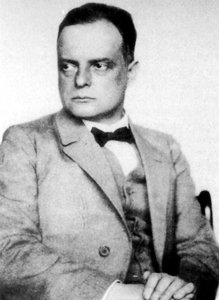
1879 - 1940 , Šveits


Püsige kursis viimaste kunstiuudistega, eksklusiivsete pakkumistega ja sisustamisideetega.
Kirjeldage meile oma projekti ja meie kunstieksperdid pakuvad teile 3 isikupärast kunstiettepanekut.
Laske meil koostada just teile mõeldud 3 valikut – tasuta!


 Eelvaade
 Saada
Saada Jaga
Jaga
 Teave teose kohta

 Laadi alla
 Sarnased teosed
 Röntgenuuring
 Slaidietendus

 Loe lähemalt


