


x


 Preview
 Telli trükis Tellimaks maali
 Saada
Saada
 Teave teose kohta
 Lisa lemmikutesse
 Laadi alla
 Sarnased teosed
 Röntgenuuring
 Slaidietendus
Ostke kõrglahutusel ja täiustatud digitaalne pilt, mis on oluliselt parem kui veebilehel näidatud eelvaade.
Iga fail on meie spetsialistide poolt hoolikalt ette valmistatud, kasutades kaasaegseid tööriistu ja professionaalset käsitsi retušeerimist. Tagame, et igal pildil on erakordne selgus, täpne värvitäpsus ja peen detail.
Lõplik fail saadetakse e-posti teel 72 tunni jooksul, olles optimeeritud koheseks kasutamiseks professionaalsetes, toimetuslikes ja trüki keskkondades. See on sama kvaliteet, mida usaldavad tipptasemel disainistuudiod, kirjastused ja galeriid.
Laadi alla kõrge resolutsiooniga fail isiklikuks vaatamiseks, trükkimiseks ja loomingulisteks projektideks.
Valides Most-Famous-Paintings.com, ei saa sa lihtsalt pilti – saad professionaalselt parandatud digitaalse teose, mida on valmistatud täpsusega ja mis on toetatud rahuldamatusgarantiiga. Siin on kõik, mis sinu tellimusega automaatselt kaasneb:

Teie kõrge resolutsiooniga digitaalne pildifail saadetakse teile e-posti 72 tunni jooksul pärast tellimist – kohe kasutamiseks valmis.

Teie teos on professionaalselt optimeeritud arenenud tehisintellekti tööriistade ja käsitsi redigeerimise abil, tagades maksimaalse detailitaseme, selguse ja värvitäpsuse.

Kas kustutasid faili kogukalu unustamisel või kustutamisel? Puudub mure – saad selle uuesti igal ajal ilma lisatasuta.

Nautige oma teoseid koheselt ilma tolli-, maksude või tarnimaskuludeta – digiletchargused on alati maksuvabadud.

Me tagame, et teie digitaalne pilt kajastaks originaali värve professionaalsete tööriistade ja värvihalduse abil võimalikult täpselt.

Kui te ei ole oma digipildiga rahul, parandame seda või tagastame 100% summast 60 päeva jooksul – küsimusi ei esita.

Ei ole rahul? Saate täielise tagastaja 60 päeva jooksul pärast digitaalse faili kättesaamist – küsimata.

Osta 3 pilti, säästa 10% - Osta 5, säästa 15% - Osta 10+, säästa 20%. Sobib suurepäraselt loomingulisteks projektideks, galeriideks ja agentuurideks.
Piet Mondrian’s “Composition,” produced around 1925, stands as a cornerstone of Neo-Plasticism—a movement that fundamentally reshaped the landscape of early twentieth-century art. More than just aesthetically pleasing, it embodies a profound philosophical assertion: that abstraction represents a more truthful reflection of reality than representational imagery.
As Dr Stephanie Chadwick eloquently explains in Smarthistory (Smarthistory), Mondrian believed that pure abstract art emancipated itself from the constraints of naturalistic depiction, liberating it to explore universal harmonies and principles.
Considered alongside references like *The Red Mill*, Mondrian’s formative landscapes reveal a young artist diligently studying nature—a meticulous process aimed at mastering technique. Yet, even amidst this careful observation, he harbored an insistent desire for simplification. He wasn't merely replicating what he saw; he sought to distill its essence into its purest form.
The painting itself is deceptively simple. A grid of horizontal and vertical lines dominates the canvas—a deliberate rejection of curvilinear forms favored by Impressionism and Cubism. Within this geometric framework reside squares of primary colors – red, blue, and yellow – interspersed with rectangles of black and white.
The meticulous execution is characteristic of Mondrian’s approach. Each square is precisely delineated, its edges sharply defined, conveying a sense of stability and order. The color palette—though restrained—is carefully considered; the hues are chosen to create visual balance and contribute to the overall meditative atmosphere.
“Composition” emerged during a period of intense intellectual ferment in Europe, fueled by breakthroughs in physics (Einstein’s theory of relativity) and psychology. Artists like Mondrian were grappling with questions about perception and representation, rejecting traditional artistic conventions in favor of new expressive languages.
The painting aligns perfectly with the tenets of Neo-Plasticism—a movement championed by artists including Kazimir Malevich and Theo van Doesburg. These pioneers sought to create a universal aesthetic language based on geometric abstraction, mirroring the underlying structure of the cosmos.
Mondrian’s use of color isn't arbitrary; it carries symbolic significance rooted in his spiritual beliefs. He drew inspiration from Zendavesta—the Zoroastrian sacred text—which posits that the universe is comprised of four elemental forces: fire, air, water, and earth.
The squares represent these elements, while the horizontal and vertical lines symbolize the opposing forces of heaven and earth. By eliminating extraneous details and reducing forms to their fundamental geometric shapes, Mondrian aimed to transcend subjective experience and capture a glimpse of objective reality—a quest for spiritual harmony expressed through visual language.
Despite its austere appearance, “Composition” possesses an undeniable emotional resonance. The balanced grid and harmonious color scheme evoke feelings of serenity and contemplation. It invites viewers to engage in a dialogue with the artwork itself—to consider its underlying principles and appreciate its subtle beauty.
As showcased at The Metropolitan Museum of Art (The Metropolitan Museum of Art), this piece exemplifies the movement’s ambition to communicate profound ideas through visual form, demonstrating how Mondrian successfully translated philosophical concepts into a powerfully evocative aesthetic experience.

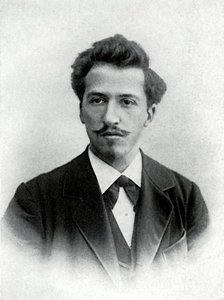
1872 - 1944 , Holland


Püsige kursis viimaste kunstiuudistega, eksklusiivsete pakkumistega ja sisustamisideetega.
Kirjeldage meile oma projekti ja meie kunstieksperdid pakuvad teile 3 isikupärast kunstiettepanekut.
Laske meil koostada just teile mõeldud 3 valikut – tasuta!


 Jaga
Jaga


 Loe lähemalt


