x

 Oil On CanvasWallArtBaroque
 151.0 x 149.0 cm
Muuseumikvaliteediga giclée- või kangasprint kiire tootmisega ja paindlikud viimistlusvõimalused. ( Osta käsitsi maalitud maal Osta pilt)





























Vali meie eelmääratud suurused, mis vastavad teose algupärastele proportsioonidele.

Saate sisestada oma mõõdud, et need sobiks konkreetse raami või ruumi sisse. Kui valitud suurus ei vasta originaalteose proportsioonidele, lõigame teose ära või laiendame pilti peegeldatud või ühtlase servaga. Enne tootmisprotsessi algust saadetakse Teie kinnitamiseks digitaalne näidis.
Palun märka, et ekraanil kuvatav eelvaade ei kajasta tegelikku lõigamist või laiendamist. Ainult näidis kujutab täpselt lõplikku kompositsiooni.
Kuigi erimõõdu on saadaval, soovitame originaaproportsioonide säilitamiseks valida mõõt ette määratud nimekirjast.
Ülemaailmne tarne () 2 nädala jooksul, tavalise 4/5 nädala asemel. (18 august)


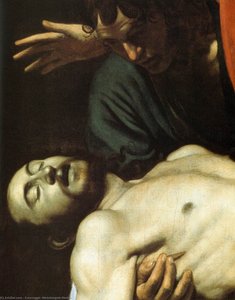
The Entombment
Reproduktsiooni suurus
To stand before this depiction of The Entombment is to be enveloped in a palpable atmosphere of sacred grief and profound human drama. Simon Vouet, a master navigating the turbulent currents from Mannerism into the full bloom of French Baroque, captures not merely an event, but a moment suspended between life and eternity. The scene centers on the figure laid before the cross, his outstretched arms speaking volumes of sacrifice and repose. It is a composition that demands the viewer’s complete surrender to its solemn narrative weight.
Vouet's genius shines through in his masterful handling of light and shadow, techniques heavily influenced by the dramatic realism pioneered by Caravaggio. The interplay between illumination and deep shadow—the tenebrism—is not merely decorative; it is narrative. Light seems to emanate from a divine source, selectively illuminating the pallor of the fallen body and the anguished gestures of those gathered around him. Observe the surrounding figures: their varied poses—some kneeling in supplication, others standing in quiet witness—create a complex tapestry of human reaction. The depth achieved through these clustered forms gives the composition an almost three-dimensional immediacy, pulling the observer directly into the sacred circle.
The symbolism inherent in this work is rich and deeply moving. Beyond the immediate religious narrative, the scene speaks to universal themes of loss, devotion, and redemption. The outstretched arms are a powerful symbol of both surrender and eternal embrace. The presence of multiple figures allows Vouet to explore the spectrum of human emotion—from profound sorrow to quiet contemplation—all converging on this central point of repose. For the collector or designer, this piece offers more than mere decoration; it is an emotional anchor, capable of lending a sense of weighty, contemplative dignity to any space.
Simon Vouet’s career trajectory—from his early portraiture successes to his pivotal role in major decorative schemes for Parisian patrons like Louis XIII—marks him as a key architect of the French Baroque style. This work, representative of that grand period, showcases his ability to integrate high drama with sophisticated compositional structure. The di sotto perspective suggested by the overall arrangement implies an immersive experience, making the viewer feel as if they are standing within the chapel itself. Owning a reproduction of this scale (151 x 149 cm) allows one to bring the grandeur and intellectual weight of 17th-century French artistic patronage into a modern setting.

Simon Vouet oli keeruline isik Prantsuse maaliku süutmises Mannerismist Barokika stiilima. Sündides kunstlikusse perere – tema isa Laurent oli maaler ja tema vend Aubin püüdis ka kunsti – sai Vouet varajase koolituse, mis loomis alusta tema tulevikule edukusele. Tema lapselaps, Ludovico Dorigny, jätkas pereli kunstlikku pärandi.
Tema Itaalia ajajal absorbeeris Vouet mitmeid erinevaid mõjuallusid. Ta õppis Caravaggio poolt pioneeritud dramaatilisi valgusvõte tehnikaid, omaks võttis Itaalia Mannerismi elemente ja süvenelt analüüsis Paolo Veronese kasutatavaid värvipalette ja di sotto in su (vahekülik perspektiivi). Ta sai inspiratsiooni ka Carracci, Guercinost, Lanfrancost ja Guido Renist teostest, sünteesides need erinevad stiilid ainulaadse kunstliku visiooni.
Simon Voueti pärand põhineb tema keerulisel rollil Itaalia ja Prantsuse kunsti vahel sillana. Ta võttis edukalt Itaalia Barokika dünaamika ja grandioosi, muuta selle stiiliks, mis kõnetas Prantsuse hovi ja aristokraatia maitseid. Tema mõju on eikaartlik 17. sajanni Prantsuse maaliku arengu jooksul, ja tema panused jäävad kunstihistoorikute jaoks tänapäeval tunnustatud.

1590 - 1649 , Prantsus

Explore the profound elegance of Baroque Classicism. Discover how 17th-century masters synthesized dramatic emotion with classical order through the lens of the Counter-Reformation and the works of legends like Carlo Maratta and Andrea Sacchi.

Explore the profound drama of 17th-century Baroque art. Discover how masters used chiaroscuro, movement, and emotional intensity to redefine history through the lens of the Counter-Reformation. An expert guide for art historians and collectors seeking deep cultural insight.

Explore the dramatic power of Baroque art through an expert guide to light, shadow, and emotion. Discover how the Counter-Reformation shaped 17th-century masterpieces and learn about the profound techniques used by the Old Masters to inspire awe.

Explore the dramatic evolution from Mannerist distortion to Baroque grandeur. Discover how light, shadow, and emotion redefined art history through a masterclass in technical mastery and religious fervor.

Explore the profound differences between Baroque drama and Rococo elegance. Our expert guide delves into art history, chiaroscuro, and the evolution of European masterpieces for collectors and enthusiasts seeking deep historical context.


Püsige kursis viimaste kunstiuudistega, eksklusiivsete pakkumistega ja sisustamisideetega.
Kirjeldage meile oma projekti ja meie kunstieksperdid pakuvad teile 3 isikupärast kunstiettepanekut.
Laske meil koostada just teile mõeldud 3 valikut – tasuta!


 Eelvaade
 Saada
Saada Jaga
Jaga
 Teave teose kohta

 Laadi alla
 Sarnased teosed
 Röntgenuuring
 Slaidietendus
 Loe lähemalt







 Klaasivalik on saadaval ainult suuruses kuni 110 cm