
Soovitusnimekiri Ostukorv Cart
Telli trükis Telli trükisTellimaks maali Tellimaks maali SaadaSaada
Teave teose kohtaTeave teose kohta Lisa lemmikutesse Lisa lemmikutesse Laadi allaLaadi alla Sarnased teosedSarnased teosed RöntgenuuringRöntgenuuring SlaidietendusSlaidietendus

Before

William Hogarth's "Before" depicts a haunting scene of domestic tension and social critique. Explore the stark realism and satirical commentary within this iconic 18th-century drawing.

William Hogarth oli inglise maalikunstnik ja graveerija kes tunnustati suuresti oma innovaatiliste kirjelduvate kunstiteoste eest ning hiljemalt ka selle maailma mõjutamise eest. Tema suurimaks saavutuseks oli uus kunstiliik – moraalseid teemasid käsitlevad sarjad, mis olid täielikult erinevad eelmistelt töödele ja pakkusid kriitilist suhtumist tolleaegsete probleemide kohta. Lisaks sellele oli Ho

Ostke kõrglahutusel ja täiustatud digitaalne pilt, mis on oluliselt parem kui veebilehel näidatud eelvaade.

Iga fail on meie spetsialistide poolt hoolikalt ette valmistatud, kasutades kaasaegseid tööriistu ja professionaalset käsitsi retušeerimist. Tagame, et igal pildil on erakordne selgus, täpne värvitäpsus ja peen detail.

Lõplik fail saadetakse e-posti teel 72 tunni jooksul, olles optimeeritud koheseks kasutamiseks professionaalsetes, toimetuslikes ja trüki keskkondades. See on sama kvaliteet, mida usaldavad tipptasemel disainistuudiod, kirjastused ja galeriid.

Digitaalne kunstiteos

Laadi alla kõrge resolutsiooniga fail isiklikuks vaatamiseks, trükkimiseks ja loomingulisteks projektideks.

Lõppsumma

$9.99

Sisse kuulub iga digitaalse pildi tellimusega

Eksperdi digitaalne kohaletoimetamine, garanteeritud

Valides Most-Famous-Paintings.com, ei saa sa lihtsalt pilti – saad professionaalselt parandatud digitaalse teose, mida on valmistatud täpsusega ja mis on toetatud rahuldamatusgarantiiga. Siin on kõik, mis sinu tellimusega automaatselt kaasneb:

shipping_icon
Kiire digitaalne saatmine

Teie kõrge resolutsiooniga digitaalne pildifail saadetakse teile e-posti 72 tunni jooksul pärast tellimist – kohe kasutamiseks valmis.

canvas_icon
Tehisintellektiga täiustatud digitaalne fail

Teie teos on professionaalselt optimeeritud arenenud tehisintellekti tööriistade ja käsitsi redigeerimise abil, tagades maksimaalse detailitaseme, selguse ja värvitäpsuse.

insurance_icon
Tasuta eluaegne uuesti saatmine

Kas kustutasid faili kogukalu unustamisel või kustutamisel? Puudub mure – saad selle uuesti igal ajal ilma lisatasuta.

tax_icon
Puuduvad importimaksed – alati

Nautige oma teoseid koheselt ilma tolli-, maksude või tarnimaskuludeta – digiletchargused on alati maksuvabadud.

color_icon
Värvitäpsuse garantii

Me tagame, et teie digitaalne pilt kajastaks originaali värve professionaalsete tööriistade ja värvihalduse abil võimalikult täpselt.

return_icon
60-päevane rahulolu garantii

Kui te ei ole oma digipildiga rahul, parandame seda või tagastame 100% summast 60 päeva jooksul – küsimusi ei esita.

guarantee_icon
100% raha tagastamise garantii

Ei ole rahul? Saate täielise tagastaja 60 päeva jooksul pärast digitaalse faili kättesaamist – küsimata.

discount_icon
Suurema tellimuse soodustused

Osta 3 pilti, säästa 10% - Osta 5, säästa 15% - Osta 10+, säästa 20%. Sobib suurepäraselt loomingulisteks projektideks, galeriideks ja agentuurideks.

Teave teose kohta

  • Influences: 18th Century London
  • Artistic style: Satirical, Realism
  • Subject or theme: Social Commentary
  • Movement: Rococo, Satire
  • Notable elements: Moral scenes, Caricature
  • Location: Private Collection
  • Year: 1720s-1764

Kunstiviktoriin

Iga küsimuse kohta on ainult üks õige vastus.

Küsimus 1:
What is the primary subject depicted in William Hogarth’s ‘Before’?
Küsimus 2:
Which of the following best describes William Hogarth’s artistic style?
Küsimus 3:
The image ‘Before’ by Hogarth likely reflects which historical period's concerns?

Kollektsiooni kirjeldus

A Study in Domestic Discord: Unpacking William Hogarth’s “Before”

William Hogarth's "Before," painted circa 1753, isn’t merely a depiction of a domestic scene; it’s a meticulously crafted tableau of social commentary and psychological insight. This remarkable work, rendered in oil on canvas, captures a moment of intense tension within a seemingly ordinary room – a bedroom dominated by the uneasy dynamic between a seated woman and a standing one. The stark black and white palette immediately establishes a formal, almost theatrical quality, reminiscent of Hogarth’s earlier engravings, yet imbued with a raw emotionality rarely seen in his more polished portraiture.

The composition is deliberately unsettling. The posture of the standing figure – her hand raised, poised to strike – speaks volumes about suppressed anger and simmering resentment. Her face, partially obscured, conveys a mixture of defiance and vulnerability. Conversely, the seated woman’s expression suggests resignation or perhaps even complicity. The inclusion of the cat and dog, seemingly oblivious to the drama unfolding around them, further emphasizes the isolation and detachment within this domestic sphere. The mirror reflects not just the room's interior but also hints at a deeper, unresolved narrative – a sense of self-reflection and hidden truths.

Hogarth’s Satirical Vision: A Window into 18th Century London

To fully appreciate “Before,” it’s crucial to understand Hogarth's broader artistic project. He was a pioneer in using art as a vehicle for social critique, meticulously documenting the realities of life in 18th-century London – its excesses, hypocrisies, and moral failings. His "modern moral subjects," as he termed them, weren’t simply portraits; they were carefully constructed narratives designed to expose societal ills. Hogarth's work reflects a deep engagement with the social and political currents of his time, mirroring the anxieties surrounding class divisions, marriage customs, and the rise of consumerism.

The scene itself is laden with symbolism. The umbrella, a symbol of protection and status, lies discarded on the floor, suggesting a disruption of order and perhaps even a loss of control. The bed, a central element of domesticity, becomes a site of conflict rather than comfort. Hogarth’s meticulous attention to detail – from the texture of the fabrics to the arrangement of objects – reinforces the painting's narrative power, inviting viewers to decipher the unspoken tensions and underlying meanings.

Technique and Legacy: Hogarth’s Masterful Approach

Hogarth’s technique is characterized by a remarkable level of realism and precision. He employed a method of “optical mixing,” layering thin washes of paint to create subtle gradations of tone and texture, a technique that lends the image an almost photographic quality. His use of chiaroscuro – the dramatic contrast between light and shadow – further heightens the emotional impact of the scene, drawing attention to key elements and creating a sense of unease. The starkness of the monochrome palette amplifies the drama and focuses the viewer’s attention on the figures and their interaction.

“Before” stands as a testament to Hogarth's artistic genius and his profound understanding of human nature. It remains a powerful example of satirical art, offering a timeless glimpse into the complexities of domestic relationships and the social realities of 18th-century London. Most-Famous-Paintings’s hand-painted reproductions capture the essence of this iconic work, allowing you to experience its intricate details and emotional depth in stunning fidelity.

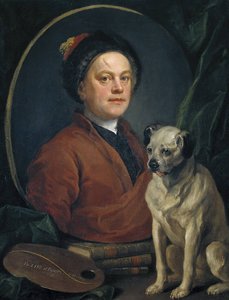
Kunstniku biograafia

A London Life in Ink and Paint: The World of William Hogarth

William Hogarth, born into the bustling heart of 18th-century London in 1697, was more than just an artist; he was a visual historian, a keen observer of human nature, and a satirical commentator on the societal currents of his age. His life story is inextricably linked to the very fabric of England during a period of significant transformation – its burgeoning ambitions, underlying anxieties, and pervasive hypocrisies all finding potent expression in his remarkably detailed and often biting works. The son of a struggling Latin schoolmaster, Hogarth’s early experiences instilled within him both a love for learning and a sharp awareness of social inequalities, a foundation that would prove crucial to shaping his artistic vision. Initially apprenticed to an engraver, he quickly demonstrated a talent extending beyond mere technical skill; he possessed an innate ability to observe the nuances of human behavior and translate them into compelling visual narratives. However, he chafed against the constraints of traditional engraving, seeking a more expressive outlet for his burgeoning creativity. This led him to studies at both St Martin’s Lane Academy and under Sir James Thornhill, where he honed his skills in painting and composition, absorbing influences that would later inform his unique style. He established a distinctly British artistic identity. His work provides invaluable insights into 18th-century English society. He influenced generations of artists and satirists. His true innovation lay not simply *what* he painted, but *how*. He pioneered what he termed “modern moral subjects” – series of pictures designed to tell a story, often imbued with a strong satirical edge. These weren’t isolated portraits or landscapes; they were visual novels unfolding before the viewer’s eyes, offering pointed commentary on contemporary society. A Harlot's Progress, created in 1742, stands as perhaps his most famous example. This series of six paintings meticulously follows the tragic downfall of Mary, a young woman arriving in London full of hope but quickly succumbing to the temptations and dangers of city life. Each scene is rendered with painstaking detail, filled with symbolic elements that reveal the moral decay surrounding her. The depiction of Mary’s descent into prostitution wasn't merely sensational; it was a deliberate provocation, designed to confront viewers with the consequences of unchecked desire and societal indifference. Similarly, A Rake's Progress, begun in 1733, charts the reckless decline of Tom Rakewell, a man who squanders his inheritance on gambling, debauchery, and ultimately, madness. These weren’t merely cautionary tales; they were unflinching portraits of a society grappling with issues of class, morality, and social mobility. Hogarth's genius resided in his ability to elevate everyday scenes – the bustling streets of London, the opulent interiors of the wealthy, the squalid lives of the poor – into works of art that resonated deeply with his audience. He didn’t shy away from depicting the harsh realities of life, presenting them with a blend of humor and pathos that forced viewers to confront uncomfortable truths about themselves and their society. He employed a distinctive cross-hatching technique that created depth and texture, bringing his scenes to life with remarkable clarity. This method allowed him to convey not only visual information but also emotional nuance—the despair of poverty, the arrogance of wealth, the corruption of power. Beyond visual art, Hogarth was influenced by literary works, particularly those of Jonathan Swift and Henry Fielding, whose satirical wit informed his own social observations. He believed that art should not merely be beautiful but should also serve a moral purpose, challenging viewers to think critically about the world around them and their place within it. He sought to hold a mirror up to nature, reflecting both its beauty and its ugliness with unflinching honesty. His technique was characterized by a masterful use of line and shading, particularly evident in his engravings. He possessed an exceptional eye for composition, arranging figures and objects within the frame to create dynamic and engaging narratives. His paintings are not merely historical artifacts; they are vibrant windows into a bygone era, offering timeless insights into the follies and foibles of humanity. Hogarth’s legacy continues to inspire artists today who strive to capture the complexities of human experience with both sensitivity and conviction. He remains a pivotal figure in the history of British art, celebrated for his innovative approach to storytelling, his unflinching social commentary, and his enduring ability to convey profound moral truths.
William Hogarth

William Hogarth

1697 - 1764 , Ühendunud kuningriik

Lühikesed faktid

  • Artistic Movement Or Style: Satire, Realism
  • Artists Who Influenced This Artist:
    • Pieter de Hooch
    • Jonathan Swift
  • Date Of Birth: 1697
  • Date Of Death: 1764
  • Full Name: William Hogarth
  • Nationality: Briti
  • Notable Artworks:
    • A Harlot's Progress
    • A Rake's Progress
  • Place Of Birth: London, UK

