Vendi la tua arte
Lista dei desideri Carrello acquisti Cart
Anteprima in scala realeAnteprima in scala reale Anteprima in ARAnteprima in AR Ordina la riproduzione dipinta a mano Ordina la riproduzione dipinta a manoAcquista download Acquista download CondividiCondividi
DettagliDettagli Aggiungi ai preferiti Aggiungi ai preferiti Scarica immagineScarica immagine Articoli similiArticoli simili RadiografiaRadiografia SlideshowSlideshow

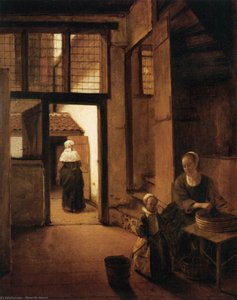
Interior with Figures

Explore "Interior with Figures" by Abraham de Vries! A haunting Dutch Golden Age painting of a dimly lit workshop scene. Rich textures & realism depict daily life. Perfect for art collectors.

Scopri Abraham Diepraam (1622-1670), maestro della pittura di genere olandese con opere iconiche come interni affollati e scene rurali autentiche. Un artista sottovalutato che cattura l'anima del XVII secolo.

Giclée / Stampe d'arte

Stampa giclée o su tela di qualità museale, con produzione rapida e diverse opzioni di finitura. (Ordina la riproduzione dipinta a mano Ordina la riproduzione dipinta a manoAcquista download Acquista download)

Standard
custom
CM
INCH

Scegli tra le nostre dimensioni predefinite, che rispettano le proporzioni originali dell'opera d'arte.

larghezza
altezza

È possibile inserire dimensioni personalizzate per adattare l'opera a una cornice o a uno spazio specifico. Se la dimensione selezionata non corrisponde alle proporzioni dell'immagine originale, procederemo al ritaglio dell'opera o all'estensione dell'immagine con un bordo specchiato o a tinta unita. Un mockup digitale ti verrà inviato per approvazione prima dell'inizio della produzione.
Si prega di notare che l'anteprima a schermo non riflette il ritaglio o l'estensione effettivi. Solo il mockup mostrerà accuratamente la composizione finale.
Sebbene siano disponibili dimensioni personalizzate, si raccomanda di selezionare una dimensione dall'elenco predefinito per preservare le proporzioni originali.

Consegna in tutto il mondo () in 2 settimane invece delle normali 4/5 settimane. (20 Agosto)

why_choose_icon
Spedizione espressa gratuita in tutto il mondo

why_choose_icon
Tela in lino di alta qualità
why_choose_icon
Assicurazione completa sulla spedizione
why_choose_icon
Garanzia di rimborso dei dazi doganali
why_choose_icon
Garanzia di fedeltà cromatica dell'originale
why_choose_icon
Politica di reso entro 60 giorni (solo per difetti di fabbricazione)
why_choose_icon
Garanzia di rimborso al 100%
why_choose_icon
Sconto per acquisti multipli

Prezzo totale

$ 68

reproduction

Interior with Figures

Giclée / Stampe d'arte

Dimensioni della riproduzione

-

Prezzo totale

$ 68


Biografia dell'artista

Abraham Diepraam: A Quiet Master of Genre Painting

Abraham Diepraam (1622 – 1670) remains a somewhat enigmatic figure in the annals of Dutch Golden Age art, overshadowed by contemporaries like Rembrandt and Hals. Yet, his prolific output of small genre scenes—particularly depictions of taverns and peasant life—offers a fascinating glimpse into the everyday realities of seventeenth-century Holland and reveals a distinctive artistic sensibility that distinguishes him from many of his peers. While Houbraken’s unflattering assessment of Diepraam's brushwork – describing it as “loose lines without connection,” akin to Hals’ later style – has fueled debate about his artistic merit, a closer examination of his oeuvre demonstrates considerable skill and an unwavering dedication to capturing the nuances of human experience. Early Life & Training: Born in Dordrecht around 1622, Diepraam's formative years were marked by exposure to craftsmanship honed under the tutelage of Dirk Stoop’s father, a glasspainter, and subsequently Hendrik Martenszoon Sorgh, whose influence is evident in Diepraam’s early works. Sorgh’s meticulous attention to detail and his mastery of chiaroscuro—the dramatic interplay of light and shadow—clearly imprinted upon Diepraam's artistic vision. This careful observation of the natural world would become a cornerstone of his artistic approach throughout his career. Journey to France & Brouwerian Influence: A trip to France during the mid-1640s broadened Diepraam’s artistic horizons, exposing him to new compositional techniques and stylistic trends prevalent in Parisian ateliers. He absorbed influences from artists like Nicolas Sustris and Jean Baptiste Tourtois, experimenting with innovative perspectives and exploring richer color palettes—a departure from the more restrained palette favored by Sorgh. Upon his return to Dordrecht, he enrolled in the Guild of Saint Luke in 1648, solidifying his professional standing within the Dutch art world. Crucially, he became a student of Adriaen Brouwer, whose style—characterized by its spontaneity and realism—became Diepraam’s guiding principle for the remainder of his artistic career. Brouwer's insistence on portraying life as it truly was – warts and all – profoundly shaped Diepraam’s aesthetic sensibilities. Genre Painting & Tav ern Scenes: Diepraam excelled in genre painting, specializing in depictions of taverns, marketplaces, and rural landscapes populated by ordinary people engaged in everyday activities. Unlike many artists of his time who focused on grand historical narratives or mythological subjects, Diepraam deliberately chose to portray the mundane—the conversations, gestures, and expressions of ordinary life—with remarkable sensitivity and accuracy. His paintings are imbued with a palpable atmosphere of authenticity, capturing not just what was seen but also what was felt. Consider “Interior with Figures,” a masterful depiction of a tavern scene bathed in warm light, where Diepraam skillfully captures the subtle emotions conveyed by his subjects – camaraderie, laughter, and quiet contemplation. This dedication to realism distinguishes him from many of his contemporaries who prioritized idealized representations over truthful portrayals. Houbraken’s Critique & Artistic Legacy: Houbraken's notoriously disparaging remarks about Diepraam’s brushwork – labeling it “loose lines without connection” and comparing it unfavorably to Hals’ later style – have persisted as a point of contention among art historians. While Houbraken’s judgment arguably reflects his personal biases, it does highlight a significant distinction between Diepraam's technique and that of some of his more celebrated contemporaries. Nevertheless, Diepraam’s enduring popularity stems from the sheer volume of his output—estimated to be around 300 paintings—and from the remarkable consistency with which he conveyed the spirit of his time. Despite this critique, Diepraam’s legacy persists as a testament to the power of quiet observation and skillful execution—qualities that continue to resonate with viewers today who appreciate the subtle beauty and psychological depth found in his genre scenes. He remains a vital voice within the broader context of Dutch Golden Age art, reminding us that greatness can reside not only in grand gestures but also in meticulous attention to detail and an unwavering commitment to portraying human experience with honesty and compassion.
Abraham Diepraam

Abraham Diepraam

1622 - 1670 , Paesi Bassi

Informazioni rapide

  • Artistic Movement Or Style: Pittura di genere
  • Artists Or Movements Influenced By This Artist: ['Frans Hals']
  • Artists Who Influenced This Artist: ['Hendrik Martenszoon Sorgh']
  • Date Of Birth: 1622
  • Date Of Death: 1670
  • Full Name: Abraham Diepraam
  • Nationality: Olandese
  • Notable Artworks: ['Interni con figure']
  • Place Of Birth: Paesi Bassi