


x

Stampa giclée o su tela di qualità museale, con produzione rapida e diverse opzioni di finitura. ( Ordina la riproduzione dipinta a mano Acquista download)





























Scegli tra le nostre dimensioni predefinite, che rispettano le proporzioni originali dell'opera d'arte.

È possibile inserire dimensioni personalizzate per adattare l'opera a una cornice o a uno spazio specifico. Se la dimensione selezionata non corrisponde alle proporzioni dell'immagine originale, procederemo al ritaglio dell'opera o all'estensione dell'immagine con un bordo specchiato o a tinta unita. Un mockup digitale ti verrà inviato per approvazione prima dell'inizio della produzione.
Si prega di notare che l'anteprima a schermo non riflette il ritaglio o l'estensione effettivi. Solo il mockup mostrerà accuratamente la composizione finale.
Sebbene siano disponibili dimensioni personalizzate, si raccomanda di selezionare una dimensione dall'elenco predefinito per preservare le proporzioni originali.
Consegna in tutto il mondo () in 2 settimane invece delle normali 4/5 settimane. (17 Agosto)


untitled (9467)
Dimensioni della riproduzione
In the quiet corners of art history, few portraits possess the arresting power of Amedeo Modigliani’s Untitled (9467). To encounter this work is to meet a gaze that feels simultaneously intimate and infinitely distant. The painting captures the visage of a man with a remarkable, almost unsettling detail, where every line of his expression serves as a window into a profound psychological depth. Modiglantiation’s focus is not merely on the physical likeness of his subject, but on the capture of a fleeting, internal moment—a deliberate choice that elevates the portrait from a simple study of features to a profound exploration of human vulnerability and quiet intensity.
The artist’s hand is unmistakably present in the way he navigates the boundaries between reality and abstraction. Drawing heavily from what is often termed the “Africanist” style, Modigliani departs from the rigid academic traditions of his era. Instead, he embraces elongated features, simplified forms, and flattened planes, finding inspiration in the primal aesthetics of African sculpture. This stylistic choice creates a tension within the canvas; while the subject feels tangibly human, there is an elegant, sculptural quality to his face that lends the piece a sense of timelessness. The way the light interacts with the skin tones suggests a life lived with great passion and perhaps great sorrow, making the portrait feel less like a static image and more like a living memory.
The technical execution of this piece reveals Modigliani’s meticulous devotion to his craft. Working in oil on canvas, he employed a sophisticated technique of layering thin, translucent washes of pigment. This painstaking process allowed for subtle gradations of color and a seamless blending that gives the subject's skin an ethereal, almost luminous quality. The mastery of light is particularly striking here; it does not merely illuminate the face but seems to emerge from within it, highlighting the prominent features and the dark, structured hair of the sitter.
Complementing this delicate rendering is the choice of a deep, muted blue background. This is not a mere void, but a deliberate compositional element that serves as a vehicle for mood. The heavy, nocturnal blue envelops the subject, fostering a pervasive sense of introspection and melancholy. It creates a stark contrast with the warmth of the flesh tones, pushing the face forward toward the viewer while simultaneously suggesting a profound solitude. For the collector or interior designer, this interplay of color and shadow offers a sophisticated focal point that can anchor a room with both drama and contemplative calm.
To understand the weight of this portrait, one must consider the vibrant, turbulent Parisian milieu from which it emerged. Created during Modigliani’s prolific period between 1915 and 1920, the work stands alongside the boundary-pushing experiments of contemporaries like Picasso and Matisse. While others were deconstructing form entirely, Modigliani sought a middle ground—retaining a connection to figurative representation while embracing the new visual languages of abstraction and primal expression.
Ultimately, Untitled (9467) is an invitation to contemplation. The man’s gaze, directed outward yet seemingly lost in an internal monologue, invites the viewer to reflect on themes of loneliness, strength, and the human condition. It is a piece that does not demand attention through noise, but commands it through a quiet, persistent presence. For those seeking to surround themselves with art that speaks to the soul, this reproduction offers more than just aesthetic beauty; it offers a profound emotional connection to one of the most romantic and tragic eras in modern art history.


1884 - 1920 , Italia

Explore the opulent world of Erté and Art Deco. Discover how Romain de Tirtoff defined an era through geometric elegance, fashion illustration, and theatrical design. A deep dive into the history of 20th-century glamour for art lovers and collectors.
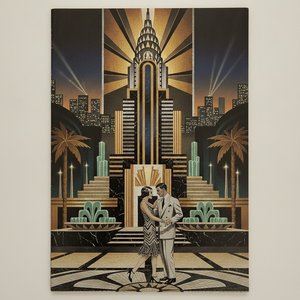
Explore the sophisticated world of Art Deco. Discover the history, geometric precision, and enduring glamour of this iconic 20th-century movement through an expert art-historical lens.

Explore the dramatic world of Italian Baroque art. Discover how masters like Caravaggio used chiaroscuro and tenebrism to revolutionize painting through light, shadow, and profound realism. A definitive guide for history lovers and art collectors.


Rimani aggiornato sulle ultime novità dell'arte, sulle offerte esclusive e sulle idee di decorazione.
Raccontaci del tuo progetto e i nostri esperti d'arte ti proporranno 3 suggerimenti artistici personalizzati.
Lascia che creiamo per te una selezione di 3 opzioni su misura – Gratis!


 Anteprima in scala reale
 Condividi
 Condividi
 Dettagli

 Scarica immagine
 Articoli simili
 Radiografia
 Slideshow

 Leggi tutto







 L'opzione vetro è disponibile solo per dimensioni inferiori a 110 cm


