


x

 Preview
 Acquista stampa Ordina la riproduzione
 Invia
Invia
 Dettagli opera
 Aggiungi ai preferiti
 Scarica
 Simili
 Radiografia
 Slideshow
Acquista un'immagine digitale ad alta risoluzione e ottimizzata, di qualità nettamente superiore all'anteprima online.
Ogni file è meticolosamente preparato dai nostri specialisti interni attraverso l'uso di strumenti avanzati e un sapiente ritocco manuale. Garantiamo che ogni immagine presenti una chiarezza eccezionale, una precisione cromatica impeccabile e dettagli raffinati.
Il file finale viene consegnato via e-mail entro 72 ore, ottimizzato per un uso immediato in contesti professionali, editoriali e di stampa. Si tratta della stessa qualità affidata dai più prestigiosi studi di design, editori e gallerie d'arte.
Scarica un file ad alta risoluzione per uso personale, per la stampa e per progetti creativi.
Quando scegli Most-Famous-Paintings.com, non riceverai solo un'immagine: riceverai un'opera d'arte digitale professionalmente ottimizzata, realizzata con la massima precisione e accompagnata da una garanzia di soddisfazione. Ecco tutto ciò che include il tuo ordine, automaticamente:

Riceverai il file dell'immagine digitale ad alta risoluzione via email entro 72 ore dall'ordine, pronto per un uso immediato.

La tua opera d'arte viene ottimizzata professionalmente attraverso l'uso di strumenti avanzati di intelligenza artificiale e una revisione manuale, garantendo il massimo livello di dettaglio, nitidezza e accuratezza cromatica.

Hai eliminato o perso accidentalmente il tuo file? Non preoccuparti: te lo invieremo di nuovo in qualsiasi momento, gratuitamente.

Goditi la tua opera d'arte istantaneamente senza costi doganali, dazi o spese di spedizione: i download digitali sono sempre esenti da tasse.

Garantiamo che la tua immagine digitale rifletta i colori originali con la massima fedeltà, grazie all'uso di strumenti professionali e a una gestione accurata del colore.

Se non sei soddisfatto della tua immagine digitale, la revisioneremo o ti rimborseremo il 100% entro 60 giorni, senza domande.

Non sei soddisfatto? Ricevi un rimborso completo entro 60 giorni dalla ricezione del tuo file digitale, senza dover fornire spiegazioni.

Acquista 3 immagini, risparmia il 10% - Acquista 5, risparmia il 15% - Acquista 10+, risparmia il 20%. Ideale per progetti creativi, gallerie e agenzie.
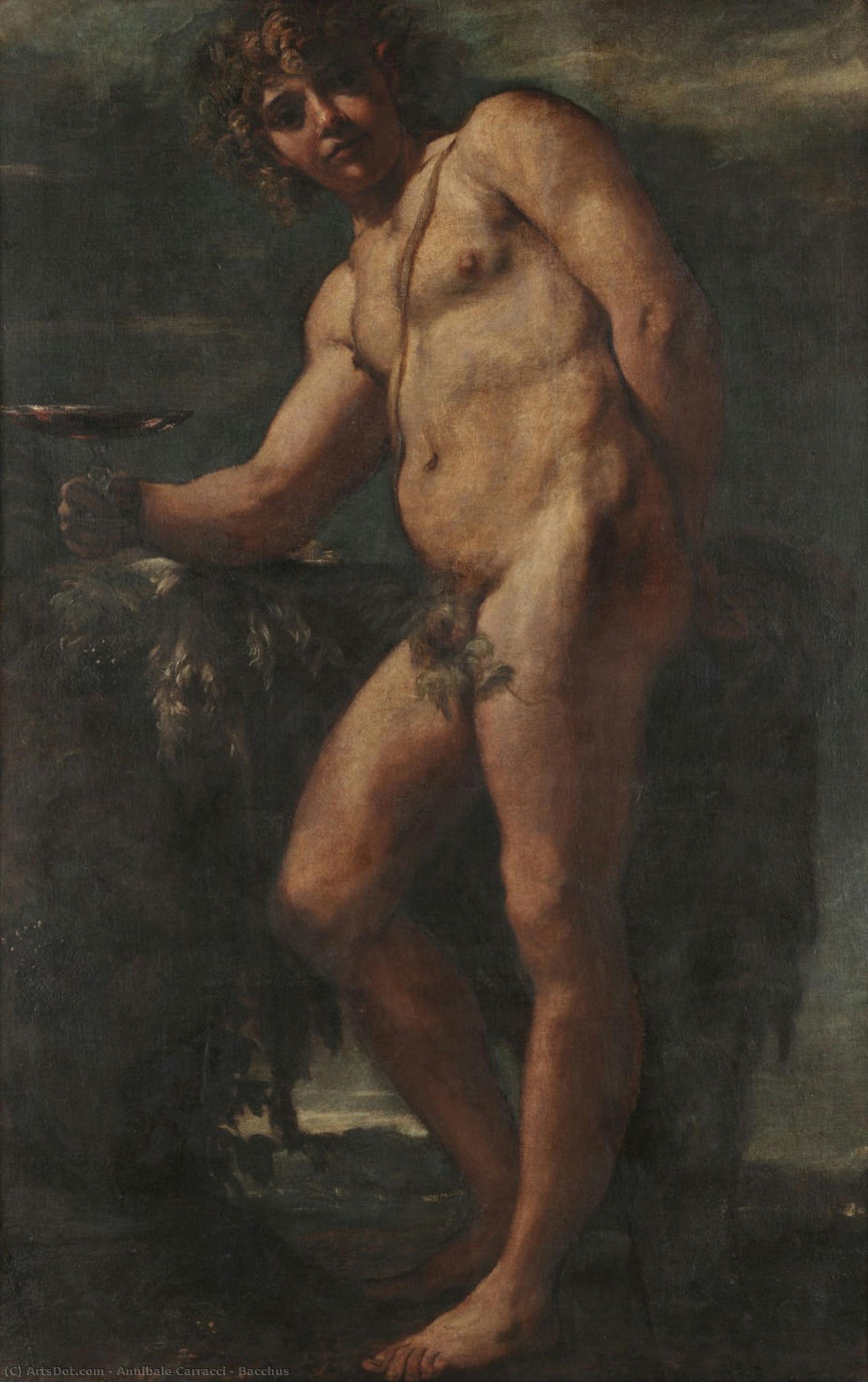
Annibale Carracci's Bacchus, painted in Venice between 1590 and 1591, is not merely a depiction of the god of wine; it’s an arresting exploration of pleasure, excess, and the precarious balance between earthly desire and divine grace. This painting, lost to history for centuries, offers a rare glimpse into the burgeoning Baroque style in its nascent form – a vibrant synthesis of Venetian colorism and the classical restraint championed by the Bolognese artists. The work immediately commands attention with its bold palette and dynamic composition, yet it’s the underlying symbolism and Carracci's masterful manipulation of light and shadow that truly elevate this piece to an enduring masterpiece.
The subject itself – Bacchus in his full, unadulterated glory – is a deliberate provocation. Carracci presents the god not as a remote deity, but as a fully nude adult male, possessing a subtly paunchy physique and the youthful features of a boy. This juxtaposition, far from being jarring, is profoundly revealing. It acknowledges the earthly nature of desire, the very impulses that Bacchus embodies, while simultaneously hinting at a deeper spiritual truth. The artist’s choice to portray him as a young man suggests a connection between the god's power and the potential for renewal, a theme central to Renaissance thought.
The painting is deeply rooted in the artistic traditions of Venice, most notably through its use of color. Carracci employs a rich, luminous palette – deep reds, vibrant blues, and shimmering golds – reminiscent of Titian’s masterful works. However, unlike the purely decorative quality often found in Venetian art, here the colors are used to create dramatic contrasts and heighten the sense of movement. The light, particularly, is crucial; it seems to emanate from within the figure itself, bathing him in an almost ethereal glow. This technique, borrowed from Paolo Veronese, creates a powerful illusionistic effect, drawing the viewer into the scene.
Carracci’s brushwork is equally noteworthy. He utilizes loose, expressive strokes – a hallmark of the Venetian style – to capture the fluidity of drapery and the dynamism of Bacchus' pose. Yet, he also demonstrates a remarkable control, particularly in rendering the details of the goblet and the grapes cascading from its rim. This skillful balance between spontaneity and precision is characteristic of Carracci’s artistic approach.
Painted during a period of significant social and religious upheaval – the Counter-Reformation – Bacchus reflects the changing attitudes towards art and its role in society. The Catholic Church, seeking to combat the spread of Protestantism, recognized the power of visual imagery to inspire faith and devotion. However, they also sought to control the content of sacred art, emphasizing clarity, orthodoxy, and a return to classical ideals. Carracci’s work embodies this tension perfectly; it embraces the exuberance and naturalism of the Renaissance while subtly hinting at deeper spiritual themes.
The painting's origins in Venice – a city known for its artistic innovation and independent spirit – further illuminate its significance. Carracci’s brief sojourn there marked a crucial stage in his development, as he absorbed the lessons of Venetian masters while simultaneously forging his own unique style. This early work demonstrates his ambition to synthesize diverse influences and create a new visual language that would resonate with audiences across Italy.
Beyond its technical brilliance, Bacchus is rich in symbolic meaning. The overflowing goblet represents abundance, indulgence, and the pleasures of earthly life. The grapes themselves symbolize fertility, prosperity, and the connection between Bacchus and nature. Yet, the god’s solitary pose – isolated within a landscape – suggests a sense of detachment from human concerns, a reminder that true fulfillment lies beyond the fleeting joys of the material world.
Ultimately, Bacchus is a captivating meditation on the complexities of human desire and the pursuit of spiritual enlightenment. It’s a painting that invites contemplation, challenging viewers to grapple with the tension between earthly pleasures and divine grace. Its enduring appeal lies not only in its technical mastery but also in its profound emotional resonance – a testament to Annibale Carracci's genius and his pivotal role in shaping the course of Western art.


1560 - 1609 , Italia


Rimani aggiornato sulle ultime novità dell'arte, sulle offerte esclusive e sulle idee di decorazione.
Raccontaci del tuo progetto e i nostri esperti d'arte ti proporranno 3 suggerimenti artistici personalizzati.
Lascia che ci pensiamo noi: 3 opzioni su misura per te – Gratis!


 Condividi


 Scopri di più


