x


 Acrylic On CanvasWallArtNeoclassical Painting
 1774
1774 562.0 x 735.0 cm
 Galleria d'Arte Walker
Stampa giclée o su tela di qualità museale, con produzione rapida e diverse opzioni di finitura. ( Switch to hand made Painting Switch to Image)





























Scegli tra le nostre dimensioni predefinite, che rispettano le proporzioni originali dell'opera d'arte.

È possibile inserire dimensioni personalizzate per adattare l'opera a una cornice o a uno spazio specifico. Se la dimensione selezionata non corrisponde alle proporzioni dell'immagine originale, procederemo al ritaglio dell'opera o all'estensione dell'immagine con un bordo specchiato o a tinta unita. Un mockup digitale ti verrà inviato per approvazione prima dell'inizio della produzione.
Si prega di notare che l'anteprima a schermo non riflette il ritaglio o l'estensione effettivi. Solo il mockup mostrerà accuratamente la composizione finale.
Sebbene siano disponibili dimensioni personalizzate, si raccomanda di selezionare una dimensione dall'elenco predefinito per preservare le proporzioni originali.
Consegna in tutto il mondo () in 2 settimane invece delle normali 4/5 settimane. (28 Luglio)


Self Portrait
Dimensioni riproduzione
Anton Raphael Mengs' "Self Portrait," painted in 1774, isn’t merely a likeness; it’s a carefully constructed tableau of intellectual ambition and introspective melancholy. Captured with the precision characteristic of the Neoclassical movement, this painting offers a rare glimpse into the mind of an artist grappling with his burgeoning fame and the weighty expectations placed upon him. The image immediately draws the eye to the subject's face – a man in his mid-forties, rendered with a remarkable sensitivity that belies the formality of the attire. His mouth is slightly open, a subtle gesture hinting at contemplation or perhaps even a quiet sadness; it’s an expression that invites prolonged observation and fuels speculation about the thoughts swirling within him.
The composition itself speaks volumes. Mengs sits three-quarters to his right, a pose favored by portrait painters of the era, suggesting both dignity and engagement with the viewer. The rich brown coat, meticulously detailed, anchors him in a world of established artistic circles, while the scarf draped loosely around his neck adds a touch of understated elegance. Yet, it’s the lighting – masterful chiaroscuro reminiscent of Rembrandt – that truly elevates the piece. Dark shadows pool beneath his eyes and across his shoulders, creating a sense of depth and drawing attention to the delicate lines of his face. The light catches the texture of his clothing and highlights the subtle nuances of his expression, transforming a simple portrait into a study in mood and atmosphere.
Mengs' journey to this moment was profoundly shaped by his lineage and the intellectual currents of the Enlightenment. Born in 1728 in Ústí nad Labem, Bohemia – a region now part of the Czech Republic – he inherited a legacy of artistic talent from his father, Ismael Mengs, a Danish painter who found patronage at the Dresden court. This early exposure to the refined tastes and exacting standards of the German aristocracy instilled within young Anton a deep appreciation for classical ideals and meticulous technique. Crucially, in 1741, he was sent to Rome – a pivotal decision that irrevocably shaped his artistic development.
Immersed in the heart of the Roman art world, Mengs spent years studying the masterpieces of Raphael, Michelangelo, and other Renaissance giants. He meticulously copied their works, absorbing not just their technical skill but also their profound understanding of human anatomy, perspective, and composition. This immersion in classical antiquity would become the bedrock of his artistic style – a commitment to clarity, balance, and idealized beauty that defined Neoclassicism. The influence is immediately apparent in “Self Portrait,” where Mengs consciously adopts a pose reminiscent of ancient Roman portraiture, signaling his ambition to emulate the masters and establish himself as a leading figure in the revival of classical art.
Beyond its technical brilliance, “Self Portrait” is laden with symbolic meaning. The open mouth, as previously noted, suggests introspection – perhaps a moment of self-doubt amidst the pressures of his career. The carefully chosen attire—the brown coat, the scarf—reflects his position within European artistic circles, signaling both his status and his adherence to established conventions. However, there’s also an underlying sense of weariness in Mengs' gaze, hinting at the sacrifices required to achieve success and the loneliness inherent in a life devoted to art.
Painted just three years before his untimely death at the age of 51, the portrait captures a man on the cusp of greatness but also burdened by mortality. Mengs was a celebrated artist throughout Europe, a key figure in the creation of Neoclassicism, yet he faced constant challenges – financial difficulties, professional rivalries, and the relentless demands of his patrons. “Self Portrait” offers a poignant glimpse into the inner life of an artist grappling with these complexities, reminding us that even the most accomplished figures are subject to human vulnerability and uncertainty.
Reproductions of Mengs’ “Self Portrait” continue to resonate today, offering a window into the artistic sensibilities of the 18th century. The painting's masterful use of light and shadow, combined with its psychologically astute portrayal of the subject, ensures its enduring appeal. Whether displayed in a grand salon or a contemporary art space, this work serves as a powerful reminder of the transformative power of art – its ability to capture not just likeness but also essence, emotion, and the complexities of the human experience. Consider commissioning a hand-painted reproduction to bring this captivating piece into your own home, preserving Mengs’ legacy for generations to come.

Anton Raphael Mengs è stato un pittore tedesco-boemo che ha influenzato significativamente la transizione dalla pittura rococò alla neoclassica. Attivo principalmente a Roma, Madrid e Sassonia, la sua opera incarna una miscela di grandiosità barocca con ideali classici emergenti, stabilendolo come una figura cruciale nell'arte del XVIII secolo.
Il percorso artistico di Mengs iniziò sotto la guida di suo padre, Ismael Mengs, un pittore danese che si era stabilito a Dresda. Ismael riconobbe presto il talento di suo figlio e lo portò a Roma nel 1741. Questa esperienza formativa coinvolse la copia di opere di Raffaello per l'elettore di Sassonia, plasmando profondamente le sensibilità estetiche di Anton Raphael. L’esposizione alla maestria di Raffaello gli instillò una profonda apprezzamento per la forma e la composizione classica, che sarebbero diventate tratti distintivi del suo stile.
La carriera di Mengs fiorì presso diverse corti europee. Nel 1749, fu nominato primo pittore di Federico Augusto, elettore di Sassonia, una posizione che gli offrì un notevole patrocinio pur consentendogli di mantenere la sua base romana. La sua opera più celebrata è probabilmente il dipinto a fresco del Parnaso presso Villa Albani a Roma, che ottenne ampi consensi e consolidò la sua reputazione di artista leader. Altre commissioni significative includono un superbo affresco sulla cupola della Chiesa di Sant'Eusebio a Roma, dimostrando la sua abilità nella decorazione monumentale, e il soffitto del salone da banchetto del Palazzo Reale di Madrid, considerato uno dei suoi risultati più importanti.
Sebbene influenzato dalla tradizione romana barocca, Mengs abbracciò sempre più gli ideali dell'antichità classica. Questa svolta fu significativamente alimentata dalla sua stretta collaborazione con Johann Joachim Winckelmann, un importante storico dell'arte e teorico che promosse la rinascita dell'estetica greco-romana. Insieme, sostennero un ritorno alla semplicità, alla chiarezza e alle forme idealizzate nell'arte, ponendo le basi per il movimento neoclassico.
Anton Raphael Mengs morì a Roma nel 1779, lasciando dietro di sé un notevole corpus di opere che colmò il divario tra gli stili barocco e neoclassico. La sua enfasi sugli ideali classici, combinata con la sua abilità tecnica, lo rese una figura fondamentale nello sviluppo del Neoclassicismo. È ricordato non solo per i suoi impressionanti affreschi e ritratti, ma anche per i suoi contributi intellettuali alla teoria dell'arte attraverso la sua collaborazione con Winckelmann. La sua influenza può essere vista nelle generazioni successive di artisti che abbracciarono la chiarezza, l'ordine e le forme idealizzate che caratterizzavano la pittura neoclassica.

1728 - 1779 , Repubblica Ceca
Esplora le 25 opere più iconiche di Van Gogh: dai Girasoli alla Notte Stellata. Scopri la storia, lo stile e i colori che hanno reso Vincent van Gogh un maestro dell'arte moderna. Trova riproduzioni di alta qualità su Most-Famous-Paintings.com.
Esplora i 25 capolavori di Rembrandt van Rijn, da 'La Ronda di Notte' ai suoi intensi autoritratti. Scopri la storia, le tecniche e l'arte barocca del maestro olandese. Riproduzioni di alta qualità su Most-Famous-Paintings.com.

Esplora i 25 capolavori del Metropolitan Museum di New York! Scopri la storia, gli artisti (Van Gogh, Monet, Rembrandt) e le emozioni dietro dipinti iconici. Trova riproduzioni artistiche di alta qualità per decorare casa con stile su Most-Famous-Paintings.com.
Esplora i 25 capolavori di James Abbott McNeill Whistler, il maestro dell'estetismo e dei notturni. Scopri la storia, le tecniche e l'armonia unica nei suoi dipinti più famosi. Stampe d'arte e riproduzioni di alta qualità su Most-Famous-Paintings.com.
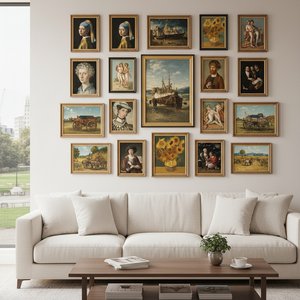
Esplora i 25 capolavori della National Gallery di Londra! Van Gogh, Monet, Rembrandt e altri maestri rivivono in storie d'arte uniche. Trova stampe su tela e riproduzioni artistiche per decorare la tua casa con stile. Scopri tutte le opere su Most-Famous-Paintings.com


Rimani aggiornato sulle ultime novità dell'arte, sulle offerte esclusive e sulle idee di decorazione.
Raccontaci del tuo progetto e i nostri esperti d'arte ti proporranno 3 suggerimenti artistici personalizzati.
Lascia che ci pensiamo noi: 3 opzioni su misura per te – Gratis!


 Preview
 Invia
Invia Condividi
 Dettagli opera

 Scarica
 Simili
 Radiografia
 Slideshow
 Scopri di più







 L'opzione vetro è disponibile solo per dimensioni inferiori a 110 cm