


x


 Oil On CanvasWallArtVorticism
 Modern
 152.0 x 224.0 cm
 Tate Britain
Olio su tela dipinto a mano nelle tue dimensioni e con la tua cornice, realizzato su ordinazione dai nostri artisti. ( Passa alla stampa Passa all'immagine)





























Scegli tra le nostre dimensioni predefinite, che rispettano le proporzioni originali dell'opera d'arte.

È possibile inserire dimensioni personalizzate per adattare l'opera a una cornice o a uno spazio specifico. Se la dimensione selezionata non corrisponde alle proporzioni dell'immagine originale, provvederemo a ritagliare l'opera o a estendere il dipinto con elementi aggiuntivi dipinti a mano. Un mockup digitale ti sarà inviato per approvazione prima dell'inizio della produzione.
Si prega di notare che l'anteprima a schermo non riflette il ritaglio o l'estensione effettivi. Solo il mockup mostrerà accuratamente la composizione finale.
Sebbene siano disponibili dimensioni personalizzate, consigliamo di selezionare una dimensione dall'elenco predefinito per preservare le proporzioni originali.
Consegna in tutto il mondo () in 3/4 settimane anziché nelle normali 5 settimane. (31 Luglio). Nessun compromesso sulla qualità.


The Mud Bath
Dimensioni della riproduzione
In the realm of early twentieth-century modernism, few works capture the raw, pulsating energy of the machine age quite like David Bomberg’s The Mud Bath. This Vorticist masterpiece serves as a breathtaking exploration of movement, where the boundaries between form and void dissolve into a rhythmic dance of geometry. At first glance, the viewer is met with a controlled chaos—a complex web of interlocking triangles, rectangles, and irregular polygons that seem to vibrate against a muted, earthy backdrop. The composition is anchored by a central vertical axis, reminiscent of a structural pillar or a primordial tree, which acts as a stabilizer for the swirling, angular fragments that orbit it. It is a painting that does not merely sit upon the canvas but seems to actively construct itself before the eyes of the observer.
The color palette of this work is both disciplined and profoundly impactful, utilizing a limited spectrum to achieve maximum visual tension. A dominant, fiery red provides an intense warmth that surges through the composition, while sharp strikes of cobalt blue offer a cooling contrast, adding much-needed depth to the flattened pictorial plane. These primary tones are punctuated by brilliant whites that highlight the edges of the geometric shards, creating a crisp, staccato rhythm. The background, a soft and understated beige, provides a grounding element that prevents the vibrant shapes from feeling untethered, allowing the structural complexity of the work to remain the focal point.
To understand The Mud Bath, one must look toward the radical artistic movements of the post-war era. Bomberg, a prominent figure among the 'Whitechapel Boys,' was deeply immersed in the avant-garde currents of Cubism and Futurism. This specific piece exemplifies the essence of Vorticism—a movement that sought to find the "vortex" at the heart of modern life, capturing the dynamism and mechanical precision of an industrializing world. Unlike the more fluid abstractions found in other movements, Bomberg’s approach here is architectural and structural; he strips away the superficiality of nature to reveal the underlying skeletal energy of the subject matter.
While the title might suggest a literal depiction of a landscape or a natural process, the painting functions primarily as an exploration of pure form. Any connection to the organic—the suggestion of foliage, water, or earth—is purely symbolic, serving as a ghostly echo of reality beneath the heavy layers of abstraction. For the discerning collector or interior designer, this artwork offers more than just visual interest; it provides a sophisticated focal point that commands attention through its historical weight and structural integrity. A high-quality reproduction of this piece brings with it an aura of intellectual depth and a bold, modern aesthetic that can transform a contemporary space into a gallery of profound artistic significance.

Nato da genitori immigrati polacco-ebrei, Abraham e Rebecca Bomberg, a Birmingham. La famiglia si trasferì a Whitechapel, Londra, nel 1895.
Inizialmente studiò alla City and Guilds Technical Art School prima di formarsi come litografo a Birmingham.
Studiò sotto Walter Sickert alla Westminster School of Art (1908-1910), dove fu influenzato dall'attenzione di Sickert per la forma e la vita urbana.
Grande esposizione a Paul Cézanne attraverso la mostra del 1910 di Roger Fry "Manet e i Post-Impressionisti".
Frequentò la Slade School of Art (1911), vincendo il premio Tonks per il suo disegno dell'altro studente Isaac Rosenberg.
Le esperienze come soldato semplice durante la Prima Guerra Mondiale ebbero un profondo impatto sulla sua visione artistica, portandolo ad allontanarsi dall'astrazione.
Gli anni '20 videro Bomberg adottare uno stile più figurativo, concentrandosi su ritratti e paesaggi tratti direttamente dalla natura.
Sviluppò una tecnica sempre più espressionista, caratterizzata da impasto testurizzato e intensità emotiva.
Estesi viaggi in Medio Oriente (in particolare Palestina) e in Europa influenzarono significativamente la sua opera successiva. Le sue rappresentazioni di Gerusalemme sono particolarmente notevoli.

1890 - 1957 , Regno Unito
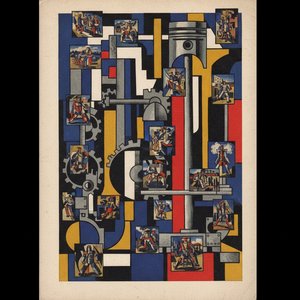
Esplora i 25 capolavori di Fernand Léger, pioniere del cubismo e del tubismo. Scopri la storia, le tecniche e l'impatto dell'arte moderna francese. Stampe d'arte e riproduzioni su Most-Famous-Paintings.com.
Esplora i 25 capolavori di Wassily Kandinsky, pioniere dell'arte astratta. Scopri la storia, il significato e le tecniche dietro ogni dipinto iconico. Trova riproduzioni d'arte di alta qualità per decorare la tua casa su Most-Famous-Paintings.com.

Esplora i 25 capolavori del Metropolitan Museum di New York! Scopri la storia, gli artisti (Van Gogh, Monet, Rembrandt) e le emozioni dietro dipinti iconici. Trova riproduzioni artistiche di alta qualità per decorare casa con stile su Most-Famous-Paintings.com.

Esplora i 25 capolavori del MoMA di New York: Van Gogh, Picasso, Warhol e altri maestri. Scopri la storia, le tecniche e l'emozione dietro ogni opera d'arte. Trova riproduzioni di alta qualità per decorare casa tua su Most-Famous-Paintings.com!

Esplora la vita e l'opera di David Bomberg, figura chiave del Vorticismo britannico. Approfondisci le sue influenze artistiche, il suo stile unico e il lascito duraturo nell'arte moderna.


Rimani aggiornato sulle ultime novità dell'arte, sulle offerte esclusive e sulle idee di decorazione.
Raccontaci del tuo progetto e i nostri esperti d'arte ti proporranno 3 suggerimenti artistici personalizzati.
Lascia che ci pensiamo noi: 3 opzioni su misura per te – Gratis!


 Anteprima
 Condividi
 Condividi
 Dettagli

 Scarica immagine
 Articoli simili
 Radiografia
 Slideshow
 Leggi tutto







 L'opzione vetro è disponibile solo per dimensioni inferiori a 110 cm


