x

Stampa giclée o su tela di qualità museale, con produzione rapida e diverse opzioni di finitura. ( Ordina la riproduzione dipinta a mano Acquista download)





























Scegli tra le nostre dimensioni predefinite, che rispettano le proporzioni originali dell'opera d'arte.

È possibile inserire dimensioni personalizzate per adattare l'opera a una cornice o a uno spazio specifico. Se la dimensione selezionata non corrisponde alle proporzioni dell'immagine originale, procederemo al ritaglio dell'opera o all'estensione dell'immagine con un bordo specchiato o a tinta unita. Un mockup digitale ti verrà inviato per approvazione prima dell'inizio della produzione.
Si prega di notare che l'anteprima a schermo non riflette il ritaglio o l'estensione effettivi. Solo il mockup mostrerà accuratamente la composizione finale.
Sebbene siano disponibili dimensioni personalizzate, si raccomanda di selezionare una dimensione dall'elenco predefinito per preservare le proporzioni originali.
Consegna in tutto il mondo () in 2 settimane invece delle normali 4/5 settimane. (18 Agosto)


Unfinished self
Dimensioni della riproduzione
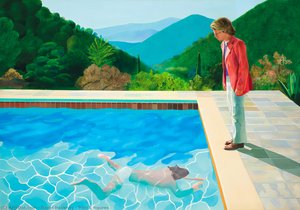
David Hockney's "Unfinished Self," painted in 1978, isn’t merely a depiction of a man asleep on his bed; it’s an exquisitely crafted meditation on perception itself. Created during Hockney’s prolific period exploring the effects of aging and distance – he famously undertook a series of ambitious Yorkshire Landscapes documenting the region's changing seasons – this portrait embodies his signature approach: capturing not just what is seen, but how it feels to see.
The painting utilizes Hockney’s distinctive optical mixing technique. Rather than layering colors conventionally, he applies thin washes of pigment that blend optically as they dry on the canvas. This method achieves remarkable luminosity and vibrancy, particularly noticeable in the blue blanket enveloping the sleeping figure. It's a deliberate choice reflecting Hockney’s fascination with how our eyes perceive color – blending hues rather than juxtaposing them to create an illusion of depth.
Despite its rich palette, “Unfinished Self” maintains a remarkable sense of calm. Hockney employs a minimalist compositional strategy, focusing on the central figure against a subtly textured background. The inclusion of other individuals – presumably Hockney’s family – adds an element of domestic intimacy and reinforces the idea that observation extends beyond the immediate subject to encompass relationships and surroundings.
The spatial arrangement is particularly noteworthy. Hockney cleverly utilizes perspective—though not in a rigorously accurate manner—to convey a feeling of depth and distance. The dining table and chairs, positioned slightly behind the bed, contribute to this illusion, suggesting a lived-in space where objects exist alongside each other in relation to one another.
The dominant color – blue – carries significant symbolic weight. Traditionally associated with tranquility, introspection, and spirituality, it underscores the painting’s contemplative mood. The sleeping figure represents restfulness and surrender to the rhythms of life, while simultaneously hinting at mortality—a recurring theme in Hockney's oeuvre.
The inclusion of a potted plant symbolizes growth and vitality, offering a counterpoint to the stillness of sleep. It subtly reminds us that even within moments of repose, life continues its inexorable march forward.
"Unfinished Self" transcends mere visual representation; it communicates a profound emotional resonance. Hockney's masterful handling of light—particularly the diffused glow illuminating the sleeping man—creates an atmosphere of warmth and tenderness. The painting invites viewers to contemplate not only the beauty of the scene but also the complexities of human experience – capturing a quiet dignity and accepting gaze that speaks volumes about Hockney’s enduring belief in the power of observation and the importance of embracing life's fleeting moments.
This artwork exemplifies Hockney’s unwavering commitment to capturing the essence of human existence through a deceptively simple yet profoundly perceptive lens.


1937 - , Regno Unito

Esplora i 10 dipinti più iconici dominati dal blu ardesia! Scopri la storia, gli artisti e le tecniche dietro capolavori impressionisti e moderni. Trova riproduzioni artistiche di alta qualità per decorare casa con .

Transform your home with soulful blue art. From serene Monet impressions to modern textured sculptures, discover curated masterpieces designed to inspire calm. Explore expert art consultations and bespoke hand-painted reproductions to create your personal sanctuary.

Explore the rich history of blue in art! Discover its symbolism, from ancient pigments to modern masterpieces by Kandinsky & Seurat. Uncover the psychological impact and cultural meanings behind this captivating hue.
Esplora i 25 capolavori di René Magritte, il maestro del surrealismo. Scopri storie, significati e tecniche dietro opere iconiche come 'L'Impero delle Luci'. Trova riproduzioni d'arte su tela e idee per decorazioni uniche su Most-Famous-Paintings.com.

Esplora la retrospettiva completa di David Hockney, icona della Pop Art britannica. Analisi approfondita del suo uso innovativo della prospettiva e dell'influenza sulla pittura contemporanea. Scopri l'eredità artistica di un maestro senza tempo.


Rimani aggiornato sulle ultime novità dell'arte, sulle offerte esclusive e sulle idee di decorazione.
Raccontaci del tuo progetto e i nostri esperti d'arte ti proporranno 3 suggerimenti artistici personalizzati.
Lascia che creiamo per te una selezione di 3 opzioni su misura – Gratis!


 Anteprima in scala reale
 Condividi
 Condividi
 Dettagli

 Scarica immagine
 Articoli simili
 Radiografia
 Slideshow
 Leggi tutto







 L'opzione vetro è disponibile solo per dimensioni inferiori a 110 cm