x

 Acrylic On CanvasWallArtExpressionism
 1916
1916 34.0 x 27.0 cm
Olio su tela dipinto a mano nelle tue dimensioni e con la tua cornice, realizzato su ordinazione dai nostri artisti. ( Passa alla stampa Passa all'immagine)





























Scegli tra le nostre dimensioni predefinite, che rispettano le proporzioni originali dell'opera d'arte.

È possibile inserire dimensioni personalizzate per adattare l'opera a una cornice o a uno spazio specifico. Se la dimensione selezionata non corrisponde alle proporzioni dell'immagine originale, provvederemo a ritagliare l'opera o a estendere il dipinto con elementi aggiuntivi dipinti a mano. Un mockup digitale ti sarà inviato per approvazione prima dell'inizio della produzione.
Si prega di notare che l'anteprima a schermo non riflette il ritaglio o l'estensione effettivi. Solo il mockup mostrerà accuratamente la composizione finale.
Sebbene siano disponibili dimensioni personalizzate, consigliamo di selezionare una dimensione dall'elenco predefinito per preservare le proporzioni originali.
Consegna in tutto il mondo () in 3/4 settimane anziché nelle normali 5 settimane. (10 Agosto). Nessun compromesso sulla qualità.


Sitting Child
Dimensioni della riproduzione
Egon Schiele’s “Sitting Child,” created in 1916, isn't merely a depiction of a young boy playing with a toy; it’s a profoundly unsettling and intensely personal portrait. Rendered in stark black and white pencil on paper, the drawing immediately draws the viewer into a world of quiet observation and subtle unease. Measuring just 34 x 27 cm, its intimate scale amplifies the feeling of being privy to a private moment, as if we’ve stumbled upon an artist's fleeting study. The simplicity of the composition – a child seated on the ground, absorbed in their play – belies the complex emotions simmering beneath the surface. This isn’t a sentimental portrayal of childhood; instead, it’s a glimpse into Schiele’s uniquely perceptive and often melancholic vision of humanity.
The drawing's style is undeniably rooted in Expressionism, a movement characterized by its focus on subjective emotion and distorted forms. Schiele’s lines are not clean or precise; they writhe and twist with an almost palpable energy, conveying a sense of restlessness and vulnerability. Notice how the child’s body isn’t rendered with anatomical accuracy – rather, it's suggested through fragmented lines, creating a feeling of instability and fragility. This deliberate distortion mirrors Schiele’s broader exploration of mortality and psychological distress, themes that frequently permeate his work. The use of monochrome further intensifies this effect, stripping away any potential distractions and forcing the viewer to confront the raw emotion at the heart of the image.
To understand “Sitting Child,” it’s crucial to consider the historical context in which it was created. 1916 was a turbulent year, marked by the escalating horrors of World War I and a pervasive sense of anxiety within Europe. Schiele himself was grappling with personal tragedy – his father's death from syphilis just four years prior had left an indelible mark on his psyche. This experience fueled a lifelong preoccupation with themes of illness, decay, and the fleeting nature of life. The drawing can be interpreted as a meditation on these anxieties, subtly projected onto the innocent figure of the child.
Schiele’s artistic influences are equally important to consider. He was deeply impacted by the work of Vincent van Gogh, particularly his expressive use of line and color. However, Schiele pushed beyond mere imitation, developing a highly individual style characterized by its angularity, distortion, and psychological depth. The drawing also reveals echoes of earlier Renaissance depictions of the Madonna and Child, but Schiele subverts this traditional iconography by imbuing the scene with an unsettling ambiguity. The child’s gaze is averted, suggesting introspection or perhaps even a hint of sadness – a stark contrast to the idealized serenity often associated with images of motherhood.
The teddy bear clutched in the child's hand is more than just a simple toy; it’s a potent symbol. In Schiele’s work, objects frequently carry layered meanings, representing desires, fears, or unresolved traumas. The teddy bear, often associated with comfort and security, here seems to offer little solace. Its presence alongside the child’s somewhat melancholic expression suggests a yearning for something lost or unattainable. The very act of sitting alone on the ground could symbolize isolation or vulnerability – a poignant reflection of the artist's own feelings of alienation.
Ultimately, “Sitting Child” is a deeply ambiguous and emotionally resonant work. It’s not a cheerful depiction of childhood innocence; rather, it’s a haunting meditation on mortality, anxiety, and the complexities of human experience. Schiele masterfully captures a fleeting moment in time, inviting us to contemplate the hidden depths beneath the surface of seemingly ordinary subjects. The drawing's power lies in its ability to evoke a sense of unease and introspection, leaving the viewer with more questions than answers – a testament to Schiele’s genius as an artist and his profound understanding of the human psyche.

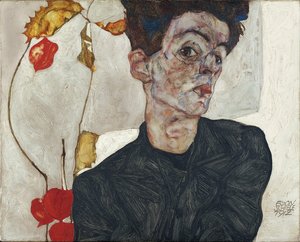
1890 - 1918 , Croazia
Esplora i 10 capolavori dell'Espressionismo con .it! Scopri Munch, Kirchner e altri artisti iconici, le loro emozioni intense e tecniche rivoluzionarie. Trova riproduzioni di alta qualità per arredare la tua casa con arte senza tempo. Esplora la collezione online!

Esplora i 25 capolavori di John Singer Sargent, pittore americano simbolo dell'Impressionismo e del Gilded Age. Ritratti iconici, acquerelli luminosi e storie affascinanti. Trova la tua opera d'arte ideale su Most-Famous-Paintings.com!

Explore the captivating world of Arturo Souto's abstract expressionism. Discover his unique style, emotional depth, and investment potential – a guide for discerning art collectors.

Esplora i 10 capolavori acrilici che hanno rivoluzionato l'arte! Dalla potenza di Rothko all'innovazione di Warhol, scopri storie e tecniche. Trova riproduzioni arte su Most-Famous-Paintings.com e arreda con stile.

Esplora l'universo artistico di Egon Schiele: dalle origini dell'Espressionismo austriaco all'analisi profonda del suo angosciante capolavoro. Approfondimenti, opere chiave e il contesto storico che ha plasmato la sua visione unica.


Rimani aggiornato sulle ultime novità dell'arte, sulle offerte esclusive e sulle idee di decorazione.
Raccontaci del tuo progetto e i nostri esperti d'arte ti proporranno 3 suggerimenti artistici personalizzati.
Lascia che creiamo per te una selezione di 3 opzioni su misura – Gratis!


 Anteprima in scala reale
 Condividi
 Condividi
 Dettagli

 Scarica immagine
 Articoli simili
 Radiografia
 Slideshow
 Leggi tutto







 L'opzione vetro è disponibile solo per dimensioni inferiori a 110 cm