x

Olio su tela dipinto a mano nelle tue dimensioni e con la tua cornice, realizzato su ordinazione dai nostri artisti. ( Passa alla stampa Passa all'immagine)





























Scegli tra le nostre dimensioni predefinite, che rispettano le proporzioni originali dell'opera d'arte.

È possibile inserire dimensioni personalizzate per adattare l'opera a una cornice o a uno spazio specifico. Se la dimensione selezionata non corrisponde alle proporzioni dell'immagine originale, provvederemo a ritagliare l'opera o a estendere il dipinto con elementi aggiuntivi dipinti a mano. Un mockup digitale ti sarà inviato per approvazione prima dell'inizio della produzione.
Si prega di notare che l'anteprima a schermo non riflette il ritaglio o l'estensione effettivi. Solo il mockup mostrerà accuratamente la composizione finale.
Sebbene siano disponibili dimensioni personalizzate, consigliamo di selezionare una dimensione dall'elenco predefinito per preservare le proporzioni originali.
Consegna in tutto il mondo () in 3/4 settimane anziché nelle normali 5 settimane. (9 Agosto). Nessun compromesso sulla qualità.


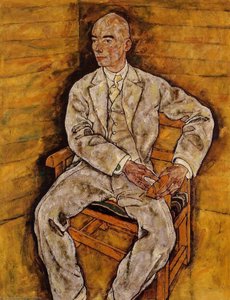
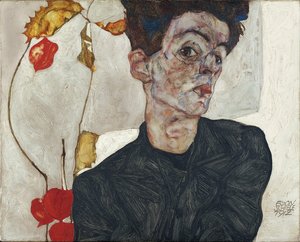
Triple Self Portrait
Dimensioni della riproduzione
Egon Schiele’s “Triple Self Portrait,” painted in 1913, stands as a haunting testament to the anxieties simmering beneath the surface of Expressionist art. More than just a depiction of three figures seated before a chair—though these elements contribute significantly to its visual impact—the painting delves into profound psychological complexities and embodies Schiele’s signature preoccupation with mortality and vulnerability.
Schiele, born in Tulln an der Donau in 1890, experienced early trauma that profoundly shaped his artistic vision. His father's debilitating syphilis illness instilled within him a visceral awareness of disease and decay—themes that would permeate throughout his oeuvre. Raised primarily by his mother and later under the watchful eye of his uncle Leopold Czihaczek, Schiele’s upbringing fostered an independent spirit tempered by intellectual curiosity. Despite familial disapproval regarding his artistic pursuits – deemed frivolous compared to more practical ambitions – he relentlessly pursued drawing, honing his skill with unwavering dedication.
The painting itself is executed in watercolor on paper, a technique Schiele favored for its ability to convey subtle tonal variations and capture the immediacy of emotion. His distinctive style—characterized by angular lines, flattened perspectives, and unsettlingly realistic depictions of human anatomy—is instantly recognizable. The figures are rendered with meticulous detail, their faces pressed together in expressions of anguish and introspection. Notably, the inclusion of two chairs serves as a powerful visual metaphor for confinement and isolation; they represent not merely physical spaces but also psychological barriers hindering self-awareness.
Painted during a period marked by intellectual ferment and societal upheaval—the burgeoning avant-garde movement challenging traditional artistic conventions alongside the looming shadow of World War I— “Triple Self Portrait” reflects the pervasive atmosphere of unease and disillusionment prevalent in Europe at the time. Schiele’s unflinching gaze confronts viewers with uncomfortable truths about human existence, prompting contemplation on themes of suffering, fear, and the inescapable awareness of death.
“Triple Self Portrait” continues to resonate powerfully today as a masterpiece of psychological portraiture. Its haunting beauty lies not in idealized representation but in its courageous articulation of inner turmoil—a testament to Schiele’s enduring legacy as one of Expressionism's most influential figures and a poignant reminder of the artist’s profound engagement with the human condition.
1890 - 1918 , Croazia
Trasforma i tuoi ricordi in opere d'arte uniche con Most-Famous-Paintings. Consulenza personalizzata, artisti esperti e dipinti su misura di alta qualità. Investi in emozioni che durano nel tempo.

Esplora l'universo artistico di Egon Schiele: dalle origini dell'Espressionismo austriaco all'analisi profonda del suo angosciante capolavoro. Approfondimenti, opere chiave e il contesto storico che ha plasmato la sua visione unica.

Esplora l'evoluzione affascinante dell'autoritratto dall'arte classica all'era digitale. Analisi approfondite, figure chiave e contesti storici per appassionati d'arte e studiosi.

Scopri la vita e l'opera di Paula Modersohn-Becker, pioniera dell'Espressionismo tedesco. Analisi approfondita dei suoi autoritratti, il coraggio della rappresentazione femminile e l'influenza sulla storia dell'arte moderna.
Esplora le 25 opere più iconiche di Egon Schiele, il maestro dell'espressionismo austriaco. Ritratti intensi, colori audaci e storie avvincenti ti aspettano. Trova riproduzioni di alta qualità e idee per decorare la tua casa su Most-Famous-Paintings.com.


Rimani aggiornato sulle ultime novità dell'arte, sulle offerte esclusive e sulle idee di decorazione.
Raccontaci del tuo progetto e i nostri esperti d'arte ti proporranno 3 suggerimenti artistici personalizzati.
Lascia che creiamo per te una selezione di 3 opzioni su misura – Gratis!


 Anteprima in scala reale
 Condividi
 Condividi
 Dettagli

 Scarica immagine
 Articoli simili
 Radiografia
 Slideshow

 Leggi tutto







 L'opzione vetro è disponibile solo per dimensioni inferiori a 110 cm