x


 Ordina la riproduzione Acquista download
 Invia
Invia
 Dettagli opera
 Aggiungi ai preferiti
 Scarica
 Simili
 Radiografia
 Slideshow
Stampa giclée o su tela di qualità museale, con produzione rapida e diverse opzioni di finitura.





























Scegli tra le nostre dimensioni predefinite, che rispettano le proporzioni originali dell'opera d'arte.

È possibile inserire dimensioni personalizzate per adattare l'opera a una cornice o a uno spazio specifico. Se la dimensione selezionata non corrisponde alle proporzioni dell'immagine originale, procederemo al ritaglio dell'opera o all'estensione dell'immagine con un bordo specchiato o a tinta unita. Un mockup digitale ti verrà inviato per approvazione prima dell'inizio della produzione.
Si prega di notare che l'anteprima a schermo non riflette il ritaglio o l'estensione effettivi. Solo il mockup mostrerà accuratamente la composizione finale.
Sebbene siano disponibili dimensioni personalizzate, si raccomanda di selezionare una dimensione dall'elenco predefinito per preservare le proporzioni originali.
Consegna in tutto il mondo () in 2 settimane invece delle normali 4/5 settimane. (23 Luglio)


Abel Widmer
Dimensioni riproduzione
“Abel Widmer,” painted circa 1824 by Eugène Delacroix, transcends the conventional boundaries of portraiture. It’s a meticulously crafted tableau brimming with youthful fervor and nascent intellect—a captivating glimpse into the mind of Abel Widmer himself, a young man poised on the precipice of adulthood, and a testament to Delacroix’s unparalleled mastery of color, composition, and dramatic lighting; hallmarks that firmly established his pivotal role in the burgeoning French Romantic movement.
Delacroix's artistic journey was profoundly shaped by the preceding generations. He held Rubens in immense esteem, absorbing his dynamic brushwork and vibrant palette as a guiding principle. Simultaneously, he drew inspiration from Venetian Renaissance painters, recognizing its emphasis on color and movement—a deliberate departure from the prevailing Neoclassical restraint that dominated the era. This dual influence is strikingly evident in “Abel Widmer,” where the rich, saturated hues of the background—deep blues and greens imbued with an aura of mystery and contemplation—are juxtaposed against the warmer tones of Widmer’s skin, creating a visual tension that mirrors the subject's internal state.
Abel Widmer himself was enrolled at Saint-Victor’s Institution in Paris, a prestigious secondary school. Delacroix captured him not as a carefree youth indulging in idle pursuits, but as a young man already imbued with a discernible seriousness and unwavering determination. His gaze—direct and unflinching—immediately commands attention; it's a face etched with thoughtfulness, hinting at an inquisitive mind grappling with profound questions and perhaps harboring a subtle melancholy. The carefully selected attire—a crisp white shirt and tie—speaks volumes about his status and aspirations, suggesting a young man striving for success within the established order while simultaneously resisting its rigid constraints.
Delacroix’s artistic technique embodies the spirit of Romanticism. Loose, expressive brushstrokes—a characteristic feature of his style—are deployed to convey movement and energy, as if capturing a fleeting moment in time. The paint seems to shimmer and vibrate, particularly within the background, generating an illusion of depth and atmosphere that transcends mere representation. Notice how Delacroix eschews meticulous detail rendering; instead, he relies on suggestive strokes and strategically placed highlights to create an impression of reality—a visceral experience rather than a photographic likeness. This approach aligns seamlessly with Romanticism’s core belief in emotion and subjective perception.
"Abel Widmer" stands as a defiant reaction against the rigid formalism of Neoclassical art, firmly rooted in Delacroix's admiration for Rubens and Velázquez. He sought to emulate their masterful use of color and dynamism—a conscious effort to liberate painting from the constraints imposed by classical ideals. Furthermore, Delacroix’s fascination with exotic themes—evident in his exploration of Spanish masters like Diego Velázquez—reflects a broader cultural shift toward embracing the dramatic intensity of distant lands and cultures. This artistic impulse anticipates the Symbolist movement's preoccupation with psychological depth and emotional resonance.
The painting’s composition—a balanced arrangement of form and color—is meticulously crafted to elicit a powerful emotional response from the viewer. Delacroix skillfully utilizes chiaroscuro, employing dramatic contrasts between light and shadow to heighten visual impact and convey mood. The overall effect is one of palpable energy and contemplation—a testament to Delacroix’s ability to infuse even a seemingly straightforward portrait with layers of meaning and profound artistic significance.
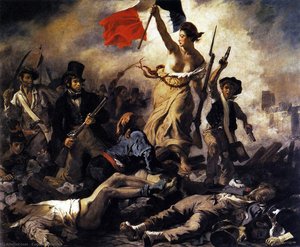
Reproductions offer an exceptional opportunity to appreciate the painting's intricate details and vibrant colors, transporting viewers into Delacroix’s world of passion and artistic innovation. Consider exploring other masterpieces by Delacroix—such as “Liberty Leading the People” and “Christ on the Cross”—to immerse yourself fully in his legacy.

Eugène Delacroix, born Ferdinand Victor Eugène Delacroix in Chantonnay, France on April 26, 1798, stands as a monumental figure within the French Romantic movement. From his formative years onwards, he was recognized not merely as an artist but as its undisputed champion—a visionary who irrevocably altered artistic conventions and captivated audiences with his bold embrace of emotion and dramatic narrative.

1798 - 1863 , Francia

Scopri come scegliere l'arte perfetta per il tuo stile con la nostra guida esperta. Esplora stili, artisti e consigli d'arredo. Acquista riproduzioni di alta qualità su !

Esplora i 10 dipinti più iconici dominati dalle calde tonalità di sienna. Scopri la storia, gli artisti e le tecniche dietro capolavori senza tempo. Trova riproduzioni d'arte di alta qualità per decorare casa con stile su .
Scopri la rinascita della pittura ad olio! Riproduzioni di alta qualità realizzate da esperti artisti. Consulenza personalizzata e opere uniche per arredare con stile e valore.

Esplora la vita e le opere di Eugène Delacroix, il maestro del Romanticismo francese. Analisi approfondita del suo stile innovativo, l'impatto politico e capolavori iconici come 'La Libertà che Guida il Popolo'. Scopri l'eredità artistica di questo genio.

Trasforma le tue foto in straordinari capolavori barocchi e romantici con l'IA di Most-Famous-Paintings! Ritratti personalizzati, ispirati ai grandi maestri. Qualità artigianale garantita e spedizione globale.


Rimani aggiornato sulle ultime novità dell'arte, sulle offerte esclusive e sulle idee di decorazione.
Raccontaci del tuo progetto e i nostri esperti d'arte ti proporranno 3 suggerimenti artistici personalizzati.
Lascia che ci pensiamo noi: 3 opzioni su misura per te – Gratis!


 Condividi


 Scopri di più







 L'opzione vetro è disponibile solo per dimensioni inferiori a 110 cm