x

Acquista un'immagine digitale ad alta risoluzione e ottimizzata, di qualità nettamente superiore all'anteprima online.
Ogni file è meticolosamente preparato dai nostri specialisti interni attraverso l'uso di strumenti avanzati e un sapiente ritocco manuale. Garantiamo che ogni immagine presenti una chiarezza eccezionale, una precisione cromatica impeccabile e dettagli raffinati.
Il file finale viene consegnato via e-mail entro 72 ore, ottimizzato per un uso immediato in contesti professionali, editoriali e di stampa. Si tratta della stessa qualità affidata ai più prestigiosi studi di design, editori e gallerie d'arte.
Scarica un file ad alta risoluzione per uso personale, per la stampa e per progetti creativi. ( Acquista stampa Acquista il dipinto realizzato a mano)
Quando scegli Most-Famous-Paintings.com, non riceverai solo un'immagine: riceverai un'opera d'arte digitale professionalmente ottimizzata, realizzata con la massima precisione e accompagnata da una garanzia di soddisfazione. Ecco tutto ciò che include il tuo ordine, automaticamente:

Riceverai il file dell'immagine digitale ad alta risoluzione via email entro 72 ore dall'ordine, pronto per un uso immediato.

La tua opera d'arte viene ottimizzata professionalmente attraverso l'uso di strumenti avanzati di intelligenza artificiale e una revisione manuale, garantendo il massimo livello di dettaglio, nitidezza e accuratezza cromatica.

Hai eliminato o perso accidentalmente il tuo file? Non preoccuparti: te lo invieremo di nuovo in qualsiasi momento, gratuitamente.

Goditi la tua opera d'arte istantaneamente senza costi doganali, dazi o spese di spedizione: i download digitali sono sempre esenti da tasse.

Garantiamo che la tua immagine digitale rifletta i colori originali con la massima fedeltà, grazie all'uso di strumenti professionali e a una gestione accurata del colore.

Se non sei soddisfatto della tua immagine digitale, la revisioneremo o ti rimborseremo il 100% entro 60 giorni, senza domande.

Non sei soddisfatto? Ricevi un rimborso completo entro 60 giorni dal ricevimento del tuo file digitale, senza dover fornire spiegazioni.

Acquista 3 immagini, risparmia il 10% - Acquista 5, risparmia il 15% - Acquista 10+, risparmia il 20%. Ideale per progetti creativi, gallerie e agenzie.
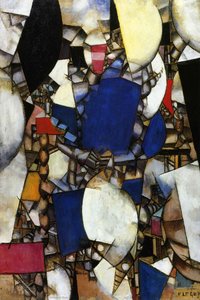
The canvas breathes with an energy that defies stillness—a palpable pulse emanating from Fernand Léger’s 1918 masterpiece, "Contrast of Forms." More than just a depiction of a man playing guitar amidst abstract shapes, it serves as a profound meditation on the relationship between humanity and technology. In this work, Léger does not merely react to the burgeoning industrial revolution; he actively attempts to translate its rhythmic, metallic heartbeat into visual terms, forging a new aesthetic born from observation and intellectual curiosity. To gaze upon this piece is to witness the moment where the organic human spirit meets the uncompromising precision of the machine age.
The composition presents a captivating visual dialogue between the figure and his environment. A man, cradling his guitar, stands anchored amidst a whirlwind of geometric patterns and fragmented objects. Scattered throughout this structured chaos are recognizable elements—a clock positioned toward the upper left, a bowl near the center, a chair in the lower right, and a bottle on the far edge. These objects are not merely still life subjects; they are deconstructed into their essential components, stripped of their traditional weight to become part of a larger, dynamic architecture of shapes. This interplay creates an experience that is both intellectually stimulating for the collector and visually arresting for anyone seeking a focal point of modern energy.
Léger's approach firmly establishes itself within the Constructivist movement, a period characterized by a rejection of fleeting Impressionist light in favor of geometric abstraction. Utilizing straight lines, squares, circles, and triangles, Léger employs a visual language of crystalline precision. This style, often referred to as "Tubism"—a distinctive offshoot of Cubism—celebrates the beauty of industrial forms through bold, cylindrical shapes that mirror the strength of modern machinery. There is no hint of organic softness or illusionistic depth here; instead, there is an unapologetic embrace of the flat, powerful plane.
The technique employed in "Contrast of Forms" reveals a masterful command over texture and light. Léger utilized a layered approach, applying thin washes of color over thicker impasto to create a surface that captures both luminosity and physical weight. His palette is striking and unapologetic, dominated by primary reds, yellows, and blues—hues often associated with the vitality of industrial signaling and the raw energy of urban life. These colors do not seek a quiet harmony; rather, they collide, creating a chromatic tension that keeps the viewer's eye in constant motion across the canvas.
For the discerning art lover or interior designer, "Contrast of Forms" offers much more than mere decoration. It is an invitation to bring the dynamism of the early 20th-century avant-garde into a contemporary living space. The painting’s ability to balance heavy, structural forms with vibrant, energetic color makes it a versatile masterpiece for high-end curation. Whether placed in a minimalist gallery setting or as a bold statement piece in a sophisticated study, the work commands attention through its rhythmic complexity.
Owning a high-quality reproduction of this work allows one to inhabit the same world of progress and structural beauty that Léger envisioned. It serves as a reminder of a time when art sought to bridge the gap between the human hand and the mechanical gear, offering a timeless aesthetic that remains as relevant in today's digital age as it was during the height of the industrial revolution. To display this piece is to celebrate the enduring power of form, color, and the relentless march of human innovation.

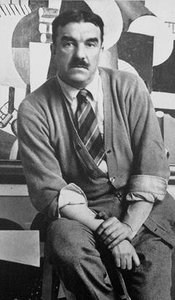
1881 - 1955 , Francia


Rimani aggiornato sulle ultime novità dell'arte, sulle offerte esclusive e sulle idee di decorazione.
Raccontaci del tuo progetto e i nostri esperti d'arte ti proporranno 3 suggerimenti artistici personalizzati.
Lascia che creiamo per te una selezione di 3 opzioni su misura – Gratis!


 Anteprima in scala reale
 Invia
Invia Condividi
 Dettagli opera

 Scarica immagine
 Simili
 Radiografia
 Slideshow

 Espandi i dettagli