


x

Stampa giclée o su tela di qualità museale, con produzione rapida e diverse opzioni di finitura. ( Acquista il dipinto realizzato a mano Acquista immagine)





























Scegli tra le nostre dimensioni predefinite, che rispettano le proporzioni originali dell'opera d'arte.

È possibile inserire dimensioni personalizzate per adattare l'opera a una cornice o a uno spazio specifico. Se la dimensione selezionata non corrisponde alle proporzioni dell'immagine originale, procederemo al ritaglio dell'opera o all'estensione dell'immagine con un bordo specchiato o a tinta unita. Un mockup digitale ti verrà inviato per approvazione prima dell'inizio della produzione.
Si prega di notare che l'anteprima a schermo non riflette il ritaglio o l'estensione effettivi. Solo il mockup mostrerà accuratamente la composizione finale.
Sebbene siano disponibili dimensioni personalizzate, si raccomanda di selezionare una dimensione dall'elenco predefinito per preservare le proporzioni originali.
Consegna in tutto il mondo () in 2 settimane invece delle normali 4/5 settimane. (22 Agosto)


The accordion
Dimensioni riproduzione
In the vibrant landscape of early twentieth-century modernism, few works capture the rhythmic pulse of the machine age as strikingly as Fernand Léger’s “The Accordion.” Completed in 1926, this masterpiece serves as a profound manifesto of Purism, a movement that sought to strip away the chaotic emotionality of previous eras in favor of a clean, structured, and essential visual language. At first glance, the viewer is met with an arresting arrangement of geometric forms—cubes, cylinders, and sharp planes—that seem to vibrate with a mechanical energy. The central figure, a monumental accordion, dominates the canvas not merely as a musical instrument, but as a sculptural totem of modernity. Through its multifaceted surfaces, Léger invites us to witness a world where the boundaries between organic life and industrial precision begin to blur into a singular, harmonious vision.
The technique employed by Léger in this piece is nothing short of masterful, characterized by a bold, graphic clarity that remains timeless. He utilizes a distinctive method of meticulous black outlining, which serves to anchor each shape with architectural certainty. Within these boundaries, large, unapologetic blocks of primary and secondary colors—vibrant reds, deep blues, and striking yellows—are applied to create a sense of weight and volume. This approach rejects the soft, atmospheric illusions of Impressionism, opting instead for a tactile materiality that celebrates the surface of the canvas. For the discerning collector or interior designer, this technique offers an incredible visual depth; the interplay of light and color creates a dynamic presence that can transform a contemporary space, acting as both a sophisticated focal point and a window into the heart of the avant-garde.
Beyond its striking aesthetic, “The Accordion” is steeped in a rich historical and symbolic narrative. Léger’s artistic journey was deeply influenced by his formative years working on the farms of Normandy, an experience that instilled in him a lifelong reverence for the physical essence of objects. In this painting, he translates that appreciation into the language of the factory and the city. The inclusion of secondary elements—the steady presence of bottles, the ticking suggestion of a clock, and the structural silhouette of a chair—creates a complex spatial dialogue. These objects are not mere still-life tropes; they are symbols of time, technology, and the human rhythm embedded within a mechanized society. The accordion itself, with its repetitive bellows and metallic keys, becomes a metaphor for the synchronized movement of modern life.
To possess a reproduction of this work is to bring a piece of art history’s most transformative era into one's personal environment. It evokes an emotional response that is both intellectual and visceral—a sense of order, strength, and forward momentum. Whether placed in a minimalist gallery-style setting or as a bold statement in a classic study, “The Accordion” resonates with anyone who finds beauty in structure and elegance in precision. It remains a testament to Léger’s ability to find the soul within the machine, offering an enduring inspiration that continues to captivate the modern eye.

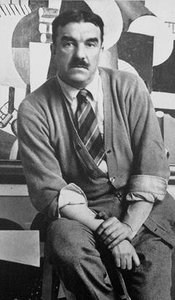
1881 - 1955 , Francia

Explore the profound history and technical mastery of woodcut relief printing. From ancient origins to German Expressionism, discover how artists use the subtractive process to create iconic works. A definitive guide for art students, collectors, and historians.

Discover the technical mastery behind Most-Famous-Paintings.com's premium Giclée canvas prints. Our guide for elite collectors explores archival pigment inks, museum-grade substrates, and the science of high-fidelity reproduction to ensure lasting beauty and historical accuracy.

Discover the science behind museum-quality Giclée prints. Learn how archival pigment inks, 12-color precision, and museum-grade substrates create high-fidelity art reproductions designed to preserve the soul of historical masterpieces for generations.


Rimani aggiornato sulle ultime novità dell'arte, sulle offerte esclusive e sulle idee di decorazione.
Raccontaci del tuo progetto e i nostri esperti d'arte ti proporranno 3 suggerimenti artistici personalizzati.
Lascia che creiamo per te una selezione di 3 opzioni su misura – Gratis!


 Anteprima in scala reale
 Invia
Invia Condividi
 Dettagli opera

 Scarica immagine
 Simili
 Radiografia
 Slideshow

 Espandi i dettagli







 L'opzione vetro è disponibile solo per dimensioni inferiori a 110 cm


