Sell Your Art
Lista dei desideri Carrello acquisti Cart
PreviewPreview AR previewAR preview Switch to hand made Painting Switch to hand made PaintingSwitch to Image Switch to Image InviaInvia
Dettagli operaDettagli opera Aggiungi ai preferiti Aggiungi ai preferiti ScaricaScarica SimiliSimili RadiografiaRadiografia SlideshowSlideshow

untitled (1612)

Fernand Léger (1881-1955) was a French painter and sculptor who pioneered "tubism," a form of cubism emphasizing cylindrical shapes, reflecting the influence of industrial machinery on his artistic vision.

Esplora l'arte di Fernand Léger (1881-1955), un pioniere del Cubismo e della 'Tubismo'. Scopri i suoi audaci dipinti figurativi che celebrano la vita moderna, le macchine e la forma umana. Un precursore del Pop Art!

Giclée / Stampa d'arte

Stampa giclée o su tela di qualità museale, con produzione rapida e diverse opzioni di finitura. (Switch to hand made Painting Switch to hand made PaintingSwitch to Image Switch to Image)

P118B $10
P118H $10
P118W $10
P438Z $10
P508JH $12
P508YH $12
P805H $10
P805Z $10
P919BZ $10
P919G $10
P919XJ $10
P959ZH $10
P968JZ $12
W106C $8
W218G $10
W218JH $8
W218Y $10
W307PJ $10
W316G $10
W316PJ $8
W316Y $10
W398PJ $8
W4111J $10
W500HY $15
W500JH $15
W692G $12
W849H $8
W940BG $15
W953PJ $8

Standard
custom
CM
INCH

Scegli tra le nostre dimensioni predefinite, che rispettano le proporzioni originali dell'opera d'arte.

larghezza
altezza

È possibile inserire dimensioni personalizzate per adattare l'opera a una cornice o a uno spazio specifico. Se la dimensione selezionata non corrisponde alle proporzioni dell'immagine originale, procederemo al ritaglio dell'opera o all'estensione dell'immagine con un bordo specchiato o a tinta unita. Un mockup digitale ti verrà inviato per approvazione prima dell'inizio della produzione.
Si prega di notare che l'anteprima a schermo non riflette il ritaglio o l'estensione effettivi. Solo il mockup mostrerà accuratamente la composizione finale.
Sebbene siano disponibili dimensioni personalizzate, si raccomanda di selezionare una dimensione dall'elenco predefinito per preservare le proporzioni originali.

Consegna in tutto il mondo () in 2 settimane invece delle normali 4/5 settimane. (30 Luglio)

why_choose_icon
Spedizione espressa gratuita in tutto il mondo
why_choose_icon
Tela in lino di alta qualità
why_choose_icon
Assicurazione completa sulla spedizione
why_choose_icon
Garanzia di rimborso dei dazi doganali
why_choose_icon
Garanzia di fedeltà cromatica
why_choose_icon
Politica di reso entro 60 giorni (solo per difetti)
why_choose_icon
Garanzia di rimborso al 100%
why_choose_icon
Sconto per acquisti multipli

Prezzo totale

$ 68

reproduction

untitled (1612)

Giclée / Stampa d'arte

Dimensioni riproduzione

-

Prezzo totale finale

$ 68

Informazioni rapide

  • Medium: Painting
  • Artist: Fernand Léger
  • Artistic style: Abstract Expressionism
  • Notable elements or techniques: Tubism, Simplified forms
  • Year: 1881
  • Title: The image is a painting of a group of people in various positions...
  • Location: Private Collection

Quiz d'arte

Per ogni domanda è presente una sola risposta corretta.

Domanda 1:
What artistic movement is Fernand Léger primarily associated with?
Domanda 2:
Fernand Léger’s style is characterized by:
Domanda 3:
The image depicts a scene featuring numerous figures engaged in what activity?
Domanda 4:
What technique did Léger employ to simplify the depiction of modern subjects?
Domanda 5:
Fernand Léger is considered a precursor to which artistic genre?

Descrizione dell'opera

A Life Forged in Form: The World of Fernand Léger

Fernand Léger’s “untitled (1612)” isn't merely a painting; it’s a crystallized snapshot of the anxieties and aspirations simmering beneath the surface of early 20th-century Europe. Born Joseph Fernand Henri Léger in Argentan, Normandy, in 1881—a region defined by its agricultural traditions—Léger possessed an inherent understanding of physicality that would profoundly influence his artistic trajectory. Initially drawn to architecture, he swiftly abandoned it for painting after relocating to Paris around 1900, establishing himself as a vital participant in the burgeoning Parisian avant-garde movement. Unlike many artists of his era who sought refuge in pure abstraction, Léger championed an approach that actively wrestled with modernity—its relentless pace, its geometric precision, and its pervasive presence within daily life—transforming these elements into a uniquely expressive visual language.
  • Tubism: Léger’s breakthrough came with “Tubism,” a radical cubist style characterized by simplified tubular forms that echoed the architecture of industrial cities. This technique deliberately rejected illusionistic representation, prioritizing instead the conveyance of structural information and conveying a sense of movement through repetitive geometric shapes.
  • Early Influences: Léger’s artistic sensibilities were shaped by influences ranging from Cézanne's exploration of volume to Picasso’s pioneering cubist experiments. However, he swiftly moved beyond these precedents, forging his own distinctive path toward stylistic innovation.
The painting itself depicts a group of figures—approximately twelve individuals—engaged in seemingly disparate activities. They sprawl across the canvas, some reclining horizontally, others standing upright, creating a dynamic composition that defies conventional spatial conventions. Léger’s masterful use of color—bold reds and yellows dominate the palette—amplifies the emotional impact of the scene, conveying both energy and unease. The figures are rendered in a simplified, stylized manner, emphasizing geometric forms rather than anatomical detail. This stylistic choice wasn't simply aesthetic; it served as a deliberate commentary on the dehumanizing effects of industrialization, presenting humanity as fragmented yet interconnected within a larger mechanical framework. Symbolism and Context: Léger’s “untitled (1612)” speaks to the broader cultural anxieties surrounding the transition from rural tradition to urban modernity. The tubular forms symbolize the dominance of machinery and the erosion of organic shapes, reflecting concerns about societal transformation and the loss of human connection. Simultaneously, the painting embodies a defiant optimism—a belief in the transformative potential of art to grapple with complex issues and inspire viewers to embrace the challenges of an evolving world. Technique: Léger’s technique involved layering paint onto canvas in multiple thin coats, achieving remarkable textural depth despite his simplified forms. He meticulously crafted each tubular element, ensuring its precise geometric accuracy while simultaneously conveying a palpable sense of movement and vibration. This painstaking attention to detail underscores Léger's commitment to capturing the essence of modern experience—a feat accomplished with breathtaking stylistic brilliance.
  • Legacy: Léger’s influence extends far beyond his own lifetime, foreshadowing developments in Pop Art decades later. His willingness to engage directly with contemporary concerns and his embrace of abstraction as a tool for social commentary cemented his position as one of the most important artists of the modernist era.
Ultimately, “untitled (1612)” transcends mere visual representation; it’s an invitation to contemplate the relationship between humanity and technology—a dialogue that continues to resonate powerfully with audiences today. It stands as a testament to Léger's unwavering conviction that art could illuminate the complexities of the modern condition while simultaneously fostering a spirit of innovation and embracing the transformative power of form itself.

Biografia dell'artista

vitae e formazione

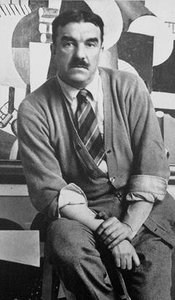
Fernand Léger, pittore, scultore e filmmaker francese, nacque il 4 febbraio 1881 ad Argentan, Orne, nella bassa Normandia. Suo padre allevava bovini e Léger iniziò la sua formazione come architetto nel 1897-1899. Successivamente si trasferì a Parigi nel 1900, sostenendosi con il lavoro di disegnatore architettonico.

sviluppo artistico

Le prime opere di Léger furono influenzate dall'impressionismo, come visto in Le jardin de ma mère (Il giardino di mia madre) (1905). Dopo aver frequentato la scuola d'arte decorativa e l'Académie Julian, iniziò a lavorare seriamente come pittore a 25 anni. Il suo stile si evolse in una forma personale di cubismo, che i critici definirono "tubismo" per la sua enfasi su forme cilindriche.

Cubismo e il gruppo dei Puteaux

Nel 1910, Léger espose al Salon d'automne insieme a Jean Metzinger e Henri Le Fauconnier. Entrò nel gruppo dei Puteaux, noto anche come la sezione d'or (la sezione aurea), insieme ad altri artisti come Francis Picabia e Marcel Duchamp.

Guerra e la sua influenza sull'opera di Léger

Le esperienze di Léger nella Prima Guerra Mondiale ebbero un impatto significativo sulla sua opera. Durante il suo tempo al fronte, produsse schizzi di pezzi d'artiglieria, aerei e soldati. Il suo dipinto Soldier with a Pipe (1916) riflette questo periodo.

Lavoro successivo e eredità

Il lavoro post-bellico di Léger, caratterizzato da forme meccaniche lisce, lo legò alla tradizione della pittura figurativa francese. I suoi paesaggi animati del 1921 mostrarono figure e animali in forme armoniose e razionalizzate. opere chiave: musei che espongono le opere di Léger:
Fernand Léger

Fernand Léger

1881 - 1955 , Francia

Dati rapidi

  • Artisti Influenti:
    • Cézanne
    • Impressionismo
  • Artisti Influenzati: ['Pop Art']
  • Data Di Nascita: 4 febbraio 1881
  • Luogo Di Nascita: Argentan, Francia
  • Movimento Artistico: Cubismo, Tubismo
  • Nazionalità: Francese
  • Nome Completo: Fernand Léger
  • Opere Notevoli:
    • La Grande Parata
    • L'Elemento Macchina
    • Donna Seduta
    • The City
Esplora opere d'arte organizzate per temi, stili e caratteristiche.