x

Stampa giclée o su tela di qualità museale, con produzione rapida e diverse opzioni di finitura. ( Ordina la riproduzione dipinta a mano Acquista download)





























Scegli tra le nostre dimensioni predefinite, che rispettano le proporzioni originali dell'opera d'arte.

È possibile inserire dimensioni personalizzate per adattare l'opera a una cornice o a uno spazio specifico. Se la dimensione selezionata non corrisponde alle proporzioni dell'immagine originale, procederemo al ritaglio dell'opera o all'estensione dell'immagine con un bordo specchiato o a tinta unita. Un mockup digitale ti verrà inviato per approvazione prima dell'inizio della produzione.
Si prega di notare che l'anteprima a schermo non riflette il ritaglio o l'estensione effettivi. Solo il mockup mostrerà accuratamente la composizione finale.
Sebbene siano disponibili dimensioni personalizzate, si raccomanda di selezionare una dimensione dall'elenco predefinito per preservare le proporzioni originali.
Consegna in tutto il mondo () in 2 settimane invece delle normali 4/5 settimane. (14 Agosto)


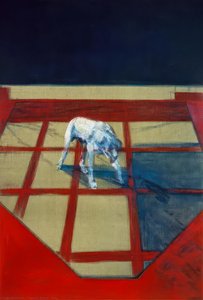
man with dog
Dimensioni della riproduzione
Francis Bacon’s “Man with Dog,” completed in 1953, stands as one of the most unsettling and iconic images produced by the British Surrealist painter. More than just a depiction of a man and his canine companion, it embodies a profound exploration of human vulnerability and the inescapable confrontation with mortality – themes central to Bacon’s artistic vision throughout his prolific career.
The painting presents a starkly simple scene: a man standing on what appears to be a metal grate or railing, clutching a dog firmly in his arms. Alongside him is another dog, positioned slightly off-center, gazing towards the viewer with an expression of palpable apprehension. Bacon deliberately eschewed elaborate narrative elements, prioritizing instead the raw physicality of the figures and their relationship.
“Man with Dog” firmly establishes Bacon’s signature style – a blend of Surrealism and Expressionism that rejects traditional representational conventions. He employed a technique characterized by thick impasto, applying paint directly onto the canvas in layers of textured pigment. This method creates a palpable sense of physicality, mirroring the psychological turmoil depicted within the artwork. The monochrome palette—primarily black and white—intensifies the emotional impact, stripping away any distractions from the core subject matter.
Painted in the immediate aftermath of World War II, “Man with Dog” reflects the pervasive anxieties of the era. Bacon’s artistic explorations coincided with the burgeoning philosophical movement of existentialism, championed by thinkers like Jean-Paul Sartre and Albert Camus. These philosophers questioned traditional notions of morality and purpose, emphasizing individual responsibility and confronting the absurdity of existence – concepts that profoundly resonated with Bacon’s own worldview.
The symbolism within “Man with Dog” is multilayered and deliberately ambiguous. The man's posture—rigid yet vulnerable—suggests a struggle against overwhelming forces. The dog’s gaze directs attention outwards, conveying fear of the unknown and highlighting the precariousness of human existence. Furthermore, the grate or railing symbolizes confinement and separation, reinforcing the painting’s overarching theme of isolation – a recurring motif in Bacon's oeuvre.
"Man with Dog" doesn't offer comfort; it compels viewers to confront uncomfortable truths about human fragility. The painting’s unsettling stillness amplifies its emotional resonance, forcing contemplation on the inevitability of death and decay. Bacon’s masterful manipulation of texture and monochrome color contributes to an atmosphere of profound melancholy and psychological unease—a testament to his ability to translate inner turmoil into visual form.
This arresting artwork continues to captivate audiences today, serving as a powerful reminder of the enduring relevance of existentialist thought and Bacon’s unparalleled capacity for conveying the darkest recesses of human emotion. Its haunting beauty resides precisely in its refusal to shy away from confronting the fundamental questions of life and death.

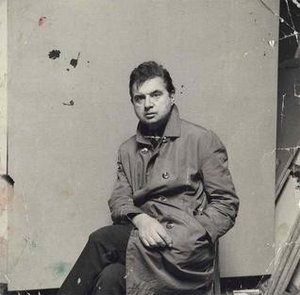
1909 - 1992 , Irlanda

Explore the profound depths of Surrealism. From Dalí’s dreamscapes to Magritte’s enigmas, master the history of the subconscious mind through our expert art guide and discover museum-quality oil reproductions of the world's most iconic surrealist masterpieces.


Rimani aggiornato sulle ultime novità dell'arte, sulle offerte esclusive e sulle idee di decorazione.
Raccontaci del tuo progetto e i nostri esperti d'arte ti proporranno 3 suggerimenti artistici personalizzati.
Lascia che creiamo per te una selezione di 3 opzioni su misura – Gratis!


 Anteprima in scala reale
 Condividi
 Condividi
 Dettagli

 Scarica immagine
 Articoli simili
 Radiografia
 Slideshow

 Leggi tutto







 L'opzione vetro è disponibile solo per dimensioni inferiori a 110 cm