


x

 Precisione Puntinista
 1884Renaissance
 15.0 x 24.0 cm
 Galleria Courtauld
Stampa giclée o su tela di qualità museale, con produzione rapida e diverse opzioni di finitura. ( Acquista il dipinto realizzato a mano Acquista immagine)





























Scegli tra le nostre dimensioni predefinite, che rispettano le proporzioni originali dell'opera d'arte.

È possibile inserire dimensioni personalizzate per adattare l'opera a una cornice o a uno spazio specifico. Se la dimensione selezionata non corrisponde alle proporzioni dell'immagine originale, procederemo al ritaglio dell'opera o all'estensione dell'immagine con un bordo specchiato o a tinta unita. Un mockup digitale ti verrà inviato per approvazione prima dell'inizio della produzione.
Si prega di notare che l'anteprima a schermo non riflette il ritaglio o l'estensione effettivi. Solo il mockup mostrerà accuratamente la composizione finale.
Sebbene siano disponibili dimensioni personalizzate, si raccomanda di selezionare una dimensione dall'elenco predefinito per preservare le proporzioni originali.
Consegna in tutto il mondo () in 2 settimane invece delle normali 4/5 settimane. (25 Agosto)


Uomo in una barca
Dimensioni riproduzione
Georges Seurat's "Man in a Boat," painted in 1884, is more than just a depiction of a solitary figure navigating a small boat; it’s a meticulously constructed meditation on perception, light, and the quiet beauty of the French countryside. This intimate scene, rendered with his revolutionary Pointillist technique, offers a glimpse into the artist's intensely intellectual approach to art – a world where scientific observation and emotional resonance intertwine seamlessly. The painting captures a fleeting moment, imbued with an almost palpable sense of tranquility, inviting us to contemplate the relationship between the individual and the vastness of nature.
Created during a pivotal period in art history, “Man in a Boat” exemplifies Seurat’s groundbreaking development of Pointillism. Rejecting the blending and diffusion favored by Impressionists, Seurat believed that color should be perceived as independent entities, not mixed on the palette. Instead, he employed thousands of tiny, unmixed dots – or ‘points’ – of pure pigment, meticulously arranged to create an optical illusion when viewed from a distance. This technique, born from his study of optics and color theory, aimed to achieve a heightened sense of luminosity and vibrancy. The seemingly simple act of applying these individual points becomes a complex exercise in scientific precision, demanding immense patience and control.
While rooted in scientific principles, “Man in a Boat” is not devoid of symbolic meaning. The solitary figure, rowing towards the horizon, evokes the Romantic tradition of the lone traveler seeking solace and self-discovery within nature. The boat itself, small and vulnerable against the expansive water, suggests a sense of humility before the power of the natural world. The distant boats in the background – some grand, others modest – hint at the complexities of human interaction and the diverse experiences that populate the landscape. The muted tones and diffused light contribute to an atmosphere of contemplative stillness, encouraging introspection.
Painted in 1884, “Man in a Boat” reflects the artist's growing disillusionment with Impressionism. Seurat was increasingly interested in creating works that were more structured and intellectually rigorous than his predecessors. He sought to capture not just the fleeting impressions of light and color but also the underlying structure of reality itself. This painting represents a crucial step towards his later, more monumental works, such as “A Sunday on La Grande Jatte.” Despite his tragically short life – he died at the age of 31 – Seurat’s legacy endures as one of the most innovative and influential figures in modern art. His meticulous technique and unwavering commitment to scientific observation continue to inspire artists today, reminding us of the profound connection between art, science, and human perception.
Most-Famous-Paintings offers a stunning, hand-painted reproduction of “Man in a Boat,” meticulously crafted to capture the essence of Seurat’s masterpiece. Bring this evocative image into your home or office – a testament to artistic genius and a celebration of the beauty of the natural world.

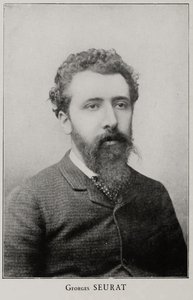
1859 - 1891 , Francia

Explore the scientific brilliance of Neo-Impressionism. Discover how masters like Georges Seurat revolutionized art through optical mixing, color theory, and the precision of Pointillism to capture the true essence of light.

Explore the scientific brilliance of Pointillism. Discover how masters like Georges Seurat revolutionized art through optical color mixing and the science of light. A definitive guide for classical art enthusiasts seeking to understand the physics behind Neo-Impressionist masterpieces.


Rimani aggiornato sulle ultime novità dell'arte, sulle offerte esclusive e sulle idee di decorazione.
Raccontaci del tuo progetto e i nostri esperti d'arte ti proporranno 3 suggerimenti artistici personalizzati.
Lascia che creiamo per te una selezione di 3 opzioni su misura – Gratis!


 Anteprima in scala reale
 Invia
Invia Condividi
 Dettagli opera

 Scarica immagine
 Simili
 Radiografia
 Slideshow
 Espandi i dettagli







 L'opzione vetro è disponibile solo per dimensioni inferiori a 110 cm


