x

 Acrilico su telaOpere da pareteProto-Renaissance
 1300Renaissance
 Museo del Tesoro della Basilica di San Francesco ad Assisi
Stampa giclée o su tela di qualità museale, con produzione rapida e diverse opzioni di finitura. ( Passa alla versione dipinta a mano Passa all'immagine)





























Scegli tra le nostre dimensioni predefinite, che rispettano le proporzioni originali dell'opera d'arte.

È possibile inserire dimensioni personalizzate per adattare l'opera a una cornice o a uno spazio specifico. Se la dimensione selezionata non corrisponde alle proporzioni dell'immagine originale, procederemo al ritaglio dell'opera o all'estensione dell'immagine con un bordo specchiato o a tinta unita. Un mockup digitale ti verrà inviato per approvazione prima dell'inizio della produzione.
Si prega di notare che l'anteprima a schermo non riflette il ritaglio o l'estensione effettivi. Solo il mockup mostrerà accuratamente la composizione finale.
Sebbene siano disponibili dimensioni personalizzate, si raccomanda di selezionare una dimensione dall'elenco predefinito per preservare le proporzioni originali.
Consegna in tutto il mondo () in 2 settimane invece delle normali 4/5 settimane. (9 Agosto)


St. Paul
Dimensioni della riproduzione
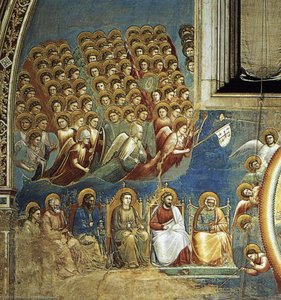
Giotto di Bondone's “St. Paul,” created around 1300, is not merely a depiction of an Apostle; it’s a profound exploration of faith and the nascent humanism that would come to define the Renaissance. This fresco fragment, originally part of a larger cycle adorning the Basilica of Saint Francis in Assisi, offers a captivating encounter with one of Christianity's most pivotal figures. What immediately strikes the viewer is not simply the representation of St. Paul, but the startlingly direct gaze – an invitation to communion that transcends centuries. Giotto doesn’t present us with a distant saint enshrined in ethereal glory; he presents a man, imbued with spiritual authority yet palpably human.
To fully appreciate “St. Paul,” one must understand the artistic landscape of its time. The 13th century was still largely dominated by the Byzantine style – characterized by flattened figures, gold backgrounds, and a focus on symbolic representation over naturalistic depiction. Giotto, however, was at the vanguard of a revolution. While retaining elements like the iconic halo signifying holiness and the rich blue backdrop hinting at the divine realm, he infused his work with an unprecedented sense of volume and emotional depth. Notice how Giotto uses subtle shading to model St. Paul’s face, giving it weight and presence. The delicate rendering of features—the lines around the eyes, the slight parting of the lips—suggest a thoughtful interior life. This was a radical departure from the stylized rigidity of Byzantine art, marking a crucial step towards the realism that would define Renaissance painting.
The composition itself is carefully considered. The inclusion of smaller figures flanking St. Paul – often interpreted as angels or attendant saints – emphasizes his importance while simultaneously grounding him within a celestial hierarchy. The gold accents, though reminiscent of Byzantine tradition, are used more sparingly and strategically, drawing attention to key elements like the halo and subtly illuminating St. Paul’s face. The very essence of St. Paul’s story—his dramatic conversion on the road to Damascus and his subsequent tireless evangelism—is captured in this single, arresting image. He embodies both strength and humility, a testament to the transformative power of faith. It is important to remember that St. Paul was not one of the original apostles who knew Jesus during his lifetime; he became a pivotal figure *after* the crucifixion, spreading the message to Gentiles across the Roman world.
Owning a reproduction of Giotto’s “St. Paul” is not simply acquiring a beautiful image; it’s inviting a piece of art history into your home. The painting’s restrained palette and dignified composition make it surprisingly versatile, lending itself well to both traditional and contemporary interiors. Imagine this work gracing a study, a library, or even a dining room – its presence would undoubtedly spark conversation and inspire contemplation. The emotional resonance of the piece—the sense of quiet strength and unwavering faith—can bring a profound sense of peace and serenity to any space. A Most-Famous-Paintings reproduction allows you to experience the power of Giotto’s vision firsthand, connecting with a legacy that continues to shape our understanding of art and spirituality.


1267 - 1337 , Italia

Explore the transformative era of the Proto-Renaissance. Discover how masters like Giotto broke from Byzantine traditions to introduce humanism, emotion, and naturalism, laying the foundation for modern art history.


Rimani aggiornato sulle ultime novità dell'arte, sulle offerte esclusive e sulle idee di decorazione.
Raccontaci del tuo progetto e i nostri esperti d'arte ti proporranno 3 suggerimenti artistici personalizzati.
Lascia che creiamo per te una selezione di 3 opzioni su misura – Gratis!


 Anteprima in scala reale
 Condividi
 Condividi
 Dettagli

 Scarica immagine
 Articoli simili
 Radiografia
 Slideshow
 Leggi tutto







 L'opzione vetro è disponibile solo per dimensioni inferiori a 110 cm


![La Legenda Di San Francesco - [16] - La Morte Del Cavaliere Di Celano — Giotto Di Bondone, Proto Renaissance](/media/artworks/images/thumbnails/83/59/83593bb19f4241089d593124079fe901.jpg)


![Leggenda Di San Francesco - [08] - Visione Del Carro Volante — Giotto Di Bondone, Proto-renaissance Gothic](/media/artworks/images/thumbnails/eb/77/eb7783794fc14b45848c95d6a54baff3.jpg)
![Leggenda Di San Francesco - [21] - Apparizione A Fra Agostino E Al Vescovo Guido D'arezzo — Giotto Di Bondone, Proto-rinascimento](/media/artworks/images/thumbnails/1f/a3/1fa370e8ba2040d380a682d61260727f.jpg)