


x

Olio su tela dipinto a mano nelle tue dimensioni e con la tua cornice, realizzato su ordinazione dai nostri artisti. ( Acquista stampa Acquista immagine)
Scegli tra le nostre dimensioni predefinite, che rispettano le proporzioni originali dell'opera d'arte.

È possibile inserire dimensioni personalizzate per adattare l'opera a una cornice o a uno spazio specifico. Se la dimensione selezionata non corrisponde alle proporzioni dell'immagine originale, provvederemo a ritagliare l'opera o a estendere il dipinto con elementi aggiuntivi dipinti a mano. Un mockup digitale ti sarà inviato per approvazione prima dell'inizio della produzione.
Si prega di notare che l'anteprima a schermo non riflette il ritaglio o l'estensione effettivi. Solo il mockup mostrerà accuratamente la composizione finale.
Sebbene siano disponibili dimensioni personalizzate, consigliamo di selezionare una dimensione dall'elenco predefinito per preservare le proporzioni originali.
Consegna in tutto il mondo () in 3/4 settimane anziché nelle normali 5 settimane. (24 Agosto). Nessun compromesso sulla qualità.


The great wave, sète
Dimensioni riproduzione

In the mid-nineteenth century, a period defined by the tension between scientific discovery and Romantic expression, Gustave Le Gray emerged as a transformative force who bridged the gap between the painter's brush and the photographer's lens. Born in 1820 in Villiers-le-Bel to a family of distinguished military lineage—his father being the celebrated Marshal Jean Lannes—Le Gray possessed a temperament that blended disciplined observation with an extraordinary, almost poetic, imagination. While his early training was rooted in the academic traditions of painting under masters such as François-Édouard Picot and Paul Delaroche, his true destiny lay in capturing the ephemeral nuances of the natural world through the burgeoning medium of photography.
Le Gray’s journey was one of relentless experimentation and technical mastery. He did not merely accept the limitations of early photographic processes like the daguerreotype; instead, he sought to transcend them. His profound influence on the medium stems from his refusal to view photography as a mere tool for documentation. To Le Gray, the camera was an instrument of art. This philosophy led him to develop the revolutionary waxed paper negative, a breakthrough that allowed for greater tonal range and the ability to produce multiple prints, effectively democratizing the photographic image and expanding its artistic potential. His work became a precursor to what many now call Photographic Impressionism, where the goal was not just to record a scene, but to evoke the very atmosphere of the moment.
One of Le Gray’s most enduring contributions to art history was his ingenious solution to one of photography's greatest nineteenth-century challenges: the disparate exposure requirements of sky and sea. In a single exposure, the bright sky would often appear washed out while the darker waves remained underexposed. With the soul of a painter, Le Gray approached this technical hurdle with a creative manipulation known as combination printing. By meticulously merging two separate negatives—one captured for the luminous heavens and another for the textured ocean—he achieved a level of realism and dramatic depth that seemed almost supernatural to his contemporaries.
This technique is nowhere more evident than in his breathtaking seascapes, such as Brig upon the Water. In these works, one can witness a symphony of light and shadow where the clouds appear as heavy, textured tapestries mirroring the rhythmic movement of the tides below. His ability to capture the subtle gradations of light filtering through mist or breaking through silver linings transformed maritime photography from topographical records into narrative poems. Through his lens, the vastness of the Mediterranean or the solitude of a coastal vessel became vessels for profound emotional resonance, inviting viewers to contemplate their own place within the grandeur of nature.
The historical significance of Gustave Le Gray extends far beyond his technical patents. He was a central figure in the French photographic movement of the 1850s, serving as a teacher and mentor to subsequent generations of photographers. His insistence that photography should belong to the realm of fine art rather than mere commerce helped elevate the medium's status within the global art community. His influence can be traced through the evolution of landscape photography and the eventual rise of pictorialism, as he proved that the camera could possess an extraordinary imagination.
As we reflect on his life, which concluded in Cairo in 1884, we see a man who successfully navigated the transition from the Romantic era to the age of modern technology. His legacy remains etched in the silvered surfaces of his prints—images that continue to captivate us with their scientific precision and their haunting, atmospheric beauty. Le Gray did not just photograph the world; he taught us how to see the light within it.

1820 - 1884
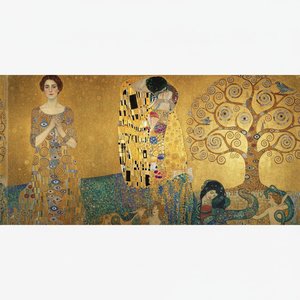
Esplora i 25 capolavori di Gustav Klimt, pittore simbolo dell'Art Nouveau. Scopri la storia, le tecniche e l'oro iconico delle sue opere più famose come 'Il Bacio'. Trova riproduzioni d'arte di alta qualità per decorare casa con stile su Most-Famous-Paintings.com
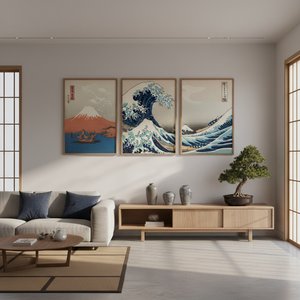
Esplora le 25 opere più iconiche di Katsushika Hokusai, maestro dell'ukiyo-e. Scopri la storia dietro 'La Grande Onda', il Monte Fuji e altre stampe giapponesi senza tempo. Trova riproduzioni d'arte di alta qualità per decorare la tua casa su Most-Famous-Paintings.com.

Esplora i 10 dipinti più iconici dominati dal grigio scuro. Scopri le storie di Rembrandt, Goya e altri maestri, le loro tecniche e l'impatto emotivo delle opere. Trova riproduzioni d'arte di alta qualità per la tua casa su .

Esplora i 10 dipinti più celebri dominati dal grigio chiaro. Scopri la storia, gli artisti e le tecniche dietro capolavori di Monet, Hopper e altri maestri. Trova stampe d'arte di alta qualità per decorare casa con .

Esplora i 10 dipinti più iconici dominati dal suggestivo grigio Payne. Scopri la storia, gli artisti e le emozioni dietro questi capolavori senza tempo. Trova riproduzioni di alta qualità per decorare la tua casa su Most-Famous-Paintings.com!


Rimani aggiornato sulle ultime novità dell'arte, sulle offerte esclusive e sulle idee di decorazione.
Raccontaci del tuo progetto e i nostri esperti d'arte ti proporranno 3 suggerimenti artistici personalizzati.
Lascia che creiamo per te una selezione di 3 opzioni su misura – Gratis!


 Anteprima in scala reale
 Invia
Invia Condividi
 Dettagli opera

 Scarica immagine
 Simili
 Radiografia
 Slideshow
 Espandi i dettagli




































 L'opzione vetro è disponibile solo per dimensioni inferiori a 110 cm


