x


Olio su tela dipinto a mano nelle tue dimensioni e con la tua cornice, realizzato su ordinazione dai nostri artisti. ( Passa alla stampa Passa all'immagine)





























Scegli tra le nostre dimensioni predefinite, che rispettano le proporzioni originali dell'opera d'arte.

È possibile inserire dimensioni personalizzate per adattare l'opera a una cornice o a uno spazio specifico. Se la dimensione selezionata non corrisponde alle proporzioni dell'immagine originale, provvederemo a ritagliare l'opera o a estendere il dipinto con elementi aggiuntivi dipinti a mano. Un mockup digitale ti sarà inviato per approvazione prima dell'inizio della produzione.
Si prega di notare che l'anteprima a schermo non riflette il ritaglio o l'estensione effettivi. Solo il mockup mostrerà accuratamente la composizione finale.
Sebbene siano disponibili dimensioni personalizzate, consigliamo di selezionare una dimensione dall'elenco predefinito per preservare le proporzioni originali.
Consegna in tutto il mondo () in 3/4 settimane anziché nelle normali 5 settimane. (31 Luglio). Nessun compromesso sulla qualità.


Skeletons nella Stanza
Dimensioni della riproduzione
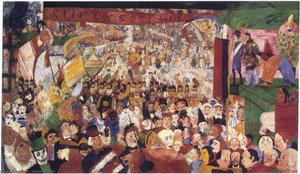
James Ensor’s “Skeletons in the Studio” – a painting that, at first glance, might seem merely unsettling, reveals itself upon closer inspection as a profoundly complex and deeply evocative work. Created in 1900 and now residing within the esteemed collection of the National Gallery of Canada, this oil on canvas transcends simple morbidity; it’s a meticulously constructed meditation on mortality, memory, and the very nature of artistic creation. Ensor, a pivotal figure bridging Symbolism and Expressionism, wasn't interested in merely depicting death – he sought to capture its lingering presence within the spaces we inhabit, both physical and psychological.
The painting immediately draws the viewer into a dimly lit chamber, dominated by an atmosphere of quiet despair. The monochromatic palette—a carefully orchestrated blend of grays, browns, and blacks—amplifies this somber mood, creating a sense of claustrophobia and isolation. Yet, within this darkness, Ensor introduces a startling element: the skeletons themselves. These aren’t idealized representations of death; they are rendered with a remarkable degree of detail, posed in various states of activity – seated, leaning against furniture, even seemingly engaged in a macabre game. The choice of these specific poses—a man reading, another playing a musical instrument—suggests that death isn't an ending but rather a continuation, a ghostly echo of life’s routines and passions.
Ensor’s technique is as crucial to the painting’s impact as its subject matter. He employs a loose, expressive brushstroke, eschewing academic precision for a more visceral approach. The surfaces are layered with thick impasto, particularly noticeable around the skeletons' limbs and clothing, adding texture and weight to the scene. This deliberate roughness contrasts sharply with the smooth, almost polished quality of the furniture – a subtle visual tension that mirrors the painting’s thematic concerns. Notice how he uses light and shadow not just for illumination but also to sculpt form and create an unsettling sense of depth. The single window, offering a glimpse of natural light, acts as a poignant reminder of the vitality that has been lost within this shadowed space.
Born in Ostend, Belgium, in 1860 – a city steeped in maritime history and artistic tradition – James Ensor’s life profoundly shaped his work. His father, an English merchant, and his mother, a Belgian artist, provided him with a unique cultural perspective, one that informed his fascination with masks, carnivals, and the theatricality of everyday life. The souvenir shop run by his parents, overflowing with exotic objects and fantastical costumes, undoubtedly served as a crucial source of inspiration for Ensor’s distinctive visual vocabulary. “Skeletons in the Studio” can be interpreted as an exploration of this very legacy – a confrontation with the ghosts of past experiences and the enduring power of memory. The skeletons aren't simply symbols of death; they represent the artists, the patrons, and the critics who have shaped the course of art history, their presence a silent commentary on the creative process itself.
At Most-Famous-Paintings.com, we are proud to offer meticulously crafted, hand-painted reproductions of James Ensor’s “Skeletons in the Studio.” These aren't mere copies; they are faithful interpretations that capture the artist’s unique style and emotional intensity. Whether you’re an art enthusiast seeking a piece for your collection or an interior designer looking to add a touch of unsettling beauty to a room, our reproduction provides an authentic representation of this iconic work. The quality of materials and the attention to detail ensure that it will be a treasured addition to any home or gallery. Explore other works by Ensor on our website – here – and discover the breadth of this extraordinary artist’s oeuvre. For further insights, we encourage you to visit the National Gallery of Canada here.


1860 - 1949 , Belgio

Esplora i 25 capolavori di James Abbott McNeill Whistler, il maestro dell'estetismo e dei notturni. Scopri la storia, le tecniche e l'armonia unica nei suoi dipinti più famosi. Stampe d'arte e riproduzioni di alta qualità su Most-Famous-Paintings.com.

Esplora i 25 capolavori di Alfred James Munnings, pittore inglese celebrato per la sua arte equestre e i paesaggi rurali. Scopri storie, tecniche e colori unici. Stampe d'arte e riproduzioni su Most-Famous-Paintings.com!

Esplora il mondo provocatorio di James Ensor, pioniere del Simbolismo Belga. Analisi approfondita delle sue opere più iconiche, tra satira sociale e innovazione artistica. Scopri il significato nascosto dietro maschere e scheletri.

Explore the life & art of James Sant (1820-1916), renowned Victorian portraitist to Queen Victoria. Discover his captivating depictions of childhood, landscapes, and aristocratic society. Learn about his legacy & find fine art reproductions.

Scopri James Stark, maestro della Scuola di Norwich e interprete del realismo inglese. Analisi approfondita della sua tecnica, stile e l'evocazione della condizione umana attraverso paesaggi intimi e dettagliati.


Rimani aggiornato sulle ultime novità dell'arte, sulle offerte esclusive e sulle idee di decorazione.
Raccontaci del tuo progetto e i nostri esperti d'arte ti proporranno 3 suggerimenti artistici personalizzati.
Lascia che ci pensiamo noi: 3 opzioni su misura per te – Gratis!


 Anteprima
 Condividi
 Condividi
 Dettagli

 Scarica immagine
 Articoli simili
 Radiografia
 Slideshow

 Leggi tutto







 L'opzione vetro è disponibile solo per dimensioni inferiori a 110 cm