


x
 Oil On CanvasWallArtBaroque
 1668Early Modern
 111.0 x 99.0 cm
 Residenzgalerie
Olio su tela dipinto a mano nelle tue dimensioni e con la tua cornice, realizzato su ordinazione dai nostri artisti. ( Passa alla stampa Passa all'immagine)





























Scegli tra le nostre dimensioni predefinite, che rispettano le proporzioni originali dell'opera d'arte.

È possibile inserire dimensioni personalizzate per adattare l'opera a una cornice o a uno spazio specifico. Se la dimensione selezionata non corrisponde alle proporzioni dell'immagine originale, provvederemo a ritagliare l'opera o a estendere il dipinto con elementi aggiuntivi dipinti a mano. Un mockup digitale ti sarà inviato per approvazione prima dell'inizio della produzione.
Si prega di notare che l'anteprima a schermo non riflette il ritaglio o l'estensione effettivi. Solo il mockup mostrerà accuratamente la composizione finale.
Sebbene siano disponibili dimensioni personalizzate, consigliamo di selezionare una dimensione dall'elenco predefinito per preservare le proporzioni originali.
Consegna in tutto il mondo () in 3/4 settimane anziché nelle normali 5 settimane. (9 Agosto). Nessun compromesso sulla qualità.


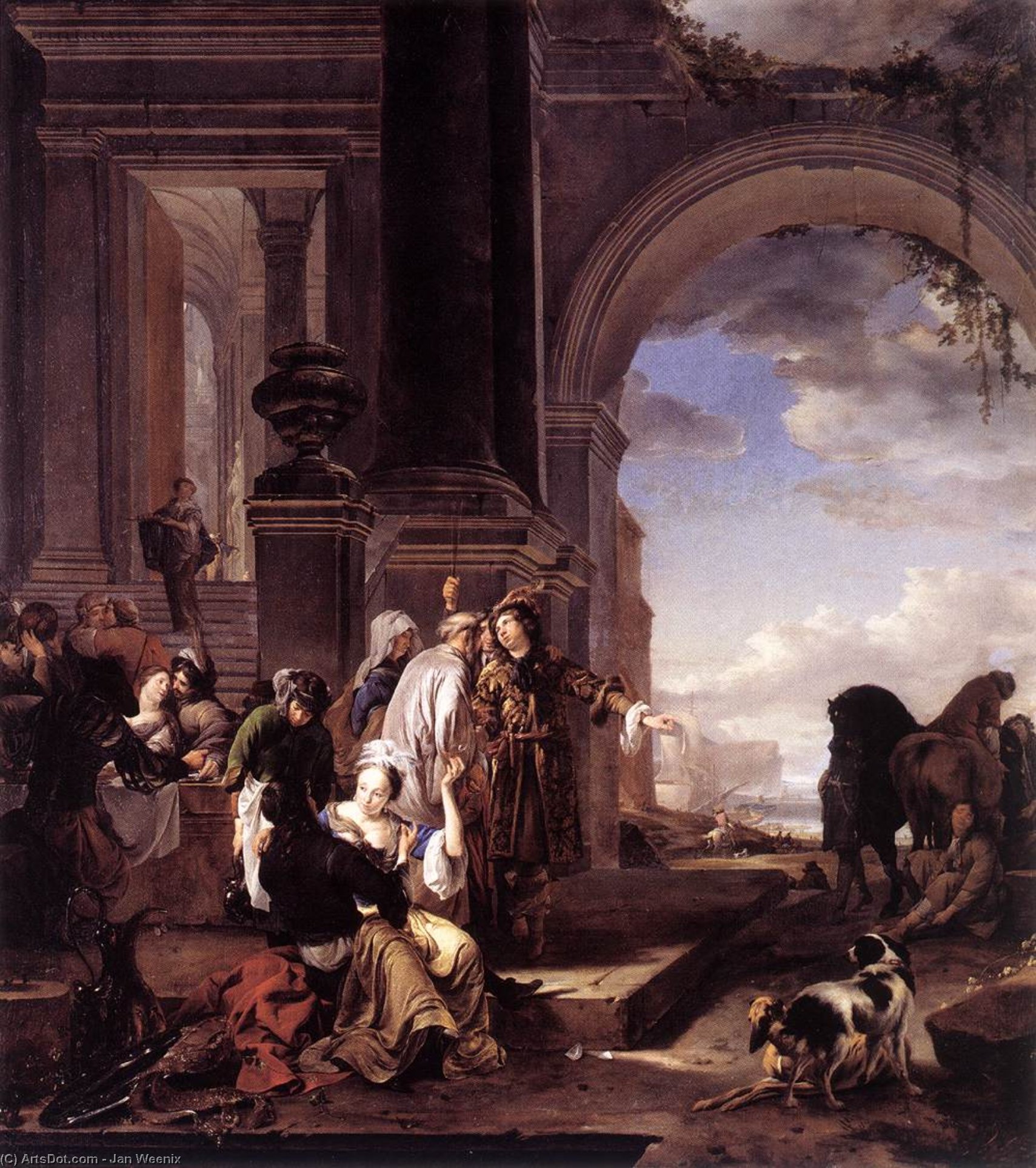
The Prodigal Son
Dimensioni della riproduzione
In the profound depths of Jan Weenix’s 1668 masterpiece, The Prodigal Son, viewers are transported into a world of intense theatricality and raw human emotion. This classical oil painting serves as a breathtaking window into the Baroque era, capturing a moment of profound vulnerability and communal grief. The composition is masterfully orchestrated, drawing the eye through a complex arrangement of figures gathered around a fallen protagonist. Set against the evocative backdrop of an architectural ruin, the scene utilizes a powerful arched doorway to create a sense of immense depth, pulling the observer into the very heart of the tragedy. The interplay of light and shadow—a hallmark of the period—casts a dramatic glow upon the central figures, highlighting the textures of weathered stone and the heavy folds of drapery, while plunging the periphery into mysterious, somber shadows.
The technical prowess displayed in this work reflects the pinnacle of Dutch Golden Age skill. Weenix employs a sophisticated layering technique, utilizing glazes to achieve a luminous quality that breathes life into skin tones and the rich, earthy palette of ochres, deep reds, and warm browns. Every brushstroke serves a purpose, from the delicate rendering of facial expressions caught in moments of anguish to the more vigorous, textured applications used to define the decaying masonry of the ruins. This meticulous attention to detail creates a tactile experience for the viewer, where the smoothness of fine silk contrasts sharply with the rugged, crumbling edges of the ancient architecture, suggesting a world where human fragility meets the inexorable passage of time.
Beyond its visual splendor, The Prodigal Son is a profound meditation on loss, decay, and the cyclical nature of life. The fallen figure at the center of the composition acts as a powerful symbol of mortality, serving as the emotional anchor for the surrounding crowd. The architectural ruins that frame the scene are not merely decorative; they represent the inevitable decline of all earthly structures and the transient nature of human glory. As the eye wanders toward the distant seascape visible through the archway, there is a poignant contrast between the stillness of death within the ruins and the eternal, rhythmic movement of the sea. This juxtaposition invites collectors and enthusiasts to contemplate themes of redemption, consequence, and the enduring legacy of our actions.
For the discerning interior designer or art collector, this painting offers more than just aesthetic beauty; it provides a narrative soul for a space. The warm, somber tones and the commanding presence of the composition make it an ideal focal point for a room designed to evoke contemplation and grandeur. Whether placed in a traditional study or as a conversation piece in a contemporary gallery setting, The Prodigal Son commands attention through its ability to stir the spirit. It is a work that transcends mere decoration, offering a timeless connection to the mastery of Jan Weenix and the enduring power of classical storytelling.

Jan Weenix (1641-1719) è stato un pittore olandese barocco di spicco, celebre per le sue ricche rappresentazioni di nature morte di caccia, pezzi di selvaggina e paesaggi. La sua opera incarna lo spirito artistico dell'Età d'Oro, mostrando sia maestria tecnica che un acuto senso dell'osservazione del mondo naturale.
Nato ad Amsterdam, nei Paesi Bassi, nel 1641, Jan Weenix seguì le orme del padre come artista. Suo padre, Jan Baptist Weenix, era anch'egli un pittore rispettato specializzato in soggetti simili. Questa influenza familiare si è rivelata cruciale per lo sviluppo artistico precoce di Jan. Inizialmente ha lavorato sotto la guida del padre, imparando le tecniche della pittura di nature morte e della rappresentazione degli animali.
Lo stile di Jan Weenix riflette le influenze di diversi artisti chiave del suo tempo. Suo padre gli ha instillato un amore per il realismo dettagliato e le vivaci palette cromatiche. È stato influenzato anche da pittori come Hendrick Cornelisz Vroom, noto per i dipinti marini, e potenzialmente da altri specializzati in opere animaliere come Melchior de Hondecoeter e Gillis Claesz d'Hondecoeter.
Lo stile artistico di Weenix è caratterizzato da:
Nel corso della sua carriera, Jan Weenix ha prodotto un considerevole corpo di lavoro. Alcuni dei suoi dipinti più notevoli includono:
Ha anche ricevuto commissioni da importanti mecenati, inclusa un invito alla corte di Johann Wilhelm, Elettore Palatino, dove ha lavorato insieme ad altri artisti rinomati.
Jan Weenix ha svolto un ruolo significativo nella popolarizzazione delle nature morte di caccia e dei dipinti di selvaggina durante il periodo barocco. Le sue opere sono state molto richieste dai collezionisti e hanno contribuito allo sviluppo delle tradizioni artistiche olandesi. Ha aiutato a elevare questi generi al di là della semplice decorazione, infondendoli di un senso di realismo, dramma e bellezza estetica.
Sua figlia, Maria Weenix, ha continuato la tradizione familiare come pittrice di fiori abile, consolidando ulteriormente il nome Weenix negli annali dell'arte olandese. L'eredità di Jan Weenix continua a ispirare gli artisti e a catturare il pubblico con le sue magistrali rappresentazioni del mondo naturale.

1641 - 1719 , Netherlands

Explore the profound mastery of light and shadow in Dutch Golden Age art. From Rembrandt's chiaroscuro to Vermeer's luminosity, discover the techniques that defined an era and learn how to bring these museum-quality masterpieces into your home through expert oil reproductions.


Rimani aggiornato sulle ultime novità dell'arte, sulle offerte esclusive e sulle idee di decorazione.
Raccontaci del tuo progetto e i nostri esperti d'arte ti proporranno 3 suggerimenti artistici personalizzati.
Lascia che creiamo per te una selezione di 3 opzioni su misura – Gratis!


 Anteprima in scala reale
 Condividi
 Condividi
 Dettagli

 Scarica immagine
 Articoli simili
 Radiografia
 Slideshow
 Leggi tutto







 L'opzione vetro è disponibile solo per dimensioni inferiori a 110 cm


